Author Archives: Norma Shirk

Norma Shirk's avatar

About Norma Shirk

My company, Corporate Compliance Risk Advisor, helps employers (with up to 50 employees) to create human resources policies and employee benefit programs that are appropriate to the employer’s size and budget. The goal is to help small companies grow by creating the necessary back office administrative structure while avoiding the dead weight of a bureaucracy.  To read my musings on the wacky world of HR, see my weekly blog HR Compliance Jungle (www.hrcompliancejungle.com) which publishes every Wednesday morning. To read my musings on a variety of topics, see my posts on Her Savvy (www.hersavvy.com).

The Perils of a Family Business

William Marshal

Working for a family business can be difficult because family businesses seem to inevitably degenerate into factional fighting. Loyal workers are dragged into the family’s feud and must be clever at balancing the competing interests of the various family factions.  A perfect example is the career of William Marshal, who served a series of English kings between 1170 and 1219.

William Marshal worked for the family business known as the Angevin Empire, which was founded by King Henry II of England and his wife, Eleanor of Aquitaine. Marshal began his career as one of the household knights of Eleanor. Since Eleanor fought frequently with her husband, her knights risked loss of property and life depending on how the marital feud was progressing.

Marshal became an expert at balancing the competing family loyalties. Henry II and Eleanor rewarded Marshal by appointing him to serve their son, Henry (Henry the Young King). Young Henry also fought a long bitter feud with his father that ended only when Young Henry died. At that point, Marshal could easily have found himself stripped of all his property and exiled from England. Instead Marshal was welcomed back into the family business because King Henry II couldn’t afford to lose such a skilled knight and diplomat.  Marshal remained loyal to Henry II during the feuds that Henry fought with his other sons, Richard the Lion-Hearted, Geoffrey of Brittany, and John (signer of the Magna Carta).  Marshal survived to serve as a senior advisor to both Richard and John.

When John died, Marshal ensured that John’s son inherited the English crown. With a child on the throne, the family business was inThe Greatest Knight
deep trouble and England faced a hostile takeover by French barons. Most of the English barons sided with the French, but Marshal, who was in his 70’s, sided with John’s son. Marshal personally led the English army that defeated the French.

Why should we care about William Marshal today? Anyone who has ever tried to climb the greasy career pole in a company will recognize the situations faced by Marshal. He dealt with crazy bosses such as King John, who was crazier than the Mad Hatter. He survived back-stabbing colleagues who tried to destroy his career in an effort to advance their own. He had to reestablish his career each time a new king took the throne. Through it all, his competence and skill made him indispensable to the family business.

William Marshal was a “company man” long before that term was coined and he survived family feuds spanning decades. An excellent biography of William Marshal is, The Greatest Knight by Thomas Asbridge (2014).

About Norma Shirk

Norma started her company, Corporate Compliance Risk Advisor, to help employers create human resources policies for their employees and employee benefit programs that are appropriate to the employer’s size and budget. The goal is to have structure without bureaucracy. Visit Norma’s website: www.complianceriskadvisor.com/.

Like what you’ve read? Feel free to share, but please… Give HerSavvy credit. Thanks!

Leave a comment

Filed under Business Savvy

Erratic Bosses

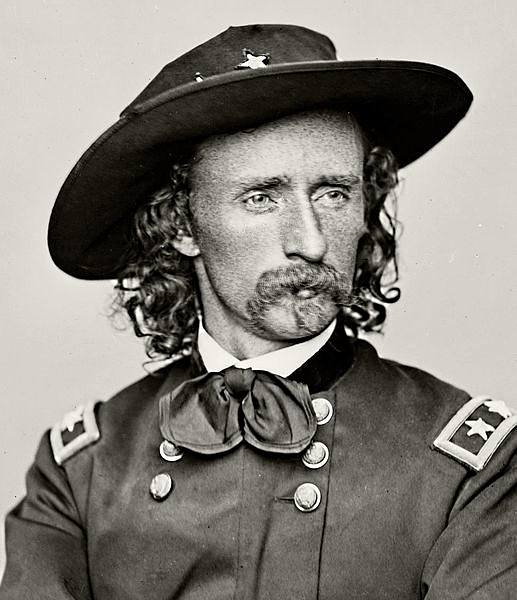
General Custer

Erratic bosses are a disaster in the workplace. Occasionally they are deadly as some cavalry troopers learned in the summer of 1876.

In the summer of 1876, three cavalry columns chased Lakota, Cheyenne and Arapaho Indians across the northern Plains into modern-day Montana. The goal was to confront the Indians, beat them in battle, and force the survivors back to their reservations.

One of the columns was led by “General” George A. Custer whose actual rank was lieutenant colonel. Custer had been temporarily promoted to general during the American Civil War and was a bona fide hero of that war. But by 1876 his antics had severely dented his career prospects.

He was a shameless self-promoter which irritated his military bosses. His troops were disenchanted with his habit of ignoring the rules personally while enforcing them against his subordinates. Then he annoyed President Grant by testifying to Congress about corruption in the Grant administration. (Publicizing dirty linen never wins favor with the boss, especially when it’s true.) Grant fired Custer as commander of the 7th Cavalry and Custer had to beg friends to help him get reinstated.

So when Custer went on patrol a few months later he was trying to restore his career prospects. Custer arrived at the Little Bighorn River (a/k/a the Greasy Grass) near the Indian encampment and immediately disobeyed his orders to wait for the other two cavalry columns. He also ignored the reports from his Indian scouts about the size of the Indian camp. Indian warriors numbered between 1000 and 5000, depending on which source you read.

On June 25, 1876, Custer ordered an attack on the Indian encampment and rode into history. Cavalry forces totaled 500 men and 208 died with Custer. News of the defeat ruined the July 4th centennial celebrations back east.

Custer is a hero today because his widow lived until the 1930’s. She spent every waking moment blaming others for the defeat and insisting that Custer was the greatest hero of all times. She ensured that Hollywood’s version of the tale would show Custer as the hero.

What’s the moral of the story? Erratic bosses are bad for employee health, although, fortunately, it doesn’t usually get them killed these days. Erratic bosses damage a company’s bottom line by destroying employee morale and lowering productivity. They also thin the ranks as top performers vote with their feet, leaving only demoralized or unmarketable employees.

About Norma Shirk

Norma started her company, Corporate Compliance Risk Advisor, to help employers create human resources policies for their employees and employee benefit programs that are appropriate to the employer’s size and budget. The goal is to have structure without bureaucracy. Visit Norma’s website: www.complianceriskadvisor.com/.

Like what you’ve read? Feel free to share, but please… Give HerSavvy credit. Thanks!
2 Comments

Filed under Business Savvy

DIY vs. Outsourcing

DIY vs. Outsourcing

Abigail and Bob started their business five years ago after being downsized from corporate jobs.  Until recently they were the only employees, working long hours and outsourcing specific tasks to free-lancers (a/k/a independent contractors).  Now they want to add employees to prepare for several new customers.  They believe replacing the free-lancers with employees will allow them to streamline processes, speed up response times and become more profitable.

Refugees from corporate America, Abigail and Bob want to avoid bogging down in bureaucracy, but they also know they need some administrative structure. They are smart, educated individuals, so they begin researching HR issues and employment laws. They quickly feel overwhelmed and confused.

As small business owners, they know how to change tack quickly when something isn’t working, so instead of becoming HR compliance experts, they take a phased approach.  First, they decide on their philosophical approach to employee and HR issues. They want their policies to have a positive spin, rewarding employees for initiative and good performances as opposed to punishing them for mistakes. Next, they identify all the tasks to be performed by each newly hired employee so that accurate job descriptions can be created.  It’s impossible to hire the “right” employee if no one knows what skill set that person should have.

With this initial phase completed, they are ready to move to the next phase which is to select an HR consultant to assist with implementation.  By hiring an HR consultant who is a subject matter expert, Abigail and Bob will get solid HR assistance while freeing their time to run their business.

These types of issues arise every day for small business owners who must weigh the pros and cons of DIY versus outsourcing.  Is your company growing? Are you making changes and facing this kind of decision?  For those who decide to outsource, Corporate Compliance Risk Advisor helps small business owners like Abigail and Bob to create HR policies that are appropriate for their company’s size and then serves as a resource to their staff as the policies are implemented.

About Norma Shirk

Norma started her company, Corporate Compliance Risk Advisor, to help employers create human resources policies for their employees and employee benefit programs that are appropriate to the employer’s size and budget. The goal is to have structure without bureaucracy. Visit Norma’s website: www.complianceriskadvisor.com/.

Like what you’ve read? Feel free to share, but please… Give HerSavvy credit. Thanks!

Leave a comment

Filed under Business Savvy

How Can I Run My Business With All These Distractions?

?????

Sondra’s business grew rapidly in the past 18 months as she expanded product lines. Then she added three new employees last quarter when she opened a second store.

With two retail locations and a constantly expanding line of products, Sondra can’t keep up with all the details. She is constantly bombarded with employee requests for time off from work and yesterday several employees came to work with ripped jeans and t-shirts which is not the image Sondra wants to present to her customers. The employees say they thought the dress code was casual.  This morning she spent an hour sorting out a dispute between two employees.

Now it seems one of the new employees at the new store is not working out and should probably be fired, but  Sondra needs time to read the store manager’s notes to verify the grounds for terminating employment. Then she needs to hire a replacement.

Sondra’s been delaying taking action because she hates these administrative tasks. But she also knows her business is getting stuck because she’s stuck making up the rules as she goes.  She knows she can’t procrastinate any longer. She considers hiring an HR consultant to fix all these HR issues. Then she realizes that hiring a consultant would be a waste of money if she doesn’t first decide what she wants, so she wades into the details that will fix her employee problems:

  • Step one is to revise the job description for her store employees to ensure the next employee has the qualifications she needs.
  • Step two is to create a list of what constitutes proper attire in the work place.
  • Step three is to create a time table for each work day so that employees know when each work shift begins and ends and the consequences of showing up late (or not at all).

Then Sondra asks her store managers to review the new rules. Based on their suggestions, she decides to add a dispute resolution process to make sure future employee disputes don’t escalate. Now that all the basic details have been hashed out over several weeks, Sondra can hire an HR consultant to actually create an employee handbook for her business.

Every small business begins as Sondra’s did, with informal employee and HR policies. As the business grows and adds employees, it is necessary to create administrative structure to ensure the whole business runs smoothly. Corporate Compliance Risk Advisor assists business owners in creating HR policies appropriate to their company size so that business owners like Sondra are free to actually run their businesses.

About Norma Shirk

Norma started her company, Corporate Compliance Risk Advisor, to help employers create human resources policies for their employees and employee benefit programs that are appropriate to the employer’s size and budget. The goal is to have structure without bureaucracy. Visit Norma’s website: www.complianceriskadvisor.com/.

Like what you’ve read? Feel free to share, but please… Give HerSavvy credit. Thanks!

Leave a comment

Filed under Business Savvy

Am I Beautiful?

Beautiful

Perhaps the better question to ask is, “How do we each reach our definition of beauty?” Standards of beauty have varied radically over the centuries and are more a statement about our cultural values than our actual physical beauty.

Beauty is a visible symbol of socio-economic status. In ancient Egypt, wealthy men and women shaved their heads and wore wigs. At parties, they removed their wigs and set scented wax cones atop their heads so that they dined with a beautiful scent wafting around them. (There are no tomb paintings showing wax falling in the diner’s eyes, unfortunately.)

During the Renaissance, a bit of plumpness meant your family was wealthy enough to eat on a regular basis, unlike poorer people who often starved. That’s why Titian’s female models are, how to say it politely, fat, by modern standards.

In the 17th and 18th centuries, higher income people tended to be pale.  Pallor separated them from the ruddy-cheeked farmers and other hoi polloi who did manual labor. After the Industrial Revolution, the beauty standards reversed. Poorer people were pale from long hours on the factory floor, while higher income people discovered the joys of nature and got a tan.

Today, our standard of beauty dictates that we must be wrinkle-free, slender and physically fit.  Higher income people can afford the Botox and cosmetic surgery to look young. They also have the disposable income to pay for a healthier diet and for the exercise programs to maintain a “healthy” weight. Meanwhile, poorer people have wrinkles, eat a less healthy diet and probably lack the time, mental energy and money needed for a regular exercise regimen.

Our modern standard of beauty also addresses our fear of dying. If we work out constantly, we will look and feel young and hopefully avoid chronic diseases that lead to “premature death” as the TV ads euphemistically put it. This is not a new obsession. Fear of growing old and dying was chronicled 4000 years ago in the “Epic of Gilgamesh.”

So what can we do if our personal beauty doesn’t match (or even come close) to society’s standard? Find an historical era where the standard of beauty matches your body type. Then buy some chocolate and a bottle of wine and salute your beauty. Am I beautiful? You bet!

About Norma Shirk

Norma started her company, Corporate Compliance Risk Advisor, to help employers create human resources policies for their employees and employee benefit programs that are appropriate to the employer’s size and budget. The goal is to have structure without bureaucracy.

Like what you’ve read? Feel free to share, but please… Give HerSavvy credit. Thanks!

Leave a comment

Filed under Self Savvy

Homage to the Big Rigs (and their Drivers)


Big Rig 5

I love the big rigs. The more chrome and clearance lights the better. At night, rolling down the highway or tooling around a truck stop, they are more brilliant than a Christmas tree.  I love to listen to the raw power of a 500 or 600 horsepower motor.  I even like the noisy engine brakes because they are one of the greatest safety inventions ever on big rigs.

Big rigs provide instant metrics on the health of the economy.  The higher the number of big rigs on the road, the healthier the economy is because they deliver goods, including food, the “last mile” from the port, warehouse or railroad siding to the store.  Without them store shelves would be empty.  So when I inhale a lungful of diesel exhaust fumes from a big rig, I smile because I know the economy is humming along.

Despite their importance, I often hear people denigrating big rigs and their drivers. Trucks are deemed to be a dangerous nuisance on the highways and their drivers are stigmatized as uneducated bumpkins too stupid to get a “real” job.  But most drivers are hard-working men (and a few women) who are supporting their families. I know because I’m the daughter, sister, niece, and cousin of truck drivers.

Becoming a big rig driver requires studying federal safety regulations, passing the commercial driver’s license (CDL) exam, and undergoing two years over-the-road supervised training.  After that they endure a solitary life riding the nation’s highways and missing birthdays, anniversaries, holidays and their children’s school activities. Not surprisingly, is there is a growing driver shortage as fewer people enter this profession.

As to the charge that big rigs are dangerous, according to the American Trucking Associations, only 30% of highway accidents involving big rigs are caused by the truck drivers. That means 70% of the accidents are caused by the rest of us.  So here are a few basic safety tips.

  1. If you can’t see the truck’s mirrors, the driver can’t see you. Slow down, go around, or move in your lane until you can see your vehicle in the truck’s mirror.
  2. Signal your intentions early and avoid sudden movements. Basic physics informs us that 80,000 pounds needs more distance to slow to a stop than a 3000 pound car or SUV.  (Avoid flitting into the car-length’s space in front of the tractor.) The driver needs time to see you and prepare for what you plan to do.
  3. Never sit in the truck’s blind spots which include: immediately in front of the tractor (you can’t be seen over the hood); beside the fifth wheel where a trailer attaches to the tractor; beside the trailer’s rear axle; and immediately behind the trailer.

So the next time you pass a big rig on the road, join with me in paying homage to the big rigs. They keep the economy moving and their drivers are some of the hardest working people you’ll probably never meet.

About Norma Shirk

Norma started her company, Corporate Compliance Risk Advisor, to help employers create human resources policies for their employees and employee benefit programs that are appropriate to the employer’s size and budget. The goal is to have structure without bureaucracy.

Like what you’ve read? Feel free to share, but please… Give HerSavvy credit. Thanks!

1 Comment

Filed under Fun Savvy

Eleanor of Aquitaine

Eleanor of Acquitaine

Eleanor of Aquitaine was the most powerful woman in medieval Europe, due to her inheritance and her marriages.  She “leaned in” long before modern women were urged to do so.

Eleanor was born in 1122 as heir to the Aquitaine, which was roughly a third of modern France.  At the age of 15 she married Louis VII, King of France. Eleanor’s life as Queen of France is notable for three things. First, she invited herself along on the Second Crusade which outraged the political and religious leaders of the day.  Second, she had only daughters with Louis. Third, at the age of 25, Eleanor fell madly in love with a younger man, Henry Plantagenet. He was 18 years old when they met and he had prospects that far exceeded what Louis could offer.

Eleanor convinced the pope to grant her an annulment so that she could marry Henry.  After Henry became King of England, they controlled territory stretching from Scotland to the Pyrenees. Louis was left with little more than Paris and its surrounding counties. To compound Louis’ humiliation, Eleanor’s new marriage produced sons including, Richard the Lion-Hearted and John (of Magna Carta fame).

Eleanor ran their vast kingdom while Henry II was off fighting wars with the Scots, Welsh, Irish, and French.  But their marriage eventually soured and Eleanor conspired with her sons against Henry and almost won a civil war against him. In retaliation, Henry imprisoned Eleanor in one of his more inaccessible castles.  She was not freed until Henry died.

Eleanor lived for 82 years and remained feisty to the end. At the age of 80, she crossed the Alps on a trip to the Norman kingdom in Sicily to find a husband for one of her granddaughters.

For a fictionalized account of Eleanor and Henry watch the movie, “The Lion in Winter”, starring Kathryn Hepburn and Peter O’Toole (and a young Anthony Hopkins as Richard).  The movie captures the soap opera behavior of the Plantagenet’s although it compresses actual historical events.  For a biographical study, read “Eleanor of Aquitaine and the Four Kings”, by Amy Kelly.

About Norma Shirk

Norma started her company, Corporate Compliance Risk Advisor, to help employers create human resources policies for their employees and employee benefit programs that are appropriate to the employer’s size and budget. The goal is to have structure without bureaucracy.

Like what you’ve read? Feel free to share, but please… Give HerSavvy credit. Thanks!

Leave a comment

Filed under Fun Savvy

First Impressions


Business Handshake

We all know that first impressions are important and that we never get a second chance at making one.  I think about that adage each time I drive past the store of a local business owner.

It all started several months ago when I joined a business networking group and began to contact other members.  My goal was to ask for a brief meeting to introduce myself, to learn about the other business’s product or service, and to explore how we can help each other grow our businesses.

One of the first businesses I contacted had a new owner who said he was also new to the networking group.  I set a time to meet him at his store. Two weeks later, I showed up at the appointed time.  The guy wasn’t there.

The woman at the store said the owner had left to run an errand.  She didn’t know where he had gone, when he would be back, or that he was scheduled to meet me that afternoon.  After a few minutes of chatter, I left my business card and went on my way.  Sure I was disappointed because my time was wasted, but I’ve screwed up appointments too, so I was willing to give this guy the benefit of the doubt.  What happened?  I never heard from him.

Here’s where first impressions are important.  Missing an appointment is minor; it happens to all of us at some point.  Not following up to apologize and perhaps reschedule is major.  My first impression of this business owner is that he’s sloppy and uncaring about details.

Based on my first impression, I know that I will never buy this guy’s product or service.  I also know I won’t ever recommend his business to anyone who could use his product or service because I’m not going to burn my contacts by recommending someone who doesn’t care about how he treats potential customers.

I think about what sort of first impression I want to make on the people I meet. They may never need the service my company offers, but they all know someone who does and I sure don’t want to blow all those future potential relationships by making a lousy first impression.

About Norma Shirk

Norma started her company, Corporate Compliance Risk Advisor, to help employers create human resources policies for their employees and employee benefit programs that are appropriate to the employer’s size and budget. The goal is to have structure without bureaucracy.

Like what you’ve read? Feel free to share, but please… Give HerSavvy credit. Thanks!

Leave a comment

Filed under Business Savvy

The Female Pharaoh

Hatshepsut

Once upon a time, Egypt had a female pharaoh.  No, I’m not referring to Cleopatra. I’m referring to Hatshepsut who lived at the height of the ancient Egyptian empire, in the 18th Dynasty of the New Kingdom, the same dynasty that produced Akhenaten and King Tut.

Hatshepsut was the daughter of a pharaoh and chief royal wife to Pharaoh Thutmose II.  When her husband died, Hatshepsut appointed herself regent to her stepson, who, being a boy, would naturally take the throne.  Not satisfied with the role of regent, she proclaimed herself pharaoh.  Since “pharaoh” is a male gender word in ancient Egyptian, she became the female (gender male) pharaoh.  If your brain cramps at this concept, consider how the poor Egyptians felt at this twisting of the “natural order.”

Hatshepsut refused to abdicate in favor of her stepson, Thutmose III, when he reached adulthood. Instead, she sent him off on military campaigns to expand the borders of the Egyptian empire.  He became the greatest warrior-pharaoh in ancient Egypt, expanding the Egyptian empire from modern Sudan to modern Turkey.

Hatshepsut and Thutmose III made a great team with her administrative skills and his military skills.  But when Hatshepsut died, Thutmose III immediately began eradicating any trace of her as the female pharaoh, chiseling her name off her monuments and deleting her from the “king” list of pharaohs.

Early archaeologists (all European men) theorized that Thutmose III was taking revenge against his stepmother for blocking his rightful place to the throne.  But pharaohs had a habit of replacing a predecessor’s name with their own, since that was faster than building a new monument.  A different theory widely accepted today is that Thutmose was trying to restore the “natural order” by deleting references to a female pharaoh.

What can we learn from Hatshepsut today?  Challenge yourself to achieve great things even if that means going against the so-called natural order of the universe.  Hatshepsut’s achievements include one of the most beautiful temples in Egypt at Deir el Bahri.

About Norma Shirk

Norma started her company, Corporate Compliance Risk Advisor, to help employers create human resources policies for their employees and employee benefit programs that are appropriate to the employer’s size and budget. The goal is to have structure without bureaucracy.

Like what you’ve read? Feel free to share, but please… Give HerSavvy credit. Thanks!

Leave a comment

Filed under Fun Savvy

The Scarlet Sisters

Victoria Woodhull

Victoria Woodhull and her sister,Tennessee Claflin Tennessee (“Tennie”) Claflin are the Scarlet Sisters in a  new biography by Myra MacPherson.  Today they are a footnote in America’s culture  wars but in late 19th century America they were famous for shocking people with their  lifestyle and their causes.

Tennie argued that society was hypocritical for ostracizing women who became  prostitutes while their male clients faced no social stigma. She believed this double  standard contributed to the spread of venereal diseases by discouraging women from  seeking medical treatment for fear of being accused of prostitution.  Victoria advocated  “free love” by which she meant no-fault divorces and a fairer division of marital property. They both favored voting rights for women but were disowned by the women’s suffrage movement for repeatedly going off-message to talk about other social issues. The suffragists feared (correctly) that talking about other social inequities would stiffen resistance to voting rights.

The sisters were also booted out of the Communist Party on the orders of Karl Marx for advocating an end to child labor, an 8-hour workday, a minimum wage and equal pay for women and blacks.  Marx wanted a proletariat revolution, not decent working conditions with racial and gender equality.

Their lifestyle was as scandalous as their social views. Victoria shared her house with her first and second husbands, until the former died of alcoholism.  Their extended family included an arsonist father, a sister who was a prostitute and a drug addict, and several blackmailers, including their mother.  Since the family liked to sue each other, the tabloids had a steady supply of sordid details to report.  Reality TV seems tame by comparison.

Most of the causes advocated by the Scarlet Sisters are now socially acceptable and a matter of labor law, but arguably, nothing would have changed without radicals such as these women to challenge the status quo.  That is the main reason for remembering them today.

We need the radicals who drag us out of our comfort zone and force us to confront established ideas of fairness.  Somewhere between the radicals’ extremism and the proponents of the status quo, there is a middle ground to compromise and make life fairer for all.

About Norma Shirk

Norma started her company, Compliance Risk Advisor, to help employers create human resources policies for their employees and employee benefit programs that are appropriate to the employer’s size and budget. The goal is to have structure without bureaucracy.

Like what you’ve read? Feel free to share, but please… Give HerSavvy credit. Thanks!

Leave a comment

Filed under Fun Savvy, Self Savvy