Tag Archives: professional women

The Other Side of the Couch – Books That Have Touched My Life

reading-baby

I really cannot remember a time when I could not read.  I know that my mother read to me, even as a baby.  A family story chronicles me at three reciting “The Night Before Christmas” in its entirety to my two year-old sister. I remember at six dancing down the hall of the house, having received a set of the Bobbsey Twins series for my birthday.  Later the Cherry Ames, Student Nurse Series and biographies of accomplished women took center stage.  Wherever I went I had a book.  I was called out in class for reading under the desk during other classes.  In the summer I stacked books beside my chair in the living room and read voraciously.

Books took me to other places, other stories, other lives.  Books took me away from my own lonely life in middle and high school, becoming the friends for whom I longed.  Books widened my world, taking me to ancient Rome (Great and Glorious Physician), to Renaissance Italy (The Agony and the Ecstasy), ancient England (The Mists of Avalon), to a romanticized South (Gone with the Wind).   I climbed the moors with Jane Eyre, rejected and then fell in love with Mr. Darcy.  Discovering theater, I reveled in Shakespeare’s tragedies and comedies.

As a professional counselor a whole other genre of books has become significant.  The stories of people’s lives embodied in historical and other fiction have been amplified by the professional literature of a lifetime.  Out of all of the hundreds of books and articles I have read over thirty plus years, three stand out as especially life-changing.

The first is On Becoming a Person by Carl Rogers, in which he elucidates the three core conditions required for transformational change in a client (empathy, authenticity, and unconditional positive regard).  These foundational principles have informed my work from its inception.  Second is the amazing leap into a new way of seeing power, articulated by Jean Baker Miller in her seminal work Toward a New Psychology of Women, in which she describes “power with” rather than “power over” as a way to understand the relational process of transformation.  Third is the slim volume called Focusing by Eugene Gendelin, a book that opened the door into the centrality of the body-based knowing that creates change, if it is given a chance.

Whether fiction, biography, or professional literature, what all of these stories and experiences have in common is an arc of change.  Characters grow, develop, learn.  People live through struggle, learn new ways of being.  Through my profession I have learned how to be part of and witness to that process of change, informed by the touchstones of presence and witness.

Does your life story have an arc?  Have you considered how your story could be created?  What if you were an author, considering a biography of the life you have led?  What would you see?

About Susan Hammonds-White, EdD, LPC/MHSP:

Susan is a communications and relationship specialist, counselor, Imago Relationship Therapist, businesswoman, mother, and proud native Nashvillian. She has been in private practice for over 30 years. As she says, “I have the privilege of helping to mend broken hearts.”  Contact Susan at http://www.susanhammondswhite.com

Like what you’ve read? Feel free to share, but please… Give HerSavvy credit. Thanks!

Leave a comment

Filed under Self Savvy

The Gig Economy

Gig Economy

When I was growing up, everyone was expected to work a 9 to 5 job with a pension, health care and other fringe benefits.  Only deadbeats turned down a “real” job to do their own thing.  Of course, even then cradle to grave employment was already a myth.

Lifetime employment with one employer went the way of the dodo bird in the 1970’s as the U.S. economy began opening up to international trade.  The auto industry, the bedrock of lifetime employment and gold-plated benefits, was the first to feel the shock.  To compete, the U.S. auto industry automated factories which meant they needed fewer workers.  That led to labor strikes and everyone blamed the Japanese auto makers for “stealing” American jobs.

In the 1980’s, President Ronald Reagan pursued his dream of “small government” which translated into de-regulating many industries.  That lowered costs to consumers but it also meant job losses.  One of the deregulated industries was trucking.  That led to more labor strikes and the occasional murder of non-union truck drivers.  Union members and their sympathizers used high-powered rifles to shoot at trucks driven by non-union drivers.  I remember holding my breath as I listened to the evening news, wondering if one of my truck driver relatives would be the next casualty.

In the 1980’s, companies automated many jobs to remain competitive.  They downsized and reorganized their workforces and cut their employee training budgets.  Today employers complain that workers are disengaged and lack loyalty to the company.  Here’s a news flash to employers: Employee engagement is not likely to come back.  Employees who are old enough to remember the 1980’s are not going to invest in a company that they believe won’t invest in them.

Millennials and Gen-Xers didn’t experience the wrenching changes of the 1970’s and 1980’s but their parents did.  So, in a sense, these younger workers grew up disengaged from their employers.  Rather than fitting into a box prepared by their prospective employers, they want to set their own hours and decide what work they will perform.

That’s not such a bad attitude because the economy has changed.  Our economy now thrives on technology that automates many jobs. Cloud-based software allows an entrepreneur to replicate an entire back office with little or no assistance.  Of course, this means that businesses large and small need fewer workers.  But it also means that the barriers to starting a business are lower which allows the self-employed and “gig economy” to grow.

A major concern is that government regulators are creating more rules that fit the old economy instead of the new “Uberized” economy.  Government service is virtually the only remaining industry with lifetime employment which may explain why the regulators are looking at the myth instead of the reality of today’s workplace.  Instead of more regulations, we need training programs to teach new skills to workers who have lost their jobs due to technological advances.

About Norma Shirk

Norma started her company, Corporate Compliance Risk Advisor, to help employers create human resources policies for their employees and employee benefit programs that are appropriate to the employer’s size and budget. The goal is to have structure without bureaucracy. Visit Norma’s website: www.complianceriskadvisor.com/.

Like what you’ve read? Feel free to share, but please… Give HerSavvy credit. Thanks!

Leave a comment

Filed under Business Savvy

The Other Side of the Couch – Speaking Tech

Locked Computer

Are you a digital native or an immigrant to the land of technology?

If you were born after 1987, you are most likely a digital native. You have grown up with technology and have little resistance to it.  You do it naturally, without a lot of thought.  If you are a digital immigrant, many things about technology can be overwhelming.  As the millennials grow up and move into the job market, more and more experiences require computer savvy.  If you want to apply for a job, you will most likely have to do so online.  If you want to find a phone number, forget about finding a phone book.  Need to apply for Medicare or social security?  Most help is found online.  Many of the day-to-day activities that used to be done through mail or through written application processes are not even available in these forms.

How do all of these changes affect professional counselors and other mental health professionals?

In a word, profoundly!  Technological familiarity is now often required to submit insurance forms, to sign up for conferences, to maintain awareness of changes in the field.  Journals which once were delivered through the mail now are delivered through digital means.   Practitioners have a wide variety of information sources available, but also can be overwhelmed with the sheer volume of information flooding in-boxes.

The most significant changes that are affecting the mental health field are those related to issues of confidentiality and informed consent.  Confidentiality is the bedrock foundation on which the counseling relationship rests.  Anything that threatens confidentiality is a threat to both the client and the counselor.  Confidentiality requires very careful attention to any possibility of breach.  However, many individuals, both counselors and clients, are very used to using emails and texting in order to quickly and efficiently reach others.

How do professional counselors handle these issues?  The most important method is through informed consent – that is, through explaining the issues that relate to the use of emails/texting and social media to clients as soon as a counseling relationship is begun.  Professional counselors are urged through their ethical standards to maintain a social media and technology policy and to explain it to clients.  Counselors are also encouraged to use encrypted programs in sending and receiving emails or texts, if they actually agree to do so (some counselors do not).

Telehealth or telemedicine is another emerging area of concern.  Suppose I am a counselor in Tennessee and a client in another state finds my website (another necessity for current practice) and wants to work with me through a video platform.  First, unless I am licensed in the state where the client is, I cannot work with the client.  Second, if I am licensed in that state, I must use a video platform that is HIPAA-compliant (Skype is not).  Third, I must be knowledgeable concerning the resources in that client’s area in case of emergency.  Fourth, I must have enough ability to work with technology to be able to access the client through another means if for some reason the video bridge fails at a crucial moment.

Technology is both an incredible blessing and a huge burden.  My immigrant ability to speak tech is improving, but I will never be as adept at it as are millennials.  Nonetheless, I will keep trying, because it is where the world is going.

What are your stories about technology?  How do you manage the digital world?  I would love to hear about it.

About Susan Hammonds-White, EdD, LPC/MHSP:

Susan is a communications and relationship specialist, counselor, Imago Relationship Therapist, businesswoman, mother, and proud native Nashvillian. She has been in private practice for over 30 years. As she says, “I have the privilege of helping to mend broken hearts.”  Contact Susan at http://www.susanhammondswhite.com

Like what you’ve read? Feel free to share, but please… Give HerSavvy credit. Thanks!

Leave a comment

Filed under Business Savvy, Self Savvy

Permission to Create

Big MagicWorking as a creative person, I identify when hearing other creatives’ experiences and struggles.  Elizabeth Gilbert is one such person.  Her book Eat, Pray, Love, which chronicled her adventure of travel to pursue the three things that she most wanted to feel and be immersed in, connected with millions of people.

Her latest book, Big Magic, was a good listen for me.  She went through all the funky negatives we tell ourselves that keep us from creating.  She also gave examples of beloved pieces of art where people carved out a few pieces of time a day to create them.  I like the way she encourages us to create, not for money, not for success, but just for our happiness.

People talk to me about my art like I have a special gift.  I see how people are moved when I tell them about my experience of taking a painting class for the first time, and how I embraced it and knew it was something I wanted to pursue.  I appreciate that people are moved and inspired, and I understand that I have an ability to do what I do, but I don’t believe that I have anymore of a gift than anyone else, except that I became willing to give myself permission.  And what that meant was giving myself the tools that I needed to adventure, hence the painting class.  It was a long time in pause and in the “I don’t know if I can,” or “I don’t think I would be good,” since I had my first drawing class in the mid-1990’s.  Before the class, I could not draw good stick people, but I just wasn’t ready to carve out the time, or venture further, for almost twenty years.

So Elizabeth’s book is another tool, of encouragement, of permission to continue exploring, working toward something I want to achieve.

I hope you will give yourself permission to explore your interests.

Renee Bates

August 1, 2016

About Renee Bates

Renee is an artist focused on growing a newfound ability to express herself through oil painting, recently leaving her role as executive director of the non-profit Greenways for Nashville to pursue art and product development.  Renee likes being in nature, hiking, birding, and working in the garden. Married to David Bates of Bates Nursery and Garden Center, a 3rd generation business begun in 1932. Renee admires the fact that it was begun by a savvy woman, Bessie Bates.  Renee’s art may be enjoyed from her website or followed on Facebook.

Like what you’ve read? Feel free to share, but please… Give HerSavvy credit. Thanks!

1 Comment

Filed under Fun Savvy, Self Savvy

Leadership Lessons:  Think Before You Hit “Send”

Undo Undo

In my personal life, I am an unabashed optimist and someone who barrels through situations with abandon.  I’m not dangerously impulsive, but particularly when it comes to communication, I just lay my feelings right out there.  I express my thoughts freely both verbally and in writing.  When I’m emailing or texting with friends and family, for me, it’s all part of an ongoing conversation and I can “hear” my loved ones’ voices through their words.

But when it comes to business, I’ve learned that as a leader it’s imperative to proceed with caution.  When I began my tenure as President of my organization, I was eager to be available and responsive to my team and my constituents.  When I received an email or text, I would jump to respond, usually without considering the consequences.  But unfortunately there is no “unsend,” button.  Early on, I received an email from a member of my leadership team asking for an opinion on a policy issue.  I instinctively responded with my usual cheery encouragement to just go for it.  BAD MOVE!  I casually mentioned my decision to my predecessor who informed me a decision had already been made, before my tenure, to move in the opposite direction.  Oy!

After doing some damage control, I gave some thought to how I could better handle these types of situations.  First, and most obvious, is to control my urge to respond immediately.  While it’s important to be timely, it’s equally important to be thoughtful.  I need to take a breath and really consider the options, try to look at all sides of a situation and analyze the “what ifs.”  I also need to seek advice before issuing an opinion.  There are plenty of resources available to me and a good leader takes advantage of resources.  I can always give a quick, “I’ll get back to you on that,” response and then do my homework.  But it doesn’t serve anyone if I’m too eager.

So what’s the takeaway?  When you’re called upon for input, advice or to problem solve, especially when it’s via email or text, stop and think.  You have the luxury of taking some time to consider your answer, do your research, and consider your options.  I can’t count how many times recently I have started an email only to realize I wasn’t ready to answer, and hit the “delete,” button.  Don’t be afraid to take your time.  And remember: Think before you “send!”

About Barbara Dab

Barbara Dab is a journalist, broadcast radio personality, producer and award-winning public relations consultant.  She is the creator of The Peretz Project: Stories from the Shoah: Next Generation.  The Peretz Project, named for her late father-in-law who was a Holocaust survivor, is collecting testimony from children of survivors.  Check it out at http://www.theperetzproject.com.  If you are, or someone you know is, the child of survivors of the Shoah, The Holocaust, and you would like to tell your story please leave a comment and Barbara will contact you.

Like what you’ve read? Feel free to share, but please… Give HerSavvy credit. Thanks!

1 Comment

Filed under Business Savvy, Self Savvy

Artist Tech

Renee's Tomatoes

Spineless? Never!, 8” x 10” oil, © Renée Bates

As a painter, I use technology for capturing the light, or a moment in time.  I work as a plein air and studio painter.  Plein air is a term defined as pertaining to a manner or style of painting developed chiefly in France in the mid-19th century, characterized by the representation of the luminous effects of natural light and atmosphere as contrasted with the artificial light and absence of the sense of air or atmosphere associated with paintings produced in the studio.  Plein air can also be defined as designating a painting executed out of doors and representing a direct response to the scene or subject in front of the artist.  Lastly, a plein air painting is defined as having the qualities of air and natural light.

The business of “chasing the light,” as the sun moves across a scene, can make an artist crazy or in the least, make for a poor painting.  The “values,” or light and dark bits, are what make the thing read, even more than the color.  If you cannot capture it all quickly, you will lay out a painting, work it for a bit, then take a photograph and finish in the studio.  Technology is most helpful here.  The artist of former centuries had to work fast, or they had photographic memories.

I am probably most grateful for cell phones with quality cameras. A photography instructor recently said, “The best camera is the one you have with you.”  True. I regularly capture wildlife shots and beautiful horticulture with my phone camera. While it doesn’t get great detail at far distances, it does afford me many action shots.

When setting up plein air, I will often look through the lens at a scene for scale or, take a photograph and use the cropping tool to decide how I want to lay it out on canvas.  Back at the studio, with Photoshop and similar software, I will sometimes punch up the color in an image, or blur it for a more impressionistic effect.  I will work from a print or use the computer monitor to view as my source. I like to blow up flowers with the cropping software to achieve an abstract view.

When a painting is nearly there, I will take a photograph to see how well I have communicated with the lights and darks, and I’ll always find areas that need tweaking.

Using photos to electronically market on websites and social media is current practice for most artists.  The technology with these platforms has improved dramatically in the last couple of years.  I created a website in just eight hours.  I look forward to seeing how much better technology will be in five years.

About Renee Bates

Renee is an artist focused on growing a newfound ability to express herself through oil painting, recently leaving her role as executive director of the non-profit Greenways for Nashville to pursue art and product development.  Renee likes being in nature, hiking, birding, and working in the garden. Married to David Bates of Bates Nursery and Garden Center, a 3rd generation business begun in 1932. Renee admires the fact that it was begun by a savvy woman, Bessie Bates.  Renee’s art may be enjoyed from her website or followed on Facebook.

Like what you’ve read? Feel free to share, but please… Give HerSavvy credit. Thanks!

2 Comments

Filed under Business Savvy, Fun Savvy

The Other Side of the Couch – Memorial Day

Memorial Day
This past Memorial Day weekend was perfect in its blue-sky, cotton-cloud beauty, in its breezes that tamed the almost 90-degree heat in Nashville, and in its opportunities to gather with friends and family.  This ushering-in-of-summer weekend, this celebration of all the things like watermelon and burgers and kids running around and fireflies and even fireworks, seemed light-hearted in its easy and breezy fun.

And yet – and yet – this day also carries undertones and overtones of other days, days that were darker, full of other kinds of feelings and memories.  This is a day the origins of which are disputed, but no matter where it began, it in some way began as a remembrance of those who died when this country was rent by civil war.  Whether begun by Southern women, freedmen, or Northern generals, the day evolved over the years into what it is today:  a memorial to those in this country who lost their lives in defending the lives of others.

I grew up in the 50’s and 60’s.  As a child I read the Cherry Ames: Student Nurse Series enthralled by the tales of bravery involving WWII.  As a young teen I read Janet Lambert’s series focusing on the Parrish family, whose parents were military and whose young men aspired to join the service and attend West Point.  As I entered college, our country was beginning to face the struggle of Vietnam, and my patriotic ideals began to become mixed up with the war protests that were common in my northeastern college.  I was uncertain about what to think about the whole idea of the military.  For a time I turned to pacifism, but then I realized that if attacked I could not condone doing nothing.

These confusions continue, but what I know today is that I hold in high esteem those men and women who choose to serve their country by joining one of the services.  I am thankful for these men and women, and I hold the memory of those who died in the service of others with gratitude and thanks.

At the same time, I continue to struggle with the need for war, the reality of war.  Although I was never a great fan of Dwight David Eisenhower, I have recently come across some things that he said, and they make really good sense.

Eisenhower said, “I hate war as only a soldier who has lived it can, only as one who has seen its brutality, its futility, its stupidity.  War settles nothing.”

He also said, “Every gun that is made, every warship launched, every rocket fired, signifies in the final sense a theft from those who hunger and are not fed, those who are cold and are not clothed.  This world in arms is not spending money alone.  It is spending the sweat of its laborers, the genius of its scientists, the hopes of its children.”

I hope that the words of this old soldier will be heard.  At a time when war seems endless, let’s remember that, as Ike said, war settles nothing.  In the meantime, we remember, and we are grateful.

About Susan Hammonds-White, EdD, LPC/MHSP:

Susan is a communications and relationship specialist, counselor, Imago Relationship Therapist, businesswoman, mother, and proud native Nashvillian. She has been in private practice for over 30 years. As she says, “I have the privilege of helping to mend broken hearts.”  Contact Susan at http://www.susanhammondswhite.com

Like what you’ve read? Feel free to share, but please… Give HerSavvy credit. Thanks!

1 Comment

Filed under Uncategorized

Leadership Lessons:  It’s Not All Fun and Games

Fun and Games


I am, at heart, someone who loves to have fun and enjoy myself.  This does not mean I can’t be serious when the situation calls for it.  In fact my family members have been known to tell me to lighten up, take things easy, chill out.  But spending my time doing things that are meaningful and fulfilling, that add value to the world around me, brings me joy and pleasure.  I am also, by nature, an optimist and an extrovert.  This makes me, for better or worse, a natural cheerleader and people-pleaser.  Whether it’s encouraging my kids or spouse when they face challenges or telling a member of my leadership team that they should just “go for it,” when they have an idea for a program or fundraiser, I just can’t help myself.  The glass must always be half full, darn it!  Thankfully, I have a spouse and others in my support network who are realists and who can bring me down to earth when it’s time for some tough love.

This brings me to the hardest leadership lesson I’ve learned so far.  Sometimes it is out of my control to make things fun and joyful, for me and for those around me.  There are difficult decisions that must be made and not everyone will be happy with the outcome.  Being a leader means shouldering the burden and being willing to face criticism, and to answer for your actions or the actions of others.

I recently had to make such a decision, for the good of the organization.  I did my homework, consulted advisors both inside and outside.  I listened to opinions on both sides of the issue.  In the end, I made a decision that disappointed and hurt someone I care about.  I’m not going to lie, it sucks!  I do not like being that person who can’t please everyone.  And while I stand by my decision and feel confident I did the right thing, it has been tough going.

During the worst of it, someone whose opinion I trust and whose insights I value, said, “Being a leader is not all fun and games.”  An obvious thing, really, but that simple statement brought me comfort.  It gave me perspective and the permission to not please everyone all the time.  It also helped me to see that making a good decision, the right decision, can be satisfying on its own.  Even if I have to disappoint people, something I abhor, there is some pleasure to be had in taking the long view, in stepping up to lead an organization and knowing that this too shall pass.

This latest trial has left me with some scars and bruises, but I feel stronger and more confident as a leader.  I know that next time, and there most definitely will be a next time, I will be better prepared for the pain.  And while leadership isn’t all fun and games all the time, it is an experience I treasure and one I truly enjoy.

About Barbara Dab

Barbara Dab is a journalist, broadcast radio personality, producer and award-winning public relations consultant.  She is the creator of The Peretz Project: Stories from the Shoah: Next Generation.  The Peretz Project, named for her late father-in-law who was a Holocaust survivor, is collecting testimony from children of survivors.  Check it out at http://www.theperetzproject.com.  If you are, or someone you know is, the child of survivors of the Shoah, The Holocaust, and you would like to tell your story please leave a comment and Barbara will contact you.

Like what you’ve read? Feel free to share, but please… Give HerSavvy credit. Thanks!

Leave a comment

Filed under Business Savvy, Self Savvy

How Technology Changed My Job

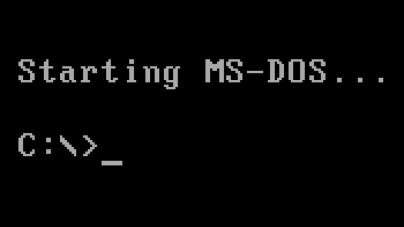
DOS

I remember being afraid of the first computer I used because I had to learn DOS with the little green cursor and the backslashes and forward slashes.  The system didn’t automatically save your document or prompt you to save it so I stuck a stickie note reminder to the side of the monitor.

Everything was printed on a flimsy dot-matrix printer and then mailed, couriered or faxed.  Faxes printed on slick paper that left black ink smudges on your clothes before curling up, turning yellow and becoming illegible.

I wasn’t sure I would like the new tech world, but soon the dreadful DOS was replaced with a desktop computer with Word Perfect.  I’ve always preferred Word Perfect over Microsoft Word because it was friendlier to writers.  Alas, Microsoft Word became ubiquitous and Word Perfect went the way of the dinosaurs.

Word Perfect was just an early example of all the changes technology has made to my job.  Many of the jobs I held early in my career, like hand delivering pleadings to the court clerk’s office for filing, have become irrelevant due to technology.  Most courts now require pleadings to be filed electronically.

But for every loss, technology had offered so much more. For example, email and text messaging eliminates the old phone tag game of trying to connect with colleagues or clients.  It also lowered the cost of starting a business.  Early in my career, a business owner needed to rent (or own) office space, furnish it, and hire staff.  The business owner also needed a telephone line obtained at great cost from the local baby Bell monopoly, a clunky desk top computer, a printer, a copier, and a fax machine.  A coffee maker was also a critical piece of office equipment.

Almost none of that is necessary today.  When I started my consulting business about five years ago, technology allowed me to work from a home office and use my cell phone as my business number.  My cell phone also allows me to text and email clients.  I get coffee at coffee shops when meeting prospects or clients.

I run my business with a laptop and a combined printer/copier/scanner.  My clients attach documents to email or we use cloud-based services like Google Docs or Dropbox to share documents on-line.  I save documents electronically and only occasionally print them.  A drawback to electronic databases is trying to remember my clever title for the file folder and document that I so diligently saved.

Of course, it’s not all a paradise.  Technology allows hackers and fraudsters to try to crack our on-line treasure troves of information, so any small business must invest in cyber security to protect its information and reputation.  Still, I wouldn’t want to go back to the days before all our modern technology.  Without all these modern conveniences, I would still find it necessary to be an employee in a big corporation because the investment costs of starting a business would simply be too high.

About Norma Shirk

Norma started her company, Corporate Compliance Risk Advisor, to help employers create human resources policies for their employees and employee benefit programs that are appropriate to the employer’s size and budget. The goal is to have structure without bureaucracy. Visit Norma’s website: www.complianceriskadvisor.com/.

Like what you’ve read? Feel free to share, but please… Give HerSavvy credit. Thanks!

Leave a comment

Filed under Business Savvy

The Other Side of the Couch –Alone?

AloneSo many people are afraid of being alone.  Over and over I hear in my office from clients – I can’t  leave; I would be alone,  or I can’t leave him or her, they would be alone – as though being alone is the worst thing that could ever happen to a human being, as though being alone is a penance, a punishment, a horror.

I know that aloneness is used as punishment.  Maximum security, solitary for years on end, drives humans crazy, literally.  Some cultures use shunning to punish, and people actually die from it.  And yet I have always wondered about that experience – a belief leading to that ending.

Being alone is one of the joys of my life.  Perhaps because I choose it, decide it when I want to do so – perhaps because I spend the majority of my days in deep places with others.  Being alone with no other human energy pulling on me is like a drink of clear, pure water, a resting place, a respite.  I return to relationship refreshed.

And yet, when I am alone, am I alone?  I am with me, and I am in relationship with all that is, and in those moments of “alone” I am yet more aware and connected to all – to the singing teakettle, the doors that call and close, the aliveness of memory, the presence of loved ones called to mind and into communion.

Perhaps “alone” is nothing more than a belief.  I am alone means I am here, in this amazing and infinite world of all possibilities.  I am always home.

What is your experience of being alone?  Do you dread it, seek it out, run from it?  How is alone different from lonely?  I invite you to spend a little time with experiencing your own relationship to the idea of being alone – you might find there is more to it than you have given yourself time to know.

About Susan Hammonds-White, EdD, LPC/MHSP:

Susan is a communications and relationship specialist, counselor, Imago Relationship Therapist, businesswoman, mother, and proud native Nashvillian. She has been in private practice for over 30 years. As she says, “I have the privilege of helping to mend broken hearts.”  Contact Susan at http://www.susanhammondswhite.com

Like what you’ve read? Feel free to share, but please… Give HerSavvy credit. Thanks!

1 Comment

Filed under Self Savvy