Author Archives: Norma Shirk

Norma Shirk's avatar

About Norma Shirk

My company, Corporate Compliance Risk Advisor, helps employers (with up to 50 employees) to create human resources policies and employee benefit programs that are appropriate to the employer’s size and budget. The goal is to help small companies grow by creating the necessary back office administrative structure while avoiding the dead weight of a bureaucracy.  To read my musings on the wacky world of HR, see my weekly blog HR Compliance Jungle (www.hrcompliancejungle.com) which publishes every Wednesday morning. To read my musings on a variety of topics, see my posts on Her Savvy (www.hersavvy.com).

Launching Your Business

open

Launching a business is much like planning a military campaign.  It requires research and planning to achieve the goal.  A business owner must research whether there is a market for the new business’ product or service and then plan to achieve the goal of running a successful business.

There is plenty of advice on launching a business, much of it contradictory since there are so many variables to consider.  What legal structure should I use to protect my personal assets?  How much market research should I do about my service or product?  Who is my target market and how do I let them know I’m open for business?  It’s all very confusing, even with the best plan.

That’s because the best plans fail.  There’s a famous military axiom that “no plan survives first contact with the enemy” (substitute “the market”).  In business this axiom means that you need to plan well but be prepared to adjust quickly.

For example, I launched my business with a service that I thought would be a winner.  However, within a few months I realized that I had misjudged the market.  So I revised my entire business and re-launched it.  A few years later, a key client walked away and I had to revamp my services and re-launch again.

Creating a great product or service is just the beginning of the effort to launch a business.  A business owner also needs to understand the competition.  In military terms, it means knowing the topography over which the attack will be launched.  For example, military planners avoid attacking directly into a strongly defended position.  They prefer flanking attacks to catch the opponent in a weak spot.

For a business owner, this means knowing what your competitor does best. There’s no point going head-to-head with an established competitor unless your product or service is significantly better.  Inertia and draconian cancellation policies tend to keep people locked in to their existing vendor’s services.

When I think back to the launch of my business, there are two major tasks that I wish I had done differently.  First, I wish I had researched the market more effectively to avoid wasting so much time on a service that didn’t sell.  Second, I wish I had given more thought to how I would deliver my services.  Marketing is not my strong suit.  I could have avoided a lot of heartache by admitting the obvious and outsourcing these tasks much sooner.

About Norma Shirk

Norma started her company, Corporate Compliance Risk Advisor, to help employers create human resources policies for their employees and employee benefit programs that are appropriate to the employer’s size and budget. The goal is to have structure without bureaucracy. Visit Norma’s website: www.complianceriskadvisor.com/.

Like what you’ve read? Feel free to share, but please… Give HerSavvy credit. Thanks!

Leave a comment

Filed under Business Savvy

The Gig Economy

Gig Economy

When I was growing up, everyone was expected to work a 9 to 5 job with a pension, health care and other fringe benefits.  Only deadbeats turned down a “real” job to do their own thing.  Of course, even then cradle to grave employment was already a myth.

Lifetime employment with one employer went the way of the dodo bird in the 1970’s as the U.S. economy began opening up to international trade.  The auto industry, the bedrock of lifetime employment and gold-plated benefits, was the first to feel the shock.  To compete, the U.S. auto industry automated factories which meant they needed fewer workers.  That led to labor strikes and everyone blamed the Japanese auto makers for “stealing” American jobs.

In the 1980’s, President Ronald Reagan pursued his dream of “small government” which translated into de-regulating many industries.  That lowered costs to consumers but it also meant job losses.  One of the deregulated industries was trucking.  That led to more labor strikes and the occasional murder of non-union truck drivers.  Union members and their sympathizers used high-powered rifles to shoot at trucks driven by non-union drivers.  I remember holding my breath as I listened to the evening news, wondering if one of my truck driver relatives would be the next casualty.

In the 1980’s, companies automated many jobs to remain competitive.  They downsized and reorganized their workforces and cut their employee training budgets.  Today employers complain that workers are disengaged and lack loyalty to the company.  Here’s a news flash to employers: Employee engagement is not likely to come back.  Employees who are old enough to remember the 1980’s are not going to invest in a company that they believe won’t invest in them.

Millennials and Gen-Xers didn’t experience the wrenching changes of the 1970’s and 1980’s but their parents did.  So, in a sense, these younger workers grew up disengaged from their employers.  Rather than fitting into a box prepared by their prospective employers, they want to set their own hours and decide what work they will perform.

That’s not such a bad attitude because the economy has changed.  Our economy now thrives on technology that automates many jobs. Cloud-based software allows an entrepreneur to replicate an entire back office with little or no assistance.  Of course, this means that businesses large and small need fewer workers.  But it also means that the barriers to starting a business are lower which allows the self-employed and “gig economy” to grow.

A major concern is that government regulators are creating more rules that fit the old economy instead of the new “Uberized” economy.  Government service is virtually the only remaining industry with lifetime employment which may explain why the regulators are looking at the myth instead of the reality of today’s workplace.  Instead of more regulations, we need training programs to teach new skills to workers who have lost their jobs due to technological advances.

About Norma Shirk

Norma started her company, Corporate Compliance Risk Advisor, to help employers create human resources policies for their employees and employee benefit programs that are appropriate to the employer’s size and budget. The goal is to have structure without bureaucracy. Visit Norma’s website: www.complianceriskadvisor.com/.

Like what you’ve read? Feel free to share, but please… Give HerSavvy credit. Thanks!

Leave a comment

Filed under Business Savvy

Reading Is Like Breathing To Me


Reading 2

I can barely remember a time in my life when I wasn’t able to read.  Reading means as much to me as breathing; one without the other is unthinkable.

Although I read many genres, my favorite is history. It’s difficult to say how my love of history originated. I was raised in an extended family with up to five generations regularly gathering for Sunday dinners. I heard endless tales about how great life used to be before modern morals screwed up society. Reading history was a useful method for fact-checking that glorious past.

It is easier to explain why I love military history. I’m a contrarian.  I was raised as a Mennonite, a Protestant sect that is pacifist.  Studying military history appealed to me as a protest against a patriarchal society that set stifling boundaries on women’s expectations. After all, military people get to fight back and sometimes win.

I began reading about the American War of Independence before moving on to our Civil War.  One of the best accounts of the Civil War is Battle Cry of Freedom, by James McPherson. It’s a “must read” for anyone interested in that war.

A source on southern life in the Civil War is Mary Chestnut’s Civil War, edited by C. Vann Woodward.  Mary Chestnut was a close friend of Varina Davis, wife of Jefferson Davis. Her memoir is full of political intrigues as well as the deprivations caused by the Yankee blockade.

Later I read about World War I flying aces. The top ace of the war was Baron Manfred von Richtofen, the Red Baron. But my favorite is Oswald Boelcke, the ace who commanded the jasta or flying circus before Richtofen. The last commander of that jasta, by the way, was Herman Goering of WW II infamy.

The biography of Boelcke illustrates an important point about history. Perspectives change. The original 1932 version by Professor Johannes Werner was published as the Weimar Republic tottered and the Nazis were close to taking power. The biography is full of jingoistic exhortations to German schoolboys to be loyal sons to their parents and the Reich. The English translation, Knight of Germany, includes the Professor’s rhetoric, which may be unsettling for some readers. The jingoism obscures the fact that Oswald Boelcke was a respected man who originated fighter pilot tactics that are still in use.

Eventually I moved on to reading about World War II, European Theater of Operations. A favorite author is Carlo D’este who writes well and includes extensive annotated endnotes.  I’ve also read scores of memoirs ranging from field marshals to French Resistance fighters. Memoirs are a great way for survivors to settle old scores against their enemies, including occasionally, the opposing side in the war.

I recommend reading history as the best method for gaining perspective on life. What we live through every day, good and bad, has happened before. History shows us how to cope with the bad and work toward the good.

About Norma Shirk

Norma started her company, Corporate Compliance Risk Advisor, to help employers create human resources policies for their employees and employee benefit programs that are appropriate to the employer’s size and budget. The goal is to have structure without bureaucracy. Visit Norma’s website: www.complianceriskadvisor.com/.

Like what you’ve read? Feel free to share, but please… Give HerSavvy credit. Thanks!


1 Comment

Filed under Fun Savvy, Self Savvy

Globalization and the Beautiful Game

Soccer Ball

The biggest sports story in the world at the moment is Leicester City Football Club (LCFC).  They beat odds of 5000 – 1 to win the 2015 -2016 English Premier League title.  The LCFC story is a microcosm of globalization.

LCFC is an English football (soccer) club owned by a Thai businessman. The coach is an Italian. The defensive unit consists of an Austrian, a German, a Jamaican, and an Englishman. The goalkeeper is Danish and his back up is an Australian. The lead strikers (goal scorers) are English, Argentinian, Japanese, and Algerian. The midfield is run by two Englishmen and a Frenchman.

This trophy winning team wouldn’t exist without globalization. A global market place allowed the players and coaches to freely sell their services.  Free trade allowed a Thai businessman to invest in an English company that thrives on a local fan base. The Thai owner, like all sports team owners, used the investment to enhance his company’s global brand. Thanks to the title run, we’ve all heard of King Power even if we don’t know the product or service sold under that name.

But future business deals like the Leicester City team are threatened by a rising tide of anti-trade and anti-globalization.  Across Europe and in the U.S. populist politicians spew anti-trade messages to voters who feel left behind by global trade deals.

Globalization is scary.  Global trade may lower costs for services and products which is good for consumers, but global trade also means that workers at all skill levels face lower wages and job losses as their jobs are automated out of existence or moved to lower cost countries.

I’ve been losing jobs to globalization since the 1980’s when I was downsized from a factory job because overseas competitors could provide the same product at half the American cost. I remember being angry at the factory owners for shutting down the factory and at competitors in countries that didn’t seem to care about worker safety, a living wage or product quality.

Of course, I also remember the grim pre-global trade days of the 1970’s with high inflation, trade barriers that raised the cost of goods and services, protected jobs for insiders and stagnant wages or unemployment for everyone else. So as much as I once hated globalization for dumping me in the unemployment line, it was an opportunity. It gave me an incentive to complete a university education that made me more employable.  I continue to scramble to improve my skills and knowledge to stay relevant as the market place changes.

It would be a shame if trade deals are abandoned in a wave of fear about job losses and “unfair” competition. Abandoning global trade would mean a loss of opportunity for new products and services and higher prices.  It would also ruin the beautiful game of soccer because we’d miss out on Leicester City FC using a global workforce to win a major sports trophy.

About Norma Shirk

Norma started her company, Corporate Compliance Risk Advisor, to help employers create human resources policies for their employees and employee benefit programs that are appropriate to the employer’s size and budget. The goal is to have structure without bureaucracy. Visit Norma’s website: www.complianceriskadvisor.com/.

Like what you’ve read? Feel free to share, but please… Give HerSavvy credit. Thanks!

Leave a comment

Filed under Business Savvy

How Technology Changed My Job

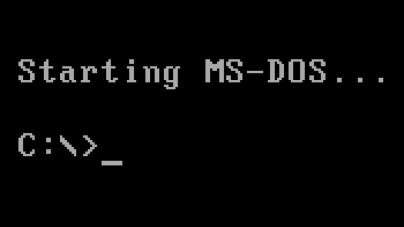
DOS

I remember being afraid of the first computer I used because I had to learn DOS with the little green cursor and the backslashes and forward slashes.  The system didn’t automatically save your document or prompt you to save it so I stuck a stickie note reminder to the side of the monitor.

Everything was printed on a flimsy dot-matrix printer and then mailed, couriered or faxed.  Faxes printed on slick paper that left black ink smudges on your clothes before curling up, turning yellow and becoming illegible.

I wasn’t sure I would like the new tech world, but soon the dreadful DOS was replaced with a desktop computer with Word Perfect.  I’ve always preferred Word Perfect over Microsoft Word because it was friendlier to writers.  Alas, Microsoft Word became ubiquitous and Word Perfect went the way of the dinosaurs.

Word Perfect was just an early example of all the changes technology has made to my job.  Many of the jobs I held early in my career, like hand delivering pleadings to the court clerk’s office for filing, have become irrelevant due to technology.  Most courts now require pleadings to be filed electronically.

But for every loss, technology had offered so much more. For example, email and text messaging eliminates the old phone tag game of trying to connect with colleagues or clients.  It also lowered the cost of starting a business.  Early in my career, a business owner needed to rent (or own) office space, furnish it, and hire staff.  The business owner also needed a telephone line obtained at great cost from the local baby Bell monopoly, a clunky desk top computer, a printer, a copier, and a fax machine.  A coffee maker was also a critical piece of office equipment.

Almost none of that is necessary today.  When I started my consulting business about five years ago, technology allowed me to work from a home office and use my cell phone as my business number.  My cell phone also allows me to text and email clients.  I get coffee at coffee shops when meeting prospects or clients.

I run my business with a laptop and a combined printer/copier/scanner.  My clients attach documents to email or we use cloud-based services like Google Docs or Dropbox to share documents on-line.  I save documents electronically and only occasionally print them.  A drawback to electronic databases is trying to remember my clever title for the file folder and document that I so diligently saved.

Of course, it’s not all a paradise.  Technology allows hackers and fraudsters to try to crack our on-line treasure troves of information, so any small business must invest in cyber security to protect its information and reputation.  Still, I wouldn’t want to go back to the days before all our modern technology.  Without all these modern conveniences, I would still find it necessary to be an employee in a big corporation because the investment costs of starting a business would simply be too high.

About Norma Shirk

Norma started her company, Corporate Compliance Risk Advisor, to help employers create human resources policies for their employees and employee benefit programs that are appropriate to the employer’s size and budget. The goal is to have structure without bureaucracy. Visit Norma’s website: www.complianceriskadvisor.com/.

Like what you’ve read? Feel free to share, but please… Give HerSavvy credit. Thanks!

Leave a comment

Filed under Business Savvy

Women and the White House

White House


The current election cycle is a reminder of how far our country still has to go in its treatment of women. We’ve never had a woman president. To understand why, take a look at the history of women presidential candidates.

The first woman to run for president was Victoria Woodhull. She had to form her own party because the established political parties refused to acknowledge her candidacy.  After all, women couldn’t even vote back in 1872. Woodhull ran on a platform of “free love,” meaning legal protection for abused women and no-fault divorces.  Preachers denounced her as an offense to God and the natural order of things.

A century later in 1972, Shirley Chisholm ran for president as a Democratic Party candidate.  Every time her name was mentioned, people laughed. No one believed a black woman should be, or could be, president. Her presidential run is a footnote because 1972 was the year of Nixon’s reelection and the beginning of the Watergate scandal.

In 1984, no woman ran for president, but Democrat Walter Mondale selected Geraldine Ferraro as his vice presidential candidate. They lost by a landslide to incumbent Ronald Reagan, but their campaign wasn’t helped by the attacks against Ferraro and her husband. Her husband was Italian-American and he owned a construction company in New York City.  Voters were warned that a vote for Geraldine was a vote for the Mob.

This time around, Carly Fiorina and Hillary Clinton announced White House runs.  Ms. Fiorina dropped out early. Her critics warned that she would be a lousy president because she was a difficult boss and showed poor business judgment while she was CEO of Hewlett Packard.  Hillary Clinton stands accused of dishonesty, poor leadership and owing her political life to Wall Street bankers.

Historically, male candidates have also been accused of poor business judgment, poor leadership, not playing well with others and being in hock to special interests. But these “character” flaws are rarely considered a serious handicap for male candidates.

What does this tell us about our country?

  1. Women are deemed un-presidential for exhibiting the same qualities that apparently make men presidential material.
  2. Women only appear on a major party’s ticket when that party is expected to lose the general election.

Would a woman make a good president? I don’t know. I do know that some incredibly useless, incompetent and politically tin-eared men have occupied that esteemed office.  A woman president could hardly do worse damage than the male duds.

I’d like to see women of all political persuasions work together to fight the social stereotypes that automatically discount women as presidential material.  Years ago, a cigarette brand marketed to women used the tagline “We’ve come a long way, baby!”

I think we’ve still got a long way to go.

About Norma Shirk

Norma started her company, Corporate Compliance Risk Advisor, to help employers create human resources policies for their employees and employee benefit programs that are appropriate to the employer’s size and budget. The goal is to have structure without bureaucracy. Visit Norma’s website: www.complianceriskadvisor.com/.

Like what you’ve read? Feel free to share, but please… Give HerSavvy credit. Thanks!

1 Comment

Filed under Business Savvy

More Things I Didn’t Know (When I Started My Business)


Ignorance 2

Recently I wrote about some of the things that I didn’t know when I started my consulting business. My first list focused on money issues. That’s no surprise. I’ve had a few financial near death experiences since starting my business almost five years ago.

Now I’m back with a second list of things I didn’t know when I started my business. I’m betting I’m not the only one who didn’t know:

  1. Which services my prospective clients would actually consider critical enough to buy. My first efforts involved selling a service which I thought was important but no one wanted to buy. Clearly I had misjudged the market. So I started over, assessing what prospects and clients said they needed. Then I had to continuously tweak my services to keep up with changing demand.
  1. How to identify my ideal client and niche market. This is a corollary to the above point. I’ve marketed my services to plenty of businesses who couldn’t afford me at any price or didn’t care about human resources. So I created a spreadsheet of key data about each client to identify my ideal client. Now I regularly update my spreadsheet to continue defining my niche market. I recently listened to a presentation by Marcus Whitney, co-founder of Jumpstart Factory, in which he advocated reviewing client metrics every two weeks in order to continuously refine the profile of your ideal client. It’s nice to have validation that I’m finally on the right track.
  1. I’ll always have to talk myself off the ledge. Every time I got a new client I was ready to break out the champagne. Every time my services were rejected I wanted to throw myself into a volcano. Then a very good friend who also runs a small consulting business told me, “You’ll always be talking yourself off the ledge.” That’s a typical day in the life of a small business owner.
  1. That my stubbornness would be one of my best skills. Okay, call it persistence. I sell a service, not a product. That means I must meet dozens of people each week, educate them about my services and what my ideal client looks like, and then hope for a referral. I prefer coffee meetings since it’s less expensive than a lunch or dinner and eliminates the awkwardness over who pays for the meal.  But a meeting does not a referral guarantee. I’ve had many days with caffeine highs when I wondered if I made the right career choice. Then my stubborn streak would kick in and I refused to accept failure.  Ironically, my stubborn streak was a detriment when I was an employee.

The list could go on because owning a business is a process of experimentation in which you never really get it “right.” You just keep learning and that’s fine with me.

About Norma Shirk

Norma started her company, Corporate Compliance Risk Advisor, to help employers create human resources policies for their employees and employee benefit programs that are appropriate to the employer’s size and budget. The goal is to have structure without bureaucracy. Visit Norma’s website: www.complianceriskadvisor.com/.

Like what you’ve read? Feel free to share, but please… Give HerSavvy credit. Thanks!

Leave a comment

Filed under Business Savvy, Self Savvy

History is Alive

Books

I am frequently asked why I love history so much.  History is alive. It’s full of people and how they lived their lives.  Since we learn by observing other people, historical persons are the ultimate role models.

For example, George Washington was brilliant at projecting confidence.  The worse things got, the more he appeared calm and confident. His attitude inspired his troops to continue fighting for eight years in the Revolutionary War. Any business owner understands the importance of projecting confidence to employees, clients, and competitors. Confidence breeds success.

Another guy I’m partial to is General George Thomas, nicknamed the Rock of Chickamauga.  Why? When the entire Union line broke and scampered back to Chattanooga, Tennessee, he refused to retreat and ordered his men to stop the Confederates. He turned a potential disaster into merely an embarrassing day for the Union Army.

Every business owner has experienced a version of Chickamauga when a key client cancelled a contract leaving a giant hole in the company’s bottom line or a project went hideously wrong. Successful business owners hold their nerve, trust their team and battle on to retrieve something from the mess.

History also gives us perspective. Without historical comparisons, we have a tendency to believe the challenges we face are brand new. But there truly is nothing new under the sun because human nature doesn’t change.

Take a look back at the first “world war” known as the Peloponnesian War which lasted from 431 – 404 B.C. Athens and Sparta fought across Greece, then on to North Africa, Sicily, Spain, and all Mediterranean points in between. They trashed the known world fighting for economic and political control. The war created an opportunity for the competing Persian Empire to try to conquer Europe.  It all seems a bit like Microsoft and Apple who were so busy fighting each other they failed to recognize the threat posed by Google.

The Peloponnesian War is described in wonderful detail by Thucydides. He had time to write because he was unemployed after disagreeing with his superiors about the Athenian strategy to defeat Sparta. He’s an early example of making a career transition, in his case from soldier to historian.

Thucydides tells of heroic battles and the suffering of civilians, of spies and traitors. His most memorable character is Alcibiades who sold out his home town of Athens to the Spartans, then switched sides, before pulling yet another switcheroo. Alcibiades eventually sold out all the Greeks to the Persians.

Alcibiades must have been charming because it took years for the Athenians and Spartans to stop trusting him. Today, Alcibiades would be labeled as anti-social or sociopathic. I’ll bet you’ve met an Alcibiades at some point in your career.

These few examples illustrate why I love history.  I have role models for every possible event in my life.  I can see how current challenges are the same or different than historical events and that guides my strategy on how to react.  No how-to book will ever match what I can learn from history.

About Norma Shirk

Norma started her company, Corporate Compliance Risk Advisor, to help employers create human resources policies for their employees and employee benefit programs that are appropriate to the employer’s size and budget. The goal is to have structure without bureaucracy. Visit Norma’s website: www.complianceriskadvisor.com/.

Like what you’ve read? Feel free to share, but please… Give HerSavvy credit. Thanks!
Leave a comment

Filed under Business Savvy, Self Savvy

WHAT I DIDN’T KNOW WHEN I STARTED MY BUSINESS

Start Up

When I started my consulting business a few years ago, I thought I knew what I was doing.  Starting my own business was an old dream conjured up every time I was sick of office politics and the roulette wheel of re-engineering, right-sizing, downsizing, layoffs. (Pick your favorite euphemism.)  After I was downsized yet again, I took the plunge.  That’s when I realized that no matter how well I had planned, there were so many things I didn’t know.  For example, I didn’t know:

  1. How hard it is to hone a marketing pitch. I went through dozens of elevator speeches and 60-second “songs” in the first year trying to find what resonated with potential clients. I believed in the services I was selling but seemed unable to convince potential clients that I was worth hiring.
  1. How hard it is to set a price for my services. Should I charge by the project or by the hour? If I charge an hourly rate what is fair to me and to the client? I’m still not sure I know the answer to this question.
  1. How hard it is to talk about money to people. When should I start talking about money with a prospective client? What if the prospect decides she/he can’t afford me?
  1. How quickly money runs out. I lived frugally but still blew through my severance package and savings before landing a big client. This is the part of starting a business that most of us get wrong, according to the pundits. It always costs more to start a business than we anticipated.

In spite of all the things I didn’t know when I started my company I recently celebrated another year in business. Along the way, I’ve discovered plenty of new things I didn’t know when I started my business.  One thing I definitely know: I want to continue this journey of business ownership.

About Norma Shirk

Norma started her company, Corporate Compliance Risk Advisor, to help employers create human resources policies for their employees and employee benefit programs that are appropriate to the employer’s size and budget. The goal is to have structure without bureaucracy. Visit Norma’s website: www.complianceriskadvisor.com/.

Like what you’ve read? Feel free to share, but please… Give HerSavvy credit. Thanks!

2 Comments

Filed under Business Savvy

3 Mistakes of Networking

NetworkingNetworking is a skill that must be developed, as I learned the hard way when I started my own business. Based on my experiences, I’ve developed a hit list of networking mistakes. Here are my top 3:

Mistake #1: No preparation. A mistake I made early on was not thinking about what I wanted out of the meeting.  Was I expecting to walk away with a new client?  Could the person I was meeting connect me to someone I wanted to meet?  Who did I want to meet? Was there someone in my network that I could connect to the person I was meeting?  In other words, I didn’t prepare properly. I learned my lesson.  Now when the other person says “so how can I help you,” I whip out my list of 3 – 5 names to which I’d like to be connected.  It all starts with preparation.

By now, everyone knows that LinkedIn and Facebook are great resources for gathering information about people. I want to know if we have any common interests or experiences. I also look at company websites to see who they target as customers to see if there are ways we can help our mutual businesses.

Mistake #2: No show.  It can be a challenge to schedule a meeting because anyone you really want to meet already has multiple obligations making it difficult to find an open date.  But if we’re agreeing to meet it means we both expect to get something of value from the meeting.  So not showing up is bad. I’ve waited at coffee shops for people who never showed and never called to let me know they couldn’t make the meeting.  It’s hard not to take it personally.  To limit the no show problem, I confirm via email a day or two before the scheduled date.  When I’ve screwed up and missed a meeting, I’ve emailed or called the other person as soon as possible to apologize.  I want to limit the damage done to my reputation.

Mistake #3: No referrals.  I’ve lost count of the coffee meetings I’ve had where the other person offered nothing. What was the point of meeting if you’re not prepared to make connections? One of the most effective networkers I know goes into each meeting expecting to connect the other person with at least one person in his network.  Even if he doesn’t get any referrals, he’s helped the other person achieve a goal.  My networking improved when began using the same approach. If I can help others achieve their goals, I will eventually be rewarded.

As I continue to hone my networking skills, I’m sure my list of networking mistakes will also be refined. Meanwhile, I continue striving to avoid committing my top 3 mistakes of networking.

About Norma Shirk

Norma started her company, Corporate Compliance Risk Advisor, to help employers create human resources policies for their employees and employee benefit programs that are appropriate to the employer’s size and budget. The goal is to have structure without bureaucracy. Visit Norma’s website: www.complianceriskadvisor.com/.

Like what you’ve read? Feel free to share, but please… Give HerSavvy credit. Thanks!

Leave a comment

Filed under Business Savvy