Tag Archives: women as leaders

Eleanor of Aquitaine

Eleanor of Acquitaine

Eleanor of Aquitaine was the most powerful woman in medieval Europe, due to her inheritance and her marriages.  She “leaned in” long before modern women were urged to do so.

Eleanor was born in 1122 as heir to the Aquitaine, which was roughly a third of modern France.  At the age of 15 she married Louis VII, King of France. Eleanor’s life as Queen of France is notable for three things. First, she invited herself along on the Second Crusade which outraged the political and religious leaders of the day.  Second, she had only daughters with Louis. Third, at the age of 25, Eleanor fell madly in love with a younger man, Henry Plantagenet. He was 18 years old when they met and he had prospects that far exceeded what Louis could offer.

Eleanor convinced the pope to grant her an annulment so that she could marry Henry.  After Henry became King of England, they controlled territory stretching from Scotland to the Pyrenees. Louis was left with little more than Paris and its surrounding counties. To compound Louis’ humiliation, Eleanor’s new marriage produced sons including, Richard the Lion-Hearted and John (of Magna Carta fame).

Eleanor ran their vast kingdom while Henry II was off fighting wars with the Scots, Welsh, Irish, and French.  But their marriage eventually soured and Eleanor conspired with her sons against Henry and almost won a civil war against him. In retaliation, Henry imprisoned Eleanor in one of his more inaccessible castles.  She was not freed until Henry died.

Eleanor lived for 82 years and remained feisty to the end. At the age of 80, she crossed the Alps on a trip to the Norman kingdom in Sicily to find a husband for one of her granddaughters.

For a fictionalized account of Eleanor and Henry watch the movie, “The Lion in Winter”, starring Kathryn Hepburn and Peter O’Toole (and a young Anthony Hopkins as Richard).  The movie captures the soap opera behavior of the Plantagenet’s although it compresses actual historical events.  For a biographical study, read “Eleanor of Aquitaine and the Four Kings”, by Amy Kelly.

About Norma Shirk

Norma started her company, Corporate Compliance Risk Advisor, to help employers create human resources policies for their employees and employee benefit programs that are appropriate to the employer’s size and budget. The goal is to have structure without bureaucracy.

Like what you’ve read? Feel free to share, but please… Give HerSavvy credit. Thanks!

Leave a comment

Filed under Fun Savvy

Effective Leadership – Building Trust

Effective Leadership-BuildingTrust

It’s a basic necessity for good relationships, so it makes sense that trust is a key contributor to a leader’s effectiveness.  Think about it… Would you follow someone you don’t trust? The trust that is critical to being an effective leader involves much more than honesty, though. Leaders usually act a little shocked—act as if their character has been assaulted—when I ask whether people trust them. They hear the question as something akin to, “Do you lie to people?” I ask leaders whether they are trusted so that they will focus on the following key questions. The answers to which all need to be, “Yes.”

Do people trust that:

  • You have their best interests at heart?
  • You will follow through on your commitments?
  • You know what you’re doing?
  • You will make sound decisions?
  • You’ll keep your cool?
  • You’ll be honest with them?

Recent psychological research provides a key pointer toward what leaders can do to earn the trust of the people who work with them: people begin to trust you when they see you demonstrate self-control, i.e. avoid doing what is not beneficial and do more of what is, even if there will be a little pain involved. People look for clues about your trustworthiness in all that you say and do. If you tell everyone you are on a diet, but snack on the office goodies routinely, people will file that away as evidence that you either don’t mean what you say or you don’t have the strength to make hard choices…neither behavior being very leader-like, of course.  Imagine if you also then tiptoe around a difficult team member who is not carrying her weight on projects. Once again, others will conclude you can’t make tough decisions for the ultimate benefit of the team.

Earning trust can take time, but it’s possible to speed things along a bit if you put your mind to it. If you’re in leadership, and wondering what proactive steps you can take to earn others’ trust sooner rather than later, try out some of these:

  • Seek out information that can answer questions or ease concerns your team has expressed and pass that information along to them.
  • Start and end meetings on time, and if you must deviate from the stated agenda, make it clear why.
  • Take advantage of opportunities to advocate for your employees with others in the company.
  • Pay close attention to what you tell people you will do—even the trivial things—and do them or tell them why you can’t.
  • Keep a lid on your emotions when reacting to news, situations, etc. Besides not throwing tantrums in the office, we’re talking about keeping your less-measured editorial comments about people or events to yourself.
  • Admit when you don’t know something and demonstrate a commitment to learn it.

Obviously, none of this is rocket science; you just have to decide you’re going to take these steps. After all, building trust is as simple as staying away from the cookies when you’re on a diet.

About Dr. Debra Fish

Dr. Fish is a consulting psychologist whose writing and work focus exclusively on helping individuals and teams lead more effectively. Her firm, Fish Executive Leadership Group, LLC, counts among its clients everything from Fortune 50 corporations to small, privately-held professional service firms.

Like what you’ve read? Feel free to share, but please… Give HerSavvy credit. Thanks!


Leave a comment

Filed under Business Savvy

The Female Pharaoh

Hatshepsut

Once upon a time, Egypt had a female pharaoh.  No, I’m not referring to Cleopatra. I’m referring to Hatshepsut who lived at the height of the ancient Egyptian empire, in the 18th Dynasty of the New Kingdom, the same dynasty that produced Akhenaten and King Tut.

Hatshepsut was the daughter of a pharaoh and chief royal wife to Pharaoh Thutmose II.  When her husband died, Hatshepsut appointed herself regent to her stepson, who, being a boy, would naturally take the throne.  Not satisfied with the role of regent, she proclaimed herself pharaoh.  Since “pharaoh” is a male gender word in ancient Egyptian, she became the female (gender male) pharaoh.  If your brain cramps at this concept, consider how the poor Egyptians felt at this twisting of the “natural order.”

Hatshepsut refused to abdicate in favor of her stepson, Thutmose III, when he reached adulthood. Instead, she sent him off on military campaigns to expand the borders of the Egyptian empire.  He became the greatest warrior-pharaoh in ancient Egypt, expanding the Egyptian empire from modern Sudan to modern Turkey.

Hatshepsut and Thutmose III made a great team with her administrative skills and his military skills.  But when Hatshepsut died, Thutmose III immediately began eradicating any trace of her as the female pharaoh, chiseling her name off her monuments and deleting her from the “king” list of pharaohs.

Early archaeologists (all European men) theorized that Thutmose III was taking revenge against his stepmother for blocking his rightful place to the throne.  But pharaohs had a habit of replacing a predecessor’s name with their own, since that was faster than building a new monument.  A different theory widely accepted today is that Thutmose was trying to restore the “natural order” by deleting references to a female pharaoh.

What can we learn from Hatshepsut today?  Challenge yourself to achieve great things even if that means going against the so-called natural order of the universe.  Hatshepsut’s achievements include one of the most beautiful temples in Egypt at Deir el Bahri.

About Norma Shirk

Norma started her company, Corporate Compliance Risk Advisor, to help employers create human resources policies for their employees and employee benefit programs that are appropriate to the employer’s size and budget. The goal is to have structure without bureaucracy.

Like what you’ve read? Feel free to share, but please… Give HerSavvy credit. Thanks!

Leave a comment

Filed under Fun Savvy

Effective Communication: It May Seem Simple, But It Ain’t Easy

Communication


“Take that skeevy dust bunny and throw it on the devil strip.” (For translation see www.wordnik.com)

Ever felt like you have no idea what the heck your coworker in the next office (or spouse, or friend) is talking about? You hear what she’s saying, and she’s speaking English, but geez…she makes no sense!

Welcome to the mystifying world of interpersonal communication.

We all communicate in different ways, use our common language differently, read others differently, and have different ways of judging whether we’ve been understood. The opportunities for misunderstandings and miscommunications in the workplace are endless.

Especially if you’re in a leadership position, it’s incumbent on you to do everything possible to ensure effective communication happens. These four rules will help you to set the right communication tone, no matter the situation:

Assume nothing:

Just because you know what you’re saying doesn’t mean anyone else does. Assuming others understand you is dangerous. You also can’t assume you always got the same message a speaker intended to send.

Always give the benefit of the doubt:

One of the quickest routes to a toxic environment is for people to attribute motives to each other erroneously.  Terse emails and throwaway remarks are responsible for countless conflicts because people jump to negative conclusions rather than believing the other person is well intentioned, but not necessarily always well spoken. You have the opportunity to urge people to check their responses until they’ve clarified what someone else meant.

Encourage candor:

Candor clears clogged communication lines. People who say what they think, speak directly to difficult issues, and aren’t afraid to disagree keep communication lines open and keep issues from festering. If you expect and model communication that includes respectful candor, you will set the right tone in your relationships.

Put a premium on clarification:

A simple recap at the end of every conversation will go a long way to minimizing misunderstandings.  Take a few seconds to summarize the key discussion points and takeaways; ask others for confirmation or disagreements, and prod those hesitant listeners to speak up about what they heard.

If you’re not sure you can remember all four, then focus on the last one and get it right. It will save you a world of missteps.

About Dr. Debra Fish

Dr. Fish is a consulting psychologist whose writing and work focus exclusively on helping individuals and teams lead more effectively. Her firm, Fish Executive Leadership Group, LLC, counts among its clients everything from Fortune 50 corporations to small, privately-held professional service firms.

Like what you’ve read? Feel free to share, but please… Give HerSavvy credit. Thanks!

Leave a comment

Filed under Business Savvy, Self Savvy

The Scarlet Sisters

Victoria Woodhull

Victoria Woodhull and her sister,Tennessee Claflin Tennessee (“Tennie”) Claflin are the Scarlet Sisters in a  new biography by Myra MacPherson.  Today they are a footnote in America’s culture  wars but in late 19th century America they were famous for shocking people with their  lifestyle and their causes.

Tennie argued that society was hypocritical for ostracizing women who became  prostitutes while their male clients faced no social stigma. She believed this double  standard contributed to the spread of venereal diseases by discouraging women from  seeking medical treatment for fear of being accused of prostitution.  Victoria advocated  “free love” by which she meant no-fault divorces and a fairer division of marital property. They both favored voting rights for women but were disowned by the women’s suffrage movement for repeatedly going off-message to talk about other social issues. The suffragists feared (correctly) that talking about other social inequities would stiffen resistance to voting rights.

The sisters were also booted out of the Communist Party on the orders of Karl Marx for advocating an end to child labor, an 8-hour workday, a minimum wage and equal pay for women and blacks.  Marx wanted a proletariat revolution, not decent working conditions with racial and gender equality.

Their lifestyle was as scandalous as their social views. Victoria shared her house with her first and second husbands, until the former died of alcoholism.  Their extended family included an arsonist father, a sister who was a prostitute and a drug addict, and several blackmailers, including their mother.  Since the family liked to sue each other, the tabloids had a steady supply of sordid details to report.  Reality TV seems tame by comparison.

Most of the causes advocated by the Scarlet Sisters are now socially acceptable and a matter of labor law, but arguably, nothing would have changed without radicals such as these women to challenge the status quo.  That is the main reason for remembering them today.

We need the radicals who drag us out of our comfort zone and force us to confront established ideas of fairness.  Somewhere between the radicals’ extremism and the proponents of the status quo, there is a middle ground to compromise and make life fairer for all.

About Norma Shirk

Norma started her company, Compliance Risk Advisor, to help employers create human resources policies for their employees and employee benefit programs that are appropriate to the employer’s size and budget. The goal is to have structure without bureaucracy.

Like what you’ve read? Feel free to share, but please… Give HerSavvy credit. Thanks!

Leave a comment

Filed under Fun Savvy, Self Savvy

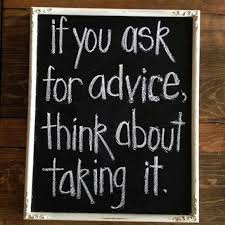
The Simplest, and Best, Career Advice I’ve Got

Advice

How often are you asked for advice by those in your profession who are just starting out?  I get that a fair amount, more so from women because I am in the traditionally male-dominated field of engineering.  When asked (and, even when I’m not on those occasions when I think it might be useful!) I offer the following three-step advice:

  1. Know what you want.
  2. Earn it.

And…. Wait for this…

  1. Ask for it.

In my experience, it’s that third step that just doesn’t happen.  Most people, women more often than men I’m afraid, think that if they work hard and earn their achievements, advancement will naturally follow.  Wrong! But it’s not necessarily because you don’t deserve it.  Nine times out of ten, whoever is in the position to make this decision simply hasn’t thought about it.  Yet, by asking and making a respectful, well thought-out case for yourself, you might give them just what they need to move forward.

Just remember: You have to EARN it first.  Once you’ve earned it, go for it!

Oh, and what happens if you are told, “No?” In my experience, even if your proposal gets a “No,” it was usually given respectful consideration and, as a result, some other opportunity will arise, because good employers really don’t want to tell good employees, “No.”  The new opportunity might not be what you had envisioned, but take the opportunity, perform well as you always do, wait for the next opportunity, and ask.

Don’t believe me?  Here’s one top leader’s account.

About Laura Reinbold, PE

Ms. Reinbold explores ways http://www.ttlusa.com can help build our communities, from the geoprofessional side of the engineering profession.

Like what you’ve read? Feel free to share, but please… Give HerSavvy credit. Thanks!

Leave a comment

Filed under Business Savvy

Shine Theory (or Why I Truly Love the Women of Her Savvy)

y99sexcast2_20000530_00477.jpg

I was prepared to write a post about pearls when I was suddenly hit with writer’s block and decided to check my email instead.  The first email I opened was from a college friend. She was writing to send me a link to an article she’d read recently; it was about something called Shine Theory. As a jewelry designer and metalsmith, when I saw the words “Shine Theory,” naturally I thought the article was about gemstones or precious metals. I was in for a surprise; there was nothing about gemstones or jewelry. The article was about why powerful women make the best friends and why we should strive to surround ourselves with women who intimidate us or women we see as “better” (i.e., more successful, smarter, cooler, etc.) than us. After I read the article, I thought about the mission of the HerSavvy group: to challenge each other, inspire each other and support each other or in other words, Shine Theory in real life. Have a look at the article and learn how to shine!

About Lisa Rose Aronow

Lisa Rose Aronow is a metalsmith and jewelry designer who works with a wide variety of precious and semiprecious stones, high karat gold and sterling silver. Her work can be found at Gus Mayer in Nashville, TN or online at Facebook.com/LisaAronowAtelier.

Photo credit: http://i.huffpost.com/gen/1764563/thumbs/o-SEX-AND-THE-CITY-CAST-facebook.jpg

Like what you’ve read? Feel free to share, but please… Give HerSavvy credit. Thanks!

Leave a comment

Filed under Business Savvy, Self Savvy

Nice Girls

Corner office istock

There are lots of leadership books out there. Every once in a while, one comes along that hits the nail on the head and raises the bar. Nice Girls Don’t Get the Corner Office did that about 10 years ago. This week a great article came out that that outlines a few tips from this classic.

Here’s the article. You’ll like it, and most likely learn something. Pay particular attention to “Mistake No. 1. ” It is one of the most common mistakes I see in my work with executive women. If you haven’t read the book, I highly recommend it!

About Dr. Debra Fish

Dr. Fish is a consulting psychologist whose writing and work focus exclusively on helping individuals and teams lead more effectively. Her firm, Fish Executive Leadership Group, LLC, counts among its clients everything from Fortune 50 corporations to small, privately-held professional service firms.

 Photo credit: istock: BCFC

Like what you’ve read? Feel free to share, but please… Give HerSavvy credit. Thanks!

 

Leave a comment

Filed under Business Savvy

Savvy Leadership: The DIY Way to Learn How Well You Lead

DIY Leadership Evaluation

Are you making the impact you think you are? Do you wonder how people perceive you? As a leader, you’re undoubtedly curious about how you’re doing, and like most people you get feedback on an irregular basis. In fact, you’re lucky if you get useful feedback even once a year.

No need to wonder anxiously until your next performance review; here are 3 easy steps to conduct your own leadership skills evaluation:

1. Set the criteria

What leadership skills does the company expect? Are there competencies outlined for your position? What leadership skills have you heard about that resonate with you? Name the leadership skills you want to strengthen and make sure you have behavioral definitions for each; in other words, specify what those skills look like on the ground, day to day, as you do your job. Make those behaviors both your goals and the criteria against which you’ll ask others to evaluate you.

2. Ask

Stick your neck out and invite people to give you feedback on those behaviors. Be prepared: most people would rather be anonymous, say nothing, or just complain about you in the restroom. Don’t be disappointed if you don’t get much in the beginning, especially from peers and direct reports. Your boss should be able to give you something useful, however, even if he or she is not the best at it. These three tips will help your asking be more fruitful:

  • Give them a heads up. Tell your boss, directs, peers, etc., you’re going to start asking for feedback regularly, tell them why you’re doing it, how you’re going to do it (via email, in person, etc.), and stress how much you appreciate their taking the time to respond. Invite them to be as candid as they feel comfortable, emphasizing how helpful their input will be to making you a better boss/team member/direct report.
  • Be specific. Ask people about one or two particular skills, or ask for feedback on a specific project, or for a specific period of time. A blanket, “How am I doing?” is likely to elicit polite reassurances, which make you feel great, but are not exceedingly helpful.
  • Don’t ask too often. You run the risk of wearing people out or appearing insecure if you ask for feedback every week or every month. Once a quarter should be the absolute maximum. If you like the idea of gathering feedback after every project, formalize that process and make it multi-directional, rather than only encouraging feedback from others to you. (Bonus hint: this is a super way to ensure you will give regular feedback to everyone else as well. It also sets up a feedback-rich culture, which is crucial to good performance.)

3. Thank, Rinse & Repeat

Always thank folks who send feedback your way, even if you didn’t like what they sent. In most cases, they’re taking as much risk in telling you what they think as you are in asking them. The greatest thank you is to let them know how you’re putting their suggestions into practice. Then, when time comes for you to ask for feedback again, they can let you know whether they see a difference.

There are definitely more robust ways to conduct a leadership skills evaluation, usually involving a 360° survey, some other assessments, and maybe an executive coach. If you don’t have access to those the DIY method is a great alternative. Instead of leading in a vacuum, you’ll know more about where you stand.

Lead on!

About Dr. Debra Fish

Dr. Fish is a consulting psychologist whose writing and work focus exclusively on helping individuals and teams lead more effectively. Her firm, Fish Executive Leadership Group, LLC counts among its clients everything from Fortune 50 corporations to small, privately-held professional service firms.

Leave a comment

Filed under Business Savvy, Self Savvy

Working the Room

Group

I do a lot of networking.  Not just a little, I do a LOT.  My job is to connect the dots between our company and our clients so that we can literally help build our communities.  To do that I rub elbows with a lot of industry colleagues, every week.  Because of this, you’d imagine that it comes naturally for me to “work a room.”  You know what working a room is: navigating a networking event (think cocktail party for business) and connecting with colleagues or even perfect strangers in a meaningful way.  Well, I’ll tell you a secret.  I used to be horrible at it.  I was the one huddled on the sidelines with the one or two other people I knew, awkward and (I was certain) obvious.

But I had to learn and, like any good engineer, I came up with a tool belt of techniques that turns networking from awkward into awesome:

  1. Before going to the event make a goal. It might be “Meet three new people and find out what they love to do”; or (having asked for the guest list ahead of time, which is often available from the organizers) “Connect with Jane Doe, John Smith, and Gordon Dalrymple.”  And (this is important) once you’ve substantially met your goal give yourself permission to leave.  That takes a LOT of pressure off.
  2. A valued colleague, who tends to get scared when entering a room full of strangers shared this tip: If you’re scared you tend to breathe shallowly and give off the “I’m not really approachable” vibe.  The first step when entering a function?  Breathe deeply.  It will change that vibe and change your whole experience!
  3. When entering the event, do NOT stop after coming through the front door. Walk, with purpose through the group towards the other end of the room.  While walking, scan the crowd for people you’d like to talk with and discern how you’ll join groups.  Often, there’s a bar or food table in the back of any event, so walking through is natural.  Believe me, it is a lot less obvious than standing stock still at the front door.  Extra tip: note those who are standing alone; they would probably be grateful if you introduce yourself!
  4. When joining a group enter across from someone you know or who looks nice enough to let you in. This way they will see you and can work to include you in the group.
  5. Unless you are best friends with all those in the group, extend your hand, make eye contact and introduce yourself by name: “I’m Laura Reinbold, it’s a pleasure to see you.” Especially if you aren’t wearing a name tag! Even acquaintances forget your name in the fray and those around will remember you better.
  6. Have some small talk questions ready and a story or two. A current event works great:  the latest sporting exploit; industry accomplishment in the community; or something relevant to the event itself.  One question that works well is “How are you connected to (this event) (the hosts)?”
  7. While food and beverages are usually abundant, resist eating too much or, worse, over indulging. It’s hard to walk around balancing a plate of food and a wine glass, and still talk professionally.  Choose one at a time. And having that second or third glass of free wine might be economical but it might not serve you well, conversationally.  Nurse that cabernet.
  8. When it’s time to go, or leave a group of colleagues, simply say “It was lovely to see you; I hope you enjoy the rest of your evening.” No need for long explanations — everyone is there to move around.
  9. Lastly, relax and be yourself. The more relaxed and comfortable you are, the more you will make others feel comfortable and THAT will make a great impression!

About Laura Reinbold, PE

Ms. Reinbold explores ways http://www.ttlusa.com can help build our communities, from the geoprofessional side of the engineering profession.

Leave a comment

Filed under Business Savvy, Self Savvy