Tag Archives: History

Erratic Bosses

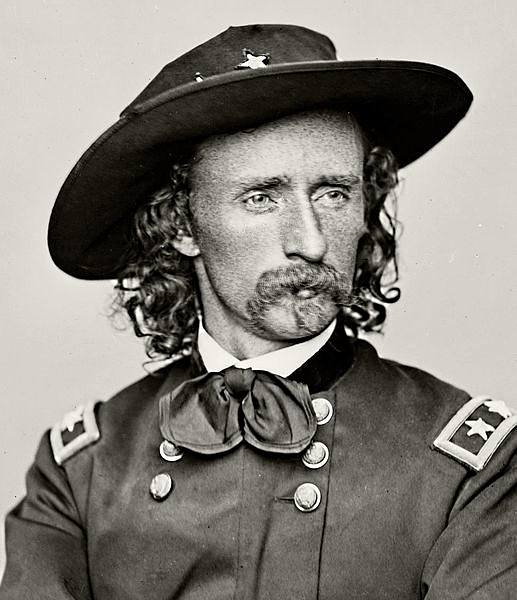
General Custer

Erratic bosses are a disaster in the workplace. Occasionally they are deadly as some cavalry troopers learned in the summer of 1876.

In the summer of 1876, three cavalry columns chased Lakota, Cheyenne and Arapaho Indians across the northern Plains into modern-day Montana. The goal was to confront the Indians, beat them in battle, and force the survivors back to their reservations.

One of the columns was led by “General” George A. Custer whose actual rank was lieutenant colonel. Custer had been temporarily promoted to general during the American Civil War and was a bona fide hero of that war. But by 1876 his antics had severely dented his career prospects.

He was a shameless self-promoter which irritated his military bosses. His troops were disenchanted with his habit of ignoring the rules personally while enforcing them against his subordinates. Then he annoyed President Grant by testifying to Congress about corruption in the Grant administration. (Publicizing dirty linen never wins favor with the boss, especially when it’s true.) Grant fired Custer as commander of the 7th Cavalry and Custer had to beg friends to help him get reinstated.

So when Custer went on patrol a few months later he was trying to restore his career prospects. Custer arrived at the Little Bighorn River (a/k/a the Greasy Grass) near the Indian encampment and immediately disobeyed his orders to wait for the other two cavalry columns. He also ignored the reports from his Indian scouts about the size of the Indian camp. Indian warriors numbered between 1000 and 5000, depending on which source you read.

On June 25, 1876, Custer ordered an attack on the Indian encampment and rode into history. Cavalry forces totaled 500 men and 208 died with Custer. News of the defeat ruined the July 4th centennial celebrations back east.

Custer is a hero today because his widow lived until the 1930’s. She spent every waking moment blaming others for the defeat and insisting that Custer was the greatest hero of all times. She ensured that Hollywood’s version of the tale would show Custer as the hero.

What’s the moral of the story? Erratic bosses are bad for employee health, although, fortunately, it doesn’t usually get them killed these days. Erratic bosses damage a company’s bottom line by destroying employee morale and lowering productivity. They also thin the ranks as top performers vote with their feet, leaving only demoralized or unmarketable employees.

About Norma Shirk

Norma started her company, Corporate Compliance Risk Advisor, to help employers create human resources policies for their employees and employee benefit programs that are appropriate to the employer’s size and budget. The goal is to have structure without bureaucracy. Visit Norma’s website: www.complianceriskadvisor.com/.

Like what you’ve read? Feel free to share, but please… Give HerSavvy credit. Thanks!

2 Comments

Filed under Business Savvy

Considering George Washington

George Washington

At Presidents Day for 2015, radio host Barbara Dab interviewed attorney and historian Norma Shirk.  Enjoy!

About Barbara Dab:

Barbara Dab is a journalist, broadcast radio personality, producer and award-winning public relations consultant. She currently hosts two radio shows locally in Nashville, TN. Check out her website at http://www.zoneabouttown.com.

Barbara is also creator of The Peretz Project: Stories from the Shoah: Next Generation. Check it out at http://www.theperetzproject.com If you, or someone you know, is the child of survivors of the Shoah, The Holocaust, and would like to tell your story please leave a comment and Barbara will contact you.

Like what you’ve read and/or heard? Feel free to share, but please… Give HerSavvy credit. Thanks!

Leave a comment

Filed under Business Savvy, Fun Savvy

Am I Beautiful?

Beautiful

Perhaps the better question to ask is, “How do we each reach our definition of beauty?” Standards of beauty have varied radically over the centuries and are more a statement about our cultural values than our actual physical beauty.

Beauty is a visible symbol of socio-economic status. In ancient Egypt, wealthy men and women shaved their heads and wore wigs. At parties, they removed their wigs and set scented wax cones atop their heads so that they dined with a beautiful scent wafting around them. (There are no tomb paintings showing wax falling in the diner’s eyes, unfortunately.)

During the Renaissance, a bit of plumpness meant your family was wealthy enough to eat on a regular basis, unlike poorer people who often starved. That’s why Titian’s female models are, how to say it politely, fat, by modern standards.

In the 17th and 18th centuries, higher income people tended to be pale.  Pallor separated them from the ruddy-cheeked farmers and other hoi polloi who did manual labor. After the Industrial Revolution, the beauty standards reversed. Poorer people were pale from long hours on the factory floor, while higher income people discovered the joys of nature and got a tan.

Today, our standard of beauty dictates that we must be wrinkle-free, slender and physically fit.  Higher income people can afford the Botox and cosmetic surgery to look young. They also have the disposable income to pay for a healthier diet and for the exercise programs to maintain a “healthy” weight. Meanwhile, poorer people have wrinkles, eat a less healthy diet and probably lack the time, mental energy and money needed for a regular exercise regimen.

Our modern standard of beauty also addresses our fear of dying. If we work out constantly, we will look and feel young and hopefully avoid chronic diseases that lead to “premature death” as the TV ads euphemistically put it. This is not a new obsession. Fear of growing old and dying was chronicled 4000 years ago in the “Epic of Gilgamesh.”

So what can we do if our personal beauty doesn’t match (or even come close) to society’s standard? Find an historical era where the standard of beauty matches your body type. Then buy some chocolate and a bottle of wine and salute your beauty. Am I beautiful? You bet!

About Norma Shirk

Norma started her company, Corporate Compliance Risk Advisor, to help employers create human resources policies for their employees and employee benefit programs that are appropriate to the employer’s size and budget. The goal is to have structure without bureaucracy.

Like what you’ve read? Feel free to share, but please… Give HerSavvy credit. Thanks!

Leave a comment

Filed under Self Savvy

Eleanor of Aquitaine

Eleanor of Acquitaine

Eleanor of Aquitaine was the most powerful woman in medieval Europe, due to her inheritance and her marriages.  She “leaned in” long before modern women were urged to do so.

Eleanor was born in 1122 as heir to the Aquitaine, which was roughly a third of modern France.  At the age of 15 she married Louis VII, King of France. Eleanor’s life as Queen of France is notable for three things. First, she invited herself along on the Second Crusade which outraged the political and religious leaders of the day.  Second, she had only daughters with Louis. Third, at the age of 25, Eleanor fell madly in love with a younger man, Henry Plantagenet. He was 18 years old when they met and he had prospects that far exceeded what Louis could offer.

Eleanor convinced the pope to grant her an annulment so that she could marry Henry.  After Henry became King of England, they controlled territory stretching from Scotland to the Pyrenees. Louis was left with little more than Paris and its surrounding counties. To compound Louis’ humiliation, Eleanor’s new marriage produced sons including, Richard the Lion-Hearted and John (of Magna Carta fame).

Eleanor ran their vast kingdom while Henry II was off fighting wars with the Scots, Welsh, Irish, and French.  But their marriage eventually soured and Eleanor conspired with her sons against Henry and almost won a civil war against him. In retaliation, Henry imprisoned Eleanor in one of his more inaccessible castles.  She was not freed until Henry died.

Eleanor lived for 82 years and remained feisty to the end. At the age of 80, she crossed the Alps on a trip to the Norman kingdom in Sicily to find a husband for one of her granddaughters.

For a fictionalized account of Eleanor and Henry watch the movie, “The Lion in Winter”, starring Kathryn Hepburn and Peter O’Toole (and a young Anthony Hopkins as Richard).  The movie captures the soap opera behavior of the Plantagenet’s although it compresses actual historical events.  For a biographical study, read “Eleanor of Aquitaine and the Four Kings”, by Amy Kelly.

About Norma Shirk

Norma started her company, Corporate Compliance Risk Advisor, to help employers create human resources policies for their employees and employee benefit programs that are appropriate to the employer’s size and budget. The goal is to have structure without bureaucracy.

Like what you’ve read? Feel free to share, but please… Give HerSavvy credit. Thanks!

Leave a comment

Filed under Fun Savvy

The Female Pharaoh

Hatshepsut

Once upon a time, Egypt had a female pharaoh.  No, I’m not referring to Cleopatra. I’m referring to Hatshepsut who lived at the height of the ancient Egyptian empire, in the 18th Dynasty of the New Kingdom, the same dynasty that produced Akhenaten and King Tut.

Hatshepsut was the daughter of a pharaoh and chief royal wife to Pharaoh Thutmose II.  When her husband died, Hatshepsut appointed herself regent to her stepson, who, being a boy, would naturally take the throne.  Not satisfied with the role of regent, she proclaimed herself pharaoh.  Since “pharaoh” is a male gender word in ancient Egyptian, she became the female (gender male) pharaoh.  If your brain cramps at this concept, consider how the poor Egyptians felt at this twisting of the “natural order.”

Hatshepsut refused to abdicate in favor of her stepson, Thutmose III, when he reached adulthood. Instead, she sent him off on military campaigns to expand the borders of the Egyptian empire.  He became the greatest warrior-pharaoh in ancient Egypt, expanding the Egyptian empire from modern Sudan to modern Turkey.

Hatshepsut and Thutmose III made a great team with her administrative skills and his military skills.  But when Hatshepsut died, Thutmose III immediately began eradicating any trace of her as the female pharaoh, chiseling her name off her monuments and deleting her from the “king” list of pharaohs.

Early archaeologists (all European men) theorized that Thutmose III was taking revenge against his stepmother for blocking his rightful place to the throne.  But pharaohs had a habit of replacing a predecessor’s name with their own, since that was faster than building a new monument.  A different theory widely accepted today is that Thutmose was trying to restore the “natural order” by deleting references to a female pharaoh.

What can we learn from Hatshepsut today?  Challenge yourself to achieve great things even if that means going against the so-called natural order of the universe.  Hatshepsut’s achievements include one of the most beautiful temples in Egypt at Deir el Bahri.

About Norma Shirk

Norma started her company, Corporate Compliance Risk Advisor, to help employers create human resources policies for their employees and employee benefit programs that are appropriate to the employer’s size and budget. The goal is to have structure without bureaucracy.

Like what you’ve read? Feel free to share, but please… Give HerSavvy credit. Thanks!

Leave a comment

Filed under Fun Savvy

Happy New Year


L'Shanah Tova

This week marks the Jewish New Year, Rosh Hashanah and the Day of Atonement, Yom Kippur.  For the Jewish community these are the most significant and most somber days of the year.  The 10-day period is marked by self-reflection, prayer, spirituality and perhaps most important, asking for forgiveness.  It’s notable that this time falls in the middle of the secular calendar, giving us another opportunity to refocus and recharge our batteries as we bid farewell to summer and prepare for the colder months ahead.

As I was anticipating this year’s holiday season and wondering, as I always do, if I will find the inspiration I seek, I received an email from a dear friend.  This friend has been through a tough year marked by a contentious divorce, the challenges of aging parents and worries about college-age children.  At the end of her email, she relayed to me some things she’s learned about herself this year.  It was filled with hope and optimism and…aha! Therein lay my inspiration.  So here I share with you some of my resolutions as inspired by my lovely friend of 20 years.

  1. Find time to enjoy simple pleasures. I am an adventure seeker and a high-energy person (duh!).  I will give myself permission to take a walk in nature without the goal of burning those extra calories.  I will take a bubble bath and not take work along with me.  I will listen to the music I really love rather than whatever is on the radio at the moment.
  2. Read more. Well, actually I read quite a lot, most of it news-related.  In fact I am quite a bookworm and love to get lost in a good book, but rarely allow myself the time.  This year I will read for pleasure, maybe even look for a book club.  Whoa!  Baby steps!
  3. Spend time with good friends. Hmmm, my life is already filled with plenty of amazing people.  But I find I tend to neglect spending quality time with those special friends who really “get” me.  These are the folks some refer to as “family of choice,” the ones who love me unconditionally and who, by their mere presence in my life, give me courage.
  4. Get more rest. This is perhaps the toughest goal of all.  See resolution #1.  High-energy people do not like to sleep much!  I usually subscribe to the “I’ll sleep when I’m dead,” theory.  However as I get older, I find I really do feel better with more rest.  So, without giving it an actual number, I pledge to add more rest to my days, or nights, depending on how it works out.

A short list, right?  Well I’ve learned it’s best to break my goals down into manageable chunks.  I find the spiritual goals are often the hardest to attain and to keep, but are also the most satisfying.  I invite you, even if you are not Jewish, to take this time to think about your spiritual goals and share them with us here at HerSavvy.

One more thing.  An important part of this season for Jews is asking for forgiveness.  So, if I have wronged you or caused you pain this past year, I am truly sorry and ask for your forgiveness.  And as we say in our tradition, May you have a sweet year filled with health, joy and prosperity.

About Barbara Dab:

Barbara Dab is a journalist, broadcast radio personality, producer and award-winning public relations consultant. She currently hosts two radio shows locally in Nashville, TN. Check out her website athttp://www.zoneabouttown.com.

Barbara is also creator of The Peretz Project: Stories from the Shoah: Next Generation. Check it out at http://www.theperetzproject.com If you, or someone you know, is the child of survivors of the Shoah, The Holocaust, and would like to tell your story please leave a comment and Barbara will contact you.

Like what you’ve read? Feel free to share, but please… Give HerSavvy credit. Thanks!

Leave a comment

Filed under Self Savvy

The Scarlet Sisters

Victoria Woodhull

Victoria Woodhull and her sister,Tennessee Claflin Tennessee (“Tennie”) Claflin are the Scarlet Sisters in a  new biography by Myra MacPherson.  Today they are a footnote in America’s culture  wars but in late 19th century America they were famous for shocking people with their  lifestyle and their causes.

Tennie argued that society was hypocritical for ostracizing women who became  prostitutes while their male clients faced no social stigma. She believed this double  standard contributed to the spread of venereal diseases by discouraging women from  seeking medical treatment for fear of being accused of prostitution.  Victoria advocated  “free love” by which she meant no-fault divorces and a fairer division of marital property. They both favored voting rights for women but were disowned by the women’s suffrage movement for repeatedly going off-message to talk about other social issues. The suffragists feared (correctly) that talking about other social inequities would stiffen resistance to voting rights.

The sisters were also booted out of the Communist Party on the orders of Karl Marx for advocating an end to child labor, an 8-hour workday, a minimum wage and equal pay for women and blacks.  Marx wanted a proletariat revolution, not decent working conditions with racial and gender equality.

Their lifestyle was as scandalous as their social views. Victoria shared her house with her first and second husbands, until the former died of alcoholism.  Their extended family included an arsonist father, a sister who was a prostitute and a drug addict, and several blackmailers, including their mother.  Since the family liked to sue each other, the tabloids had a steady supply of sordid details to report.  Reality TV seems tame by comparison.

Most of the causes advocated by the Scarlet Sisters are now socially acceptable and a matter of labor law, but arguably, nothing would have changed without radicals such as these women to challenge the status quo.  That is the main reason for remembering them today.

We need the radicals who drag us out of our comfort zone and force us to confront established ideas of fairness.  Somewhere between the radicals’ extremism and the proponents of the status quo, there is a middle ground to compromise and make life fairer for all.

About Norma Shirk

Norma started her company, Compliance Risk Advisor, to help employers create human resources policies for their employees and employee benefit programs that are appropriate to the employer’s size and budget. The goal is to have structure without bureaucracy.

Like what you’ve read? Feel free to share, but please… Give HerSavvy credit. Thanks!

Leave a comment

Filed under Fun Savvy, Self Savvy

Frankenstein’s Mother

Frankenstein

Mary Wollstonecraft was an unusual woman. She left home at the age of 19 to escape her bullying father and his many failed business ventures.  She worked as a school teacher and a governess before settling on a writing career.

Wollstonecraft’s political writings focused on the hot topic of the day, the French Revolution. She was a “republican” supporting the ideals of the French Revolution. In 1790 she became the first intellectual to challenge Edmund Burke’s Reflections on the French Revolution when she published Vindication of the Rights of Man. Most intellectuals, however, sided with the conservative Burke as news spread of the violent Reign of Terror.

Wollstonecraft’s social writings also diverged from the mainstream.  In 1792 she published Vindication of the Rights of Woman, which advocated gender equality and better education of women. She believed a better education would enhance their self-respect and self-worth. She also published a novel in which the women enjoyed sex and considered it ridiculous to pretend otherwise.  (She beat Erica Jong by almost 200 years.)

Wollstonecraft’s private life shocked conventional society as much as her political and social views. While living in Paris she met Gilbert Imlay, an American businessman, and agreed to be his common law wife. However, Imlay deserted her after the birth of their daughter, Fanny.

Wollstonecraft returned to London and eventually moved in with William Godwin, another political and social radical. They both despised marriage as tyranny but married when she became pregnant.  Wollstonecraft died soon after at the age of 38 about a month after the birth of their daughter Mary.

Daughter Mary is known to us as Mary Shelley, author of Frankenstein. Mary Shelley was overshadowed in her own life by her parents’ notoriety. It left her feeling like a freak and a social outcast, much like the Creature in her famous novel.  Psychologists might be able to explain it better; for the rest of us, it means that Mary Wollstonecraft was Frankenstein’s mother.

About Norma Shirk

Norma started her company, Compliance Risk Advisor, to help employers create human resources policies for their employees and employee benefit programs that are appropriate to the employer’s size and budget. The goal is to have structure without bureaucracy.

Like what you’ve read? Feel free to share, but please… Give HerSavvy credit. Thanks!

Leave a comment

Filed under Fun Savvy

Rebel With A Cause


Emily Dickinson


Emily Dickinson was a rebel. She’s an excellent role model for any woman (or man) who wants to demur from the mainstream but not be handled with chains, to paraphrase one of her more famous poems.

Her rebellion was unobtrusive, quiet, and almost invisible at first viewing. Consider her poetry; She wrote poetry that often did not rhyme. The convention in her day was that poems consisted of four-line stanzas in which alternating lines rhymed.  Her style was so radical that it was rejected by one of the leading poets of the day. The rejection must have crushed Emily because she never again submitted a poem for criticism or publication and her poetry was first published after her death. Now her non-rhyming style serves as a  transition to the free-form style prevalent with today’s poets.

Her poetry memorializes her rebellion against the constrictions in her life. One widely  anthologized poem begins with an observation (paraphrasing again) that people who fight silently are braver than those who fight openly as soldiers. This sentiment will resonate with anyone who has fought an up-hill battle against oppressive authority or stupid social conventions.

Emily rebelled by using satire in her poetry. Her satirical eye was as sharp as Jane’s Austen’s, but perhaps not as gentle. One of her poems pokes fun at a preacher who preached so long on a broad topic that he made it narrow. We all love to skewer pontificating bores, but we rarely do so as elegantly as Emily.

Emily was also a rebel in her personal life. At a time when marriage and motherhood was the only socially acceptable career for women she remained unmarried. She carved out an unofficial career as a poet.

I discovered the rebellious life of Emily Dickinson when I began reading my copy of her collected poems, bought long ago and forgotten on the shelf. I never realized how radical she was when I was forced to read her poetry in English literature class. Now I want to become a rebel like Emily Dickinson.

About the author:

Norma Shirk helps employers create human resources policies for their employees and employee benefit programs that are appropriate to the employer’s size and budget. The goal is to have structure without bureaucracy.

4 Comments

Filed under Fun Savvy

In the Middle of Nowhere

Letchworth State ParkLetchworth State Park is in upstate New York in the middle of nowhere. It can only be reached via secondary roads from Rochester or Buffalo.  I first visited the park on a school field trip.

I love the park because I’m a history buff and there’s plenty of history in the park.  On our school trip we visited the pioneer and Seneca Indian museum and the restored Seneca Council House. Near the Council House we saw the statue of a truly remarkable woman named Mary Jemison.

Mary’s family emigrated from Ireland in the early 1700’s. After her family died in a frontier raid, a common occurrence in those days, she was adopted by the Seneca tribe. At the time of her adoption into the tribe Mary was about 15 years old. She spent the rest of her life as a member of the tribe and her descendants can still be found among them.

Mary farmed land that is now within the borders of the park.  Traces of her life and farm remain, including a log home built for one of her daughters. Mary is buried in the park near the land she used to farm.

Of course, not everyone cares about history as I do. So if history is not your thing, there’s plenty of natural beauty on display in the park.  The primary natural attraction is the waterfalls on the Genesee River.  The river is shallow but it narrows into a deep gorge that descends through a series of three waterfalls. At the lower falls, a stone bridge spans the river gorge allowing a wonderful view upstream of the middle falls.

If you ever find yourself in the middle of nowhere near Buffalo or Rochester, consider taking a side trip to Letchworth State Park. You can eat lunch at the Glen Iris Inn, formerly the home of William P. Letchworth who donated the park land. Then take a stroll to the nearby historical and natural sights in the park.  It’ll be worth the trip, I promise!

Leave a comment

Filed under Fun Savvy