
Tag Archives: health

The Other Side of the Couch – But I Don’t Want to Change!

Change

Some time ago I was working with a couple who were struggling with some issues in their marriage.  The wife was unhappy with how things were going in the relationship, and she wanted things to be different.  The husband was quite satisfied with how things were going, and in the face of his wife’s pressure, he finally erupted in the session with this statement:  “I DIDN’T GET MARRIED TO CHANGE MY LIFE!”

Regardless of the rights and wrongs of this particular couple’s issue, the husband’s impassioned statement has long stayed with me.  How many times in my own life have I been faced with the need to change – whether due to external circumstances created by another person’s need for change, or due to internal pressures requiring me to move in new directions.  The universality of these experiences, however, is that change is not often welcomed by human beings with open arms and a wide embrace.  It is more often encountered with reluctance and with some degree of foot-dragging.

And yet, change is inevitable.  We grow up.  We age.  Friends and family come and go.  Our bodies become different over the years.  Our understanding grows and changes (if we allow ourselves to engage in the process of self-examination.)  The reality is that the opposite of change is stasis – or death.

Rosabeth Moss-Kanter, author of The Change Masters (1983), spoke to the issue of change in corporations, essentially pointing out that corporations that embrace change are successful; those that do not either struggle or fail.  Her book points out this essential truth:  If you don’t master change, change will master you.

So how do I master this inevitable process?  I react a bit to the word “master” – I would substitute “live with” or “embrace” or “lean into” (thank you, Sheryl Sandberg).  I want to experience these processes as ways through which I am able to become more fully present with myself and with my world.  By acknowledging that change is happening, by looking it squarely in the face rather than being in denial about it, I am able to work with it rather than fight with it, and therefore more effectively live the life I want to live.

Some tips about embracing change:

  1. Identify the changes that are going on in your life.
  2. Decide how you want to relate to those changes.
  3. Choose changes that you want to make for yourself.
  4. Find support and accountability to hold yourself to the path that you have chosen.
  5. Enjoy the ride!

About Susan Hammonds-White, EdD, LPC/MHSP:

Susan is a communications and relationship specialist, counselor, Imago Relationship Therapist, businesswoman, mother, and proud native Nashvillian. She has been in private practice for over 30 years. As she says, “I have the privilege of helping to mend broken hearts.”  Contact Susan at http://www.susanhammondswhite.com

Like what you’ve read? Feel free to share, but please… Give HerSavvy credit. Thanks!

Leave a comment

Filed under Self Savvy

The Other Side of the Couch – How to Say “No”

Stress

Every now and then a period of time arises in my life that results in hand-wringing and gnashing of teeth, accompanied by thoughts such as, “How could this have happened again?” and “What were you thinking?” and “Were you even thinking?”   This is usually the result of having said, “Yes,” to too many different projects, all of which for some odd reason all need to be completed within the same (already packed) time period.   This is what I used to call in my college days a “Pressure Period.”  The perplexing part of this for me is that I am light-years past college, and the same kind of thing keeps on happening on an all-too-regular basis.

I have strategies for dealing with it when it happens – chunk it down, one step at a time, do the next right thing, this too shall pass.  All of these strategies work to some degree, and the period of time passes and it all gets done.  However, what I want is a change in the pattern.  I want it NOT to happen.

To make that happen, I have to be really honest with myself and with what I am committing myself to taking on.  For example, I am currently the president or leader of three organizations – two are local and one is national.  I didn’t plan to be the one in charge of these groups all at the same time – it just turned out that way.  It’s as though when I am asked to take a certain role, everything other than my ability to do the job and my desire to do it well and my knowledge that I can do it well recedes.  I can only see that one thing that is ahead of me  All the other things that I do are not present as I contemplate this possibility.  I do choose to say yes, and I often say it quickly, without taking time to consider the impact on other areas of my life.

The result of this pattern is that I stay very busy.  I am sure that staying busy is serving some purpose in my life, but I won’t know what that purpose is unless I allow myself to become less busy.  Becoming less busy is going to involve saying, “No.” – and saying no is a skill I need to practice.

So – here are some ideas I plan to try:

  • Say maybe.
  • Sleep on any decision.
  • Make a blanket rule about saying, “Yes,” to anything at all for “x” period of time, no matter how good it sounds.
  • Be ok with changing my mind.
  • Understand that I am not the only person who can do a task. I am not irreplaceable (Wow – how arrogant to even think such a thing).
  • Breathe
  • Be compassionate to the part of me that wants to say yes, and curious about what it would be like to be less busy.

I will let you know how it goes.  In the meantime, I’d better get busy….!!!

About Susan Hammonds-White, EdD, LPC/MHSP:

Susan is a communications and relationship specialist, counselor, Imago Relationship Therapist, businesswoman, mother, and proud native Nashvillian. She has been in private practice for over 30 years. As she says, “I have the privilege of helping to mend broken hearts.”  Contact Susan at http://www.susanhammondswhite.com

Like what you’ve read? Feel free to share, but please… Give HerSavvy credit. Thanks!

Leave a comment

Filed under Business Savvy, Self Savvy

The Other Side of the Couch – Letting Go

Grief

I received the news yesterday that one of my dearest friends, one of those friends that has touched your life in a thousand ways, unexpectedly succumbed to pneumonia.  She had been battling cancer for some time, and she had started on a new kind of chemotherapy.  I knew that she had been struggling with side effects, but the news that she had not survived was both shocking and so very sad.  As I face this grief, I notice that is a familiar experience now – the weight in the chest, the tears that lurk behind the eyes, the feeling that nothing much matters.  I have been here before.

Any loss recapitulates all the other losses – and as we live life longer, those losses indeed pile up.  I believe that one of the lessons that all human beings are called to face is that of how do we let go.  When a loved one has moved beyond us, as will happen if we live long enough, how do we go forward?

Perhaps one way of looking at this is NOT to go forward, but to stay still. The shock of loss is immobilizing at first, and for good reasons.  We are not thinking clearly; our rational mind has been overturned, and we are living in – swimming in – the emotional sea of grief.  I would wish for all space, quiet, support, time.

David Whyte, a poet and author whose work has been very meaningful to me, has written a wonderful book called Consolations.  He chooses 52 words and writes essays on each.  One of his words is Heartbreak.  Below is an excerpt.

David Whyte

HEARTBREAK

“…If heartbreak is inevitable and inescapable, it might be asking us to look for it and make friends with it, to see it as our constant and instructive companion, and even perhaps, in the depth of its impact as well as in its hindsight, to see it as its own reward. Heartbreak asks us not to look for an alternative path, because there is no alternative path. It is a deeper introduction to what we love and have loved, an inescapable and often beautiful question, something or someone who has been with us all along, asking us to be ready for the last letting go.”

‘HEARTBREAK’ Excerpted From CONSOLATIONS:

The Solace, Nourishment and Underlying Meaning of Everyday Words.

© David Whyte and Many Rivers Press 2015

Now Available http://davidwhyte.stores.yahoo.net/newbook.html

As I think of my friend, and experience the heartbreak that comes with my loss of her, I am asking of myself the opportunity to sit with my heartbreak, to be with it and with her, to remember, to regret, just to be with the precious moments that we did have, to grieve those that we will not have, as I allow that piece of my heart that belonged to her to open, to grieve, and to let go.

About Susan Hammonds-White, EdD, LPC/MHSP:

Susan is a communications and relationship specialist, counselor, Imago Relationship Therapist, businesswoman, mother, and proud native Nashvillian. She has been in private practice for over 30 years. As she says, “I have the privilege of helping to mend broken hearts.”  Contact Susan at http://www.susanhammondswhite.com

Like what you’ve read? Feel free to share, but please… Give HerSavvy credit. Thanks!

2 Comments

Filed under Self Savvy

The Other Side of the Couch – Is Your Brain High Jacked?

Limbic Brain

I had an odd experience the other day.  I had made an appointment for an orientation to a wellness center, but when I arrived at the appointed time, my name could not be found in the computer. A little background would be in order – since I have a hyphenated last name, computers often struggle with me. However, they tried all possible combinations and nothing came up.  I was offered the opportunity to  a) come back an hour later, b) reschedule, or c) receive a free personal training session as a compensation.

What was interesting to me was my reaction.  I became tearful; my voice began to quiver; I stated that I was irritated and upset and that none of those options were acceptable, and I walked out.  As I walked to the car, I felt my heart pounding, and when I got to the car, I got in, slammed the door, and tried to figure out what on earth had happened.  I was reacting to this computer glitch as though I had been personally attacked and I was feeling hurt, powerless and angry.  My brain had been high jacked!

I knew that I was in the grip of an adrenaline rush powered by a variety of neurochemicals and that I was not responding rationally.  I also knew that something was powering this that was bigger than a computer glitch.  So I took a few minutes to sit with myself – but nothing came up.  I was still distressed.  I decided to leave and to check this out when I was a bit calmer.

Later, I looked again at what had happened and I discovered the iceberg beneath the seemingly insignificant experience.  For me, the iceberg included ambivalence about committing to an exercise program based on fear of injury (old stuff), a story that I was telling myself that said something like, “You’ll never be able to do this right. Why are you even trying?” (self-judgment), and a sense of hopelessness about my body.  Wow!  What I found out was that even getting in the door of this wellness center had been a huge stretch and that I was carrying a lot of self-judgment that was activated by this small disappointment.

I called and made another appointment, and I will take that free session as compensation!

This kind of experience is actually quite common in human beings.  Our limbic system, ruled by the amygdala and based on fear, can high jack our logical, thinking brain all too easily.

What can you do when your brain is high jacked?

  1. Recognize it – you want to react much more strongly than the situation warrants; you have physical responses – heart pounding, breathing quickened, voice changes; you want to react impulsively.
  2. Leave the situation if possible – take a break; drink water; go for a walk.
  3. If you are with a partner or a friend, explain that you need a time out.
  4. When the physical symptoms pass, sit with yourself and listen without judgment. Your body and brain know a lot about what has happened, and if you listen to yourself, you will learn.
  5. Do what is necessary to repair the situation.

Careful listening and self-compassion are the keys to a better understanding of your own brain.

About Susan Hammonds-White, EdD, LPC/MHSP:

Susan is a communications and relationship specialist, counselor, Imago Relationship Therapist, businesswoman, mother, and proud native Nashvillian. She has been in private practice for over 30 years. As she says, “I have the privilege of helping to mend broken hearts.” Contact Susan athttp://www.susanhammondswhite.com

Like what you’ve read? Feel free to share, but please… Give HerSavvy credit. Thanks!


3 Comments

Filed under Self Savvy

Going Natural, Part II

Linda SackLast month we delved into the world of wearing our natural hair color.  One native Nashvillian set herself apart with her beautiful silver hair.   She entered a contest for a skin care line who wanted a representative who was over 40.  Tish Hooker, later becoming known simply as Tish, was a beautiful 45 year-old who had stopped coloring her hair at 42.  From the prominent Fort family of Nashville, I knew her from local media and she wore the prettiest salt and pepper hair I had seen.  In the 80’s, I recall discovering her picture in a Germaine Monteil cosmetics advertisement in a national magazine, Vogue, Elle, or Glamour.

Wearing a full-length gown, I thought how beautiful she was. Today she is still strikingly beautiful.  Tish recalls shocking people with her silver hair when everyone else was coloring their hair.  You can read about how she took a gamble with her life and wound up in New York, and other multi-faceted life experiences in this 1984 article in The Spokesman – Review.

Since writing this, I have asked other friends who have gone natural about their reasons.  Kate Stephenson, an attorney with the best hair around, says her motivation was that she was tired of paying so much to having her hair colored and when she realized underneath was white and that it might be interesting, she stopped coloring at about age 45.  Having begun seeing white hair in her 20’s, she colored her hair for many years.  Using blonde at the end, she simply stopped coloring her short hair and it easily grew out.  Not remembering reactions of other people at the time, she gets lots of compliments on her short white hair today and has no regrets at all. Kate says to anyone thinking about doing it, “Go for it. Natural is good. We are what we are.”

Photo: Linda Sack and her lovely natural hair color.

About Renee Bates

Renee is the executive director of the non-profit, Greenways for Nashville, a member based organization. In addition to growing private support for the trails and green spaces, she enjoys oil painting, hiking, nature and working in the garden. Renee is married to David Bates of Bates Nursery and Garden Center, a 3rd generation business begun in 1932 by a savvy woman, Bessie Bates.

Like what you’ve read? Feel free to share, but please… Give HerSavvy credit. Thanks!

1 Comment

Filed under Business Savvy, Self Savvy

Going Natural

Kate Stephenson and Mark BatesIt is being discussed more and more.  Women in their 40’s, 50’s, and 60’s are deciding to cut the hair color and return to their ever lightening roots.  I’m curious, so I’ve asked some friends who have stopped coloring to share their experience with me.

Linda had been coloring her hair from her 20’s.  Because it grew so fast, she would have a color line within a week or so, and needed to color every 2 weeks.  About 6 years ago she decided to stop and go back to her own hair color, which she calls silver, or platinum.  When I asked her why, she said it was because of the pain it was causing…the physical pain from the chemicals, and the emotional pain, being so tired of feeling self-conscious when the gray would start growing out.  “At the time I was dating someone who was not in favor of the silver.  Soon after the relationship ended, I chopped off all of the color damaged, dead hair and took it as short as I could,” adding that it was a bit of a shock, even to her.  When I asked her if she saw any downside to going natural she offered, “After I started growing the silver out I’ve had nothing but compliments. The only reason that someone would not get compliments is if they didn’t style their hair.“

When I asked her what advice she would give to anyone thinking about taking the plunge she said, “If they had darker hair, I would encourage them to start by going with some highlights, blonde goes to silver easier– because when you go from dark to silver, it is too difficult, and with highlights you won’t have that nasty skunk line.  Get as close to platinum as possible.  Otherwise, chop it all off.  It felt amazing.”

Because Linda has beautiful olive skin, hazel eyes and looks much younger than her years, when she was coloring her hair blonde she got hit on often by younger men, fifteen to twenty years younger.  Now that she has gone silver, that doesn’t happen anymore.  She is grateful.  The younger men were not always the most tactful and it would often be hurtful when they found out her age.

“I didn’t feel natural, or pretty, coloring my hair.  I am so grateful that I listened to my intuition, and not my ex-boyfriend.”  Linda adds that just a little bit of platinum highlight keeps it light around her face.  She shares that her hair is much healthier and thicker, another reason to be very happy about the decision to go natural.

When I asked Linda how her business life has been affected she dropped her voice to that solid, personal truth telling tone, “I feel embracing my natural hair color and doing what I wanted to do has brought me in line with being authentically who I am.  This has made me feel more comfortable and has led me to coming into my own.  People see my natural hair and expect me to be a more real person, or maybe I am a more real person.“  Linda Sack is a licensed message therapist and came to that profession after she made the decision to stop coloring her hair, leaving a corporate career behind, and feels that massage therapy is perfect for her.

My lovely friend Marilyn Shriver, who colored for over 25 years, and has the most beautiful white hair now, says, “What kept me coloring was that someone told me that if I let my hair go natural, because I was fair, I would disappear from the neck up.”   This turned out to be mis-information.  She says, “I get more compliments on my hair since I stopped coloring it.  My obsession with hair has diminished.  The hair is much better hair and I have accepted that I am the age that I am.  Everybody’s aging at the same rate.”

So, I am thinking about it more.  The first reason is because my hair is thinning from the chemicals.  Another, besides embracing the real, I’d like to simplify my life and spend time doing the things I enjoy most.

This is part one of a two-part article.  Come back next month as I continue the exploration of going natural with a native Nashvillian who was selected from a group of 7,000 women to represent a world wide cosmetic company, not entirely because of her beautiful platinum locks, but she wouldn’t have gotten the job without them.

About Renee Bates

Renee is the executive director of the non-profit, Greenways for Nashville, a member based organization. In addition to growing private support for the trails and green spaces, she enjoys oil painting, hiking, nature and working in the garden. Renee is married to David Bates of Bates Nursery and Garden Center, a 3rd generation business begun in 1932 by a savvy woman, Bessie Bates.

Like what you’ve read? Feel free to share, but please… Give HerSavvy credit. Thanks!
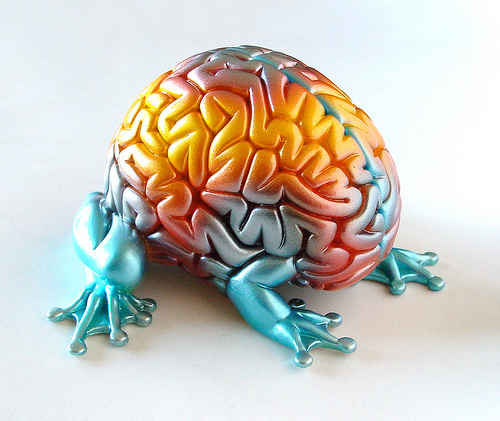
Photo Credit: Nfocus Magazine; Kate Stephenson & Mark Bates attend Authors in the Round Dinner, Humanities Tennessee

Leave a comment

Filed under Business Savvy, Self Savvy

The Road Ahead:  How I Stopped Making Excuses and Learned To Love, er, Like Running

Run.

I have a confession to make: I like running.

Not the most earth shattering admission, to be sure, but for me this is mind blowing.  You see, for most of my adult life I have had a love/hate relationship with this type of exercise and by that I mean mostly a hate relationship.  I have started running many times over the years, only to stop over and over for reasons ranging from tendonitis to a lack of time.  I have also invested in countless pairs of specialized shoes, fancy leggings, supportive bras and sweat-wicking socks.  Each of these also was a “culprit” for quitting.  The shoes just didn’t work with my plantar fasciitis, the leggings were too hot, the socks bunched up and the bras weren’t supportive enough.  You get the idea.

So what’s different this time, you ask?  I’ve been trying to figure that one out.  For starters, this past year I’ve packed on some unwanted pounds without changing much about my diet or lifestyle.  I’ve also been feeling sluggish and irritable and definitely not my usual perky self.  Added to all this is a general malaise and a desire for more challenge in my life.  I definitely want to recapture my energy and enthusiasm.  And while there is so much we can’t control, we can definitely control our exercise.  So off I went in search of some new physical challenge.

First in my quest was a personal trainer at the YMCA and a program of weight lifting and cardio, along with my regular Pilates regimen.  All went well for a couple of months and I really loved how my body was changing and becoming more toned and defined.  But one morning I awoke with neck pain so severe I could not move my head.  This continued for a couple of months and even with a lighter weight load, the pain and stiffness persisted.  So I stopped the weight training.

I have several friends who are runners and I began quizzing them on why they like it and how they train.  One friend calls running an “efficient” form of exercise.  She can accomplish some high level problem solving and planning while she runs.  Another runs so she can enjoy a foodie lifestyle with her husband.  Another just likes to sweat.  My weight trainer is also a runner and she didn’t start until after she turned 40.  She was my best cheerleader and encouraged me to just get out there and set small goals.

Once again, I invested in some great shoes, fancy leggings and a supportive bra and, joined by my new puppy Bentley, off I started.  The area around my house is very hilly and not much fun so after several weeks of hell, I headed to the local greenway, a flat nature trail that goes for miles.  The first day I decided to just run without tracking my speed or distance.  And I’m not going to lie, for the first 20 minutes or so I kept thinking of excuses to stop.  But I focused my gaze on the road ahead and kept going, Bentley at my side.  I’m not sure how far I ran that day before turning around and walking the last bit, but when I finished I felt great!  It was still hot and humid, but the feeling of accomplishment, of pushing myself to my limit, was exhilarating!

I’m now a couple of months into this running experiment and I have been tracking my speed and distance.  I’ve worked up to running 5 miles at a fairly good clip.  I’ve participated in two races, a 5K where I had my personal best time and a 5-mile where I ran and walked with my daughter.  I’ve lost weight, I sleep more soundly, I have found my energy and I feel like myself again.  I still spend the first mile or so thinking up reasons to stop, but so far I have been successful in keeping my gaze fixed on the road ahead, setting small goals to stay motivated and finishing what I started.  Efficient, challenging, good cardio; Sounds like life.

I really like running!

About Barbara Dab:

Barbara Dab is a journalist, broadcast radio personality, producer and award-winning public relations consultant. She currently hosts two radio shows locally in Nashville, TN. Check out her website athttp://www.zoneabouttown.com.

Barbara is also creator of The Peretz Project: Stories from the Shoah: Next Generation. Check it out at http://www.theperetzproject.com If you, or someone you know, is the child of survivors of the Shoah, The Holocaust, and would like to tell your story please leave a comment and Barbara will contact you.

Like what you’ve read? Feel free to share, but please… Give HerSavvy credit. Thanks!

Leave a comment

Filed under Self Savvy

The Other Side of the Couch: Worrying

Young Woman Biting Her Finger Nail


Are you a worrier?

So many people in this day and age are troubled by worry…worrying about what if this, and what if that…what will happen if this happens, how will I handle things if that…We spend precious energy on these what IFS, and too often in the process we lose track of the what NOW.

I spend many working hours with people who are troubled by many “what ifs.”  And it doesn’t help to be logical and explain that worrying isn’t very useful.  If worry could be affected by logic, it would not have the hold on us that it often does.

Worry, in many cases, is a message from our hearts (our emotional world) to our heads (our rational world) that is saying:  Be careful!  Watch out!  Take care!  Have you ever tried to be logical with a child who is frightened?  That’s about what it’s like when our rational brains try to tell our emotional hearts to calm down.

I have found it much more helpful to first accept the emotion:  “Of course you’re scared.  I understand that you’re worried about _____.”  It reminds me of being with my daughter when she was very young and was afraid of Gaston, the bully in Disney’s “Beauty and the Beast.”  I didn’t try to talk her out of her feelings; instead we found a ritual that involved telling Gaston to “Go away, scat, vamoose, you are not welcome.”  We did that together.  So the worry was met, not dismissed, witnessed, and together we created a different way of responding to it.

If you are worried, you might try:

  • Accepting the feeling
  • Taking a compassionate stance toward the part of you that is worrying
  • Creating a message of support that both witnesses and shifts the response.

Could change your head AND your heart!

About Susan Hammonds-White, EdD, LPC/MHSP:

Susan is a communications and relationship specialist, counselor, Imago Relationship Therapist, businesswoman, mother, and proud native Nashvillian. She has been in private practice for over 30 years. As she says, “I have the privilege of helping to mend broken hearts.”

Like what you’ve read? Feel free to share, but please… Give HerSavvy credit. Thanks!


Leave a comment

Filed under Self Savvy

The Other Side of the Couch 4: Depression, Untreated, Can Be Fatal

Sad Teenage Girl

About four weeks ago I started taking a medication called a beta blocker.  This medication is taken by many people, and many do well on it, but others do not.  One of the side effects of this medication is depression.  I turned out to be one of those people for whom even a tiny dose of this medication leads to a rapid descent into depression.  I wasn’t sleeping well. I was waking up exhausted;. My appetite was off, and I began to feel hopeless and unmotivated to handle my daily obligations.  I began to cry frequently, and I could not stop thinking about Robin Williams and his sad death.

I am a licensed professional counselor with years of experience in the field and I recognized pretty quickly that these were not normal experiences for me.  I know the difference between being blue and sliding into a major depressive episode and I was on my way to the latter.  I called my doctor, stopped the medication, and almost immediately (within two days) was back to my regular self.  I was still sad about Robin Williams’ tragic death, but I was also able to stop obsessing about it.

Robin’s suicide may have been influenced by a medication that he was prescribed for his early Parkinson’s diagnosis.  Many medications can have these kinds of side effects.  Sometimes depression just happens without any particular cause.  Sometimes prolonged stress can tip one over into a major depressive episode.

Knowing the signs that point to depression can save lives.  If you notice sleep and appetite changes, thinking over and over again about something without being able to let go of it, negative thoughts about yourself, including feelings of worthlessness or hopelessness, fatigue, lack of motivation (that “whatever” feeling), and especially thoughts about death (They would be better off without me; I’ll show them; They’ll miss me when I’m gone) or any kind of thought about planning what you would do to die, SEEK IMMEDIATE HELP.  Depression can be treated, but death cannot.

Depression can manifest in children and adolescents somewhat differently. Often restlessness and irritability are components of this illness in minors.

A great resource for help with depression and other mental illnesses is NAMI.  You can find great information at www.nami.org.  It’s worth reaching out for help, because help is available.  Depression is an illness, just like any other.  Treat it like an illness, and get help.

About Susan Hammonds-White, EdD, LPC/MHSP:

Susan is a communications and relationship specialist, counselor, Imago Relationship Therapist, businesswoman, mother, and proud native Nashvillian. She has been in private practice for over 30 years. As she says, “I have the privilege of helping to mend broken hearts.”

Like what you’ve read? Feel free to share, but please… Give HerSavvy credit. Thanks!


Leave a comment

Filed under Self Savvy

A Few Thoughts On Ebola and My Heroes

First identified back in 1976, Ebola has been a remote, almost mythical disease, affecting isolated jungle villages after contact with infected bats or monkeys and (rarely) laboratory workers handling the virus. The current perfect storm in regions of Guinea, Liberia, Sierra Leone, and Nigeria has the makings of a Hollywood horror film. For the first time, the virus has found its way into large urban areas, among impoverished communities without access to adequate health care or public health infrastructure. With resolution likely many months away, I thought it might help to share a little background and inspiration from some of the extraordinary people involved in fighting it.

CDC E bola

The Ebola virus doesn’t spread through the air, but is spread through infected blood and body fluids of a sick person. Unfortunately, the early sign of high fever can be mistaken for malaria or typhoid, meaning unsuspecting family members or healthcare workers can be infected if they don’t protect themselves. Once exposed, illness begins as little as 2 days or up to 3 weeks later. Although public education is everywhere, many people remain fearful of hospitals and their government, so they keep the ill at home, defying quarantine orders and continuing traditional burial practices, spreading the virus in the process. Healthcare workers are exhausted and overwhelmed with patients, ill-equipped to maintain perfect personal protection while caring for so many with so few resources; as a result, doctors, nurses and other healthcare providers have been hard hit in this outbreak. Even leading Ebola experts in these countries have succumbed in recent weeks.

The good news is that WHO and CDC disease control experts have arrived. One of my friends is using her infection control expertise to help health systems in Lagos, Nigeria, and many more experts are working around the clock back in Atlanta and in other countries. They are working to set up an effective surveillance system so we know where the disease is (and is not): this is the most critical first step in outbreak control. They are implementing other tried and true public health disease control measures capable of bringing this virus to heel. Others at CDC are refining detailed guidance for US healthcare providers, laboratories, and public health so we know just how to evaluate and manage ill travelers from the affected areas who might have Ebola.

To paraphrase Albert Camus from his 1947 novel The Plague: what we learn in time of pestilence is that there is more to admire about man than to despise. Dr. Kent Brantly and Nancy Writebol are two admirable American volunteers among those who refused to abandon the sick and dying, knowing they risked their lives by doing so.

I have read that Dr. Brantly, whose faith led him to serve the Liberian people in the mission hospital well before Ebola emerged, has told friends that his decision to stay with his Ebola patients was inspired by three young Hebrew boys described in the book of Daniel. When faced with the demand to abandon their commitment to God or endure death by fire, they replied to the Babylonian King: “If we are thrown into the blazing furnace, the God we serve is able to save us from it, and he will rescue us from your hand, O king. But even if he does not, we want you to know, O king, that we will not serve your gods or worship the image of gold you have set u
p.” (Daniel 3:16-18) Like his ancient Hebrew heroes, Dr. Brantly did not abandon his commitment in the fear of his own death.

I confess that I shed an indignant tear or two over the remarks of those who claimed, out of ignorance, that the US should not bring Dr. Brantly and Mrs. Writebol to Emory Hospital for expert care after all they had done. Ebola simply isn’t a threat to the US population. We know how to handle an Ebola patient safely at any modern hospital. Ignorance and fear need to be cured here, as in Africa, with good information to fight the rumors, and that’s part of my role in this outbreak.

We should not forget West Africa after these two American heroes leave the spotlight in triumphant health. As a former Epidemic Intelligence Service officer at the CDC, I know the CDC has at its disposal the resources, people, and outbreak know-how that is the envy of the world. I can tell you that public health folks, all the way down to your local health department, have been educating themselves and preparing to meet any need that could arise, however unlikely. This pestilence may yet be one of public health’s finest hours.

For the latest CDC information, visit: http://www.cdc.gov/vhf/ebola/

About Kelly L. Moore, MD, MPH

Dr. Moore is a public health physician specializing in preventive medicine who works to minimize the burden of preventable diseases by guiding the control of outbreaks and promoting the optimal use of vaccines.

Like what you’ve read? Feel free to share, but please… Give HerSavvy credit. Thanks!

3 Comments

Filed under Business Savvy, Uncategorized