
Tag Archives: Business Savvy

Artist Tech

Renee's Tomatoes

Spineless? Never!, 8” x 10” oil, © Renée Bates

As a painter, I use technology for capturing the light, or a moment in time.  I work as a plein air and studio painter.  Plein air is a term defined as pertaining to a manner or style of painting developed chiefly in France in the mid-19th century, characterized by the representation of the luminous effects of natural light and atmosphere as contrasted with the artificial light and absence of the sense of air or atmosphere associated with paintings produced in the studio.  Plein air can also be defined as designating a painting executed out of doors and representing a direct response to the scene or subject in front of the artist.  Lastly, a plein air painting is defined as having the qualities of air and natural light.

The business of “chasing the light,” as the sun moves across a scene, can make an artist crazy or in the least, make for a poor painting.  The “values,” or light and dark bits, are what make the thing read, even more than the color.  If you cannot capture it all quickly, you will lay out a painting, work it for a bit, then take a photograph and finish in the studio.  Technology is most helpful here.  The artist of former centuries had to work fast, or they had photographic memories.

I am probably most grateful for cell phones with quality cameras. A photography instructor recently said, “The best camera is the one you have with you.”  True. I regularly capture wildlife shots and beautiful horticulture with my phone camera. While it doesn’t get great detail at far distances, it does afford me many action shots.

When setting up plein air, I will often look through the lens at a scene for scale or, take a photograph and use the cropping tool to decide how I want to lay it out on canvas.  Back at the studio, with Photoshop and similar software, I will sometimes punch up the color in an image, or blur it for a more impressionistic effect.  I will work from a print or use the computer monitor to view as my source. I like to blow up flowers with the cropping software to achieve an abstract view.

When a painting is nearly there, I will take a photograph to see how well I have communicated with the lights and darks, and I’ll always find areas that need tweaking.

Using photos to electronically market on websites and social media is current practice for most artists.  The technology with these platforms has improved dramatically in the last couple of years.  I created a website in just eight hours.  I look forward to seeing how much better technology will be in five years.

About Renee Bates

Renee is an artist focused on growing a newfound ability to express herself through oil painting, recently leaving her role as executive director of the non-profit Greenways for Nashville to pursue art and product development.  Renee likes being in nature, hiking, birding, and working in the garden. Married to David Bates of Bates Nursery and Garden Center, a 3rd generation business begun in 1932. Renee admires the fact that it was begun by a savvy woman, Bessie Bates.  Renee’s art may be enjoyed from her website or followed on Facebook.

Like what you’ve read? Feel free to share, but please… Give HerSavvy credit. Thanks!

2 Comments

Filed under Business Savvy, Fun Savvy

Leadership Lessons:  It’s Not All Fun and Games

Fun and Games


I am, at heart, someone who loves to have fun and enjoy myself.  This does not mean I can’t be serious when the situation calls for it.  In fact my family members have been known to tell me to lighten up, take things easy, chill out.  But spending my time doing things that are meaningful and fulfilling, that add value to the world around me, brings me joy and pleasure.  I am also, by nature, an optimist and an extrovert.  This makes me, for better or worse, a natural cheerleader and people-pleaser.  Whether it’s encouraging my kids or spouse when they face challenges or telling a member of my leadership team that they should just “go for it,” when they have an idea for a program or fundraiser, I just can’t help myself.  The glass must always be half full, darn it!  Thankfully, I have a spouse and others in my support network who are realists and who can bring me down to earth when it’s time for some tough love.

This brings me to the hardest leadership lesson I’ve learned so far.  Sometimes it is out of my control to make things fun and joyful, for me and for those around me.  There are difficult decisions that must be made and not everyone will be happy with the outcome.  Being a leader means shouldering the burden and being willing to face criticism, and to answer for your actions or the actions of others.

I recently had to make such a decision, for the good of the organization.  I did my homework, consulted advisors both inside and outside.  I listened to opinions on both sides of the issue.  In the end, I made a decision that disappointed and hurt someone I care about.  I’m not going to lie, it sucks!  I do not like being that person who can’t please everyone.  And while I stand by my decision and feel confident I did the right thing, it has been tough going.

During the worst of it, someone whose opinion I trust and whose insights I value, said, “Being a leader is not all fun and games.”  An obvious thing, really, but that simple statement brought me comfort.  It gave me perspective and the permission to not please everyone all the time.  It also helped me to see that making a good decision, the right decision, can be satisfying on its own.  Even if I have to disappoint people, something I abhor, there is some pleasure to be had in taking the long view, in stepping up to lead an organization and knowing that this too shall pass.

This latest trial has left me with some scars and bruises, but I feel stronger and more confident as a leader.  I know that next time, and there most definitely will be a next time, I will be better prepared for the pain.  And while leadership isn’t all fun and games all the time, it is an experience I treasure and one I truly enjoy.

About Barbara Dab

Barbara Dab is a journalist, broadcast radio personality, producer and award-winning public relations consultant.  She is the creator of The Peretz Project: Stories from the Shoah: Next Generation.  The Peretz Project, named for her late father-in-law who was a Holocaust survivor, is collecting testimony from children of survivors.  Check it out at http://www.theperetzproject.com.  If you are, or someone you know is, the child of survivors of the Shoah, The Holocaust, and you would like to tell your story please leave a comment and Barbara will contact you.

Like what you’ve read? Feel free to share, but please… Give HerSavvy credit. Thanks!

Leave a comment

Filed under Business Savvy, Self Savvy

How Technology Changed My Job

DOS

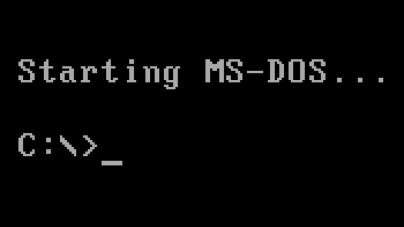
I remember being afraid of the first computer I used because I had to learn DOS with the little green cursor and the backslashes and forward slashes.  The system didn’t automatically save your document or prompt you to save it so I stuck a stickie note reminder to the side of the monitor.

Everything was printed on a flimsy dot-matrix printer and then mailed, couriered or faxed.  Faxes printed on slick paper that left black ink smudges on your clothes before curling up, turning yellow and becoming illegible.

I wasn’t sure I would like the new tech world, but soon the dreadful DOS was replaced with a desktop computer with Word Perfect.  I’ve always preferred Word Perfect over Microsoft Word because it was friendlier to writers.  Alas, Microsoft Word became ubiquitous and Word Perfect went the way of the dinosaurs.

Word Perfect was just an early example of all the changes technology has made to my job.  Many of the jobs I held early in my career, like hand delivering pleadings to the court clerk’s office for filing, have become irrelevant due to technology.  Most courts now require pleadings to be filed electronically.

But for every loss, technology had offered so much more. For example, email and text messaging eliminates the old phone tag game of trying to connect with colleagues or clients.  It also lowered the cost of starting a business.  Early in my career, a business owner needed to rent (or own) office space, furnish it, and hire staff.  The business owner also needed a telephone line obtained at great cost from the local baby Bell monopoly, a clunky desk top computer, a printer, a copier, and a fax machine.  A coffee maker was also a critical piece of office equipment.

Almost none of that is necessary today.  When I started my consulting business about five years ago, technology allowed me to work from a home office and use my cell phone as my business number.  My cell phone also allows me to text and email clients.  I get coffee at coffee shops when meeting prospects or clients.

I run my business with a laptop and a combined printer/copier/scanner.  My clients attach documents to email or we use cloud-based services like Google Docs or Dropbox to share documents on-line.  I save documents electronically and only occasionally print them.  A drawback to electronic databases is trying to remember my clever title for the file folder and document that I so diligently saved.

Of course, it’s not all a paradise.  Technology allows hackers and fraudsters to try to crack our on-line treasure troves of information, so any small business must invest in cyber security to protect its information and reputation.  Still, I wouldn’t want to go back to the days before all our modern technology.  Without all these modern conveniences, I would still find it necessary to be an employee in a big corporation because the investment costs of starting a business would simply be too high.

About Norma Shirk

Norma started her company, Corporate Compliance Risk Advisor, to help employers create human resources policies for their employees and employee benefit programs that are appropriate to the employer’s size and budget. The goal is to have structure without bureaucracy. Visit Norma’s website: www.complianceriskadvisor.com/.

Like what you’ve read? Feel free to share, but please… Give HerSavvy credit. Thanks!

Leave a comment

Filed under Business Savvy

How Journalism is Evolving in a Tech Savvy World

Tech News

Just before I began journalism school, nearly 20 years ago, I attended an orientation for new students.  I was seated at a table with the Dean, an award-winning print and broadcast journalist, who asked me point blank if I thought newspapers were eventually going to disappear.  “I certainly hope not,” I answered, “I can’t imagine not starting my day with a cup of coffee and a newspaper.”  Indeed, the Internet was in its infancy, cell phones were tiny, laptops were big and bulky and analog video was still the reigning format for TV news.

But the writing was on the wall (no pun intended) and our university had just created a cutting edge, high tech program for incoming students called “Online Journalism.”  The younger undergrads and my young grad school classmates flocked to the program, eager to learn this new technology.  But me, I wanted no part of it.  I had waited a long time to pursue my passion for journalism and I was determined to rely on traditional, time honored, reporting methods.  In fact, I continued to take notes and do my writing in long hand in a spiral notebook.

Those that don’t evolve are soon left behind and after much teasing by my 20-something classmates, I taught myself to compose my assignments on my computer.  When the school built a multi-million dollar state of the art digital newsroom, I registered for classes to learn how to navigate the world of digital news reporting.  I actually enjoyed the process and was pretty good at editing.

Imagine my surprise when my first job after grad school, at a local public radio station, required me to learn how to record on and edit reel-to-reel tape!  The 50-year-old station still hadn’t upgraded to the digital technology I’d worked so hard to learn.  But in time, they also made the switch.

These days, my tools of the trade are all contained in my IPhone.  I can take notes, record, edit and upload stories to the cloud, all from a device that fits in my pocket and weighs a few ounces.  Both audio and video quality is sharp and I can produce stories anywhere at any time.  Rather than wait in a newsroom for an assignment or a call from a source, I can be on the job all the time, anywhere.  The news cycle is now 24 hours and the churn is never ending.

So how has this new digital world affected the profession of journalism itself?  Here the waters are much murkier.  Questions about what is news and who is a journalist are much more complicated now that pretty much anyone with a phone or a laptop can record and report on events.  And the quality and quantity of product also raises questions about what is news and what is entertainment.  There are more podcasts, blogs, vlogs and online programming than can be counted, and the numbers grow exponentially.  The simple question about the survival of newspapers seems quaint in today’s world where even venerable publications have laid off print staff in favor of bloggers, podcasters and online producers.  Is this bad?  I’m not sure.  The world is both expanding and shrinking as new technology connects us all in ways we never dreamed of when I started school.

What’s up ahead?  It’s unclear where this digital revolution is taking us.  My hope is that whether through formal education or trial and error, there will always be those people who are our eyes and ears throughout the world; people with integrity who can report honestly and fairly, shine a light on events and be a watchdog, a voice for those who have no voice.  For whatever form it takes, that is the mission of good journalism and there is no substitute.

About Barbara Dab

Barbara Dab is a journalist, broadcast radio personality, producer and award-winning public relations consultant.  She is the creator of The Peretz Project: Stories from the Shoah: Next Generation.  The Peretz Project, named for her late father-in-law who was a Holocaust survivor, is collecting testimony from children of survivors.  Check it out at http://www.theperetzproject.com.  If you are, or someone you know is, the child of survivors of the Shoah, The Holocaust, and you would like to tell your story please leave a comment and Barbara will contact you.

Like what you’ve read? Feel free to share, but please… Give HerSavvy credit. Thanks!
3 Comments

Filed under Business Savvy

More Things I Didn’t Know (When I Started My Business)


Ignorance 2

Recently I wrote about some of the things that I didn’t know when I started my consulting business. My first list focused on money issues. That’s no surprise. I’ve had a few financial near death experiences since starting my business almost five years ago.

Now I’m back with a second list of things I didn’t know when I started my business. I’m betting I’m not the only one who didn’t know:

  1. Which services my prospective clients would actually consider critical enough to buy. My first efforts involved selling a service which I thought was important but no one wanted to buy. Clearly I had misjudged the market. So I started over, assessing what prospects and clients said they needed. Then I had to continuously tweak my services to keep up with changing demand.
  1. How to identify my ideal client and niche market. This is a corollary to the above point. I’ve marketed my services to plenty of businesses who couldn’t afford me at any price or didn’t care about human resources. So I created a spreadsheet of key data about each client to identify my ideal client. Now I regularly update my spreadsheet to continue defining my niche market. I recently listened to a presentation by Marcus Whitney, co-founder of Jumpstart Factory, in which he advocated reviewing client metrics every two weeks in order to continuously refine the profile of your ideal client. It’s nice to have validation that I’m finally on the right track.
  1. I’ll always have to talk myself off the ledge. Every time I got a new client I was ready to break out the champagne. Every time my services were rejected I wanted to throw myself into a volcano. Then a very good friend who also runs a small consulting business told me, “You’ll always be talking yourself off the ledge.” That’s a typical day in the life of a small business owner.
  1. That my stubbornness would be one of my best skills. Okay, call it persistence. I sell a service, not a product. That means I must meet dozens of people each week, educate them about my services and what my ideal client looks like, and then hope for a referral. I prefer coffee meetings since it’s less expensive than a lunch or dinner and eliminates the awkwardness over who pays for the meal.  But a meeting does not a referral guarantee. I’ve had many days with caffeine highs when I wondered if I made the right career choice. Then my stubborn streak would kick in and I refused to accept failure.  Ironically, my stubborn streak was a detriment when I was an employee.

The list could go on because owning a business is a process of experimentation in which you never really get it “right.” You just keep learning and that’s fine with me.

About Norma Shirk

Norma started her company, Corporate Compliance Risk Advisor, to help employers create human resources policies for their employees and employee benefit programs that are appropriate to the employer’s size and budget. The goal is to have structure without bureaucracy. Visit Norma’s website: www.complianceriskadvisor.com/.

Like what you’ve read? Feel free to share, but please… Give HerSavvy credit. Thanks!

Leave a comment

Filed under Business Savvy, Self Savvy

Leadership Lessons:  What’s Your Style?

Style 3

I was fortunate to have two years to plan for my presidency of our synagogue’s Board of Trustees.  And for several years before that, I was a member of the Board and Executive Committee.  Those prep years were invaluable for helping me to observe the presidents who came before and to learn about various leadership styles.  One thing is clear: there is no “perfect” way to lead.  As in politics, there are many different types of leaders and it is important for each to bring her unique skills and talents to the table.  I do, however, have some observations about various styles.  Here they are, in no particular order.

1. The Micro-Manager

We’ve all worked with and for these folks.  They love to have their hand in just about every aspect of an organization and, if you’re not careful, will “check in” several times a day with staff and others to make sure things are “going okay.”  This is really their attempt to control all aspects of the organization, project or event.  Micro-managers can be sweet and lovable, but also very annoying.  Give good direction, trust your team and then let go.  If they need you, they’ll ask.  If you see someone veering off course, you can always jump back in.

2. The “Hands-off” Leader

Everyone likes to say they are “very laid back,” but in practice a laid back or “hands off” leader can be difficult as well.  This person, while well-meaning, is often not very confident in her abilities as a leader and, consequently, doesn’t lead.  Relaxed is good, empowering others is great, but a strong leader models the behavior they want to see in their team.  If your leader lacks vision and drive, if she gives no direction, things can fall apart quickly.

3. Where Does the Buck Stop?

Some people really want to be a leader, but they lack something I believe is one of the most important qualities: accountability.  Regardless of who falls down on the job or which ideas don’t pan out, the leader of an organization must be willing to take responsibility.  No, everything is not your fault, but making decisions and managing outcomes are key parts of being a leader.  Be mindful of who is on your team and what they can deliver and manage your own expectations.  When things don’t go as planned, be ready to face the music.

4. “I’m Just Not Organized”

Not everyone is a detail oriented, chart-making, list-keeping type of leader.  But it is important to develop your own way of staying organized.  In any organization there are many things that require attention on a daily basis.  Some things are more urgent than others, but it’s important to be able to prioritize and manage time.  Remember, everyone is looking to you to set the tone.  If being organized is simply not your innate style, enlist the help of a trusted assistant.  Just remember you cannot blame the assistant if the system breaks down.  See #3 above!

5. “I Can Do It All Myself”

When I was young, my mother told me that a good leader knows when to ask for help.  Along with accountability, I believe this is also one of the most important skills a leader should have.  In planning for my presidency, I got to know a lot of people in the congregation and developed key relationships with people I knew I’d want on my team.  For an extrovert like me, getting to know people is one of the most fun parts of being a leader.  I admit I am still amazed when people agree to help or be on the team, but it is gratifying to work together toward a common goal.  Do not be afraid to ask for help.  No one can do it all by themselves.  Those that try are doomed to either failure, or plenty of sleepless nights and frustrating days.


So there you have it, my take on leadership styles.  How do you find yours?  This process takes soul searching, honesty, observation and trial-and-error.  If you’ve already completed this process before you take leadership, good for you!  If not, remember #5 on my list:  ASK FOR HELP!  There are plenty of mentors out there waiting to give advice and guidance.  And if you don’t have someone, contact me here at HerSavvy.com.  I would love to be a part of your team!

About Barbara Dab

Barbara Dab is a journalist, broadcast radio personality, producer and award-winning public relations consultant.  She is the creator of The Peretz Project: Stories from the Shoah: Next Generation.  The Peretz Project, named for her late father-in-law who was a Holocaust survivor, is collecting testimony from children of survivors.  Check it out at http://www.theperetzproject.com.  If you are, or someone you know is, the child of survivors of the Shoah, The Holocaust, and you would like to tell your story please leave a comment and Barbara will contact you.

Like what you’ve read? Feel free to share, but please… Give HerSavvy credit. Thanks!

Leave a comment

Filed under Business Savvy, Self Savvy

History is Alive

Books

I am frequently asked why I love history so much.  History is alive. It’s full of people and how they lived their lives.  Since we learn by observing other people, historical persons are the ultimate role models.

For example, George Washington was brilliant at projecting confidence.  The worse things got, the more he appeared calm and confident. His attitude inspired his troops to continue fighting for eight years in the Revolutionary War. Any business owner understands the importance of projecting confidence to employees, clients, and competitors. Confidence breeds success.

Another guy I’m partial to is General George Thomas, nicknamed the Rock of Chickamauga.  Why? When the entire Union line broke and scampered back to Chattanooga, Tennessee, he refused to retreat and ordered his men to stop the Confederates. He turned a potential disaster into merely an embarrassing day for the Union Army.

Every business owner has experienced a version of Chickamauga when a key client cancelled a contract leaving a giant hole in the company’s bottom line or a project went hideously wrong. Successful business owners hold their nerve, trust their team and battle on to retrieve something from the mess.

History also gives us perspective. Without historical comparisons, we have a tendency to believe the challenges we face are brand new. But there truly is nothing new under the sun because human nature doesn’t change.

Take a look back at the first “world war” known as the Peloponnesian War which lasted from 431 – 404 B.C. Athens and Sparta fought across Greece, then on to North Africa, Sicily, Spain, and all Mediterranean points in between. They trashed the known world fighting for economic and political control. The war created an opportunity for the competing Persian Empire to try to conquer Europe.  It all seems a bit like Microsoft and Apple who were so busy fighting each other they failed to recognize the threat posed by Google.

The Peloponnesian War is described in wonderful detail by Thucydides. He had time to write because he was unemployed after disagreeing with his superiors about the Athenian strategy to defeat Sparta. He’s an early example of making a career transition, in his case from soldier to historian.

Thucydides tells of heroic battles and the suffering of civilians, of spies and traitors. His most memorable character is Alcibiades who sold out his home town of Athens to the Spartans, then switched sides, before pulling yet another switcheroo. Alcibiades eventually sold out all the Greeks to the Persians.

Alcibiades must have been charming because it took years for the Athenians and Spartans to stop trusting him. Today, Alcibiades would be labeled as anti-social or sociopathic. I’ll bet you’ve met an Alcibiades at some point in your career.

These few examples illustrate why I love history.  I have role models for every possible event in my life.  I can see how current challenges are the same or different than historical events and that guides my strategy on how to react.  No how-to book will ever match what I can learn from history.

About Norma Shirk

Norma started her company, Corporate Compliance Risk Advisor, to help employers create human resources policies for their employees and employee benefit programs that are appropriate to the employer’s size and budget. The goal is to have structure without bureaucracy. Visit Norma’s website: www.complianceriskadvisor.com/.

Like what you’ve read? Feel free to share, but please… Give HerSavvy credit. Thanks!

Leave a comment

Filed under Business Savvy, Self Savvy

Lessons in Leadership: Learning to Listen

Listening

I have recently been elected President of our synagogue’s Board of Trustees, a position for which I had been preparing for several years.  The last couple of years leading up to my presidency, I began paying special attention to the current president, observing her leadership style and comparing it to other past presidents.  And now that I have been in the role for a few months, I’m figuring out my own style and learning some valuable lessons.

First and foremost for me is learning to listen.  My profession as a news reporter requires me to both ask questions and listen for answers.  The goal is to seek out information relevant to the story I am pursuing, digest it and present it in a clear, balanced, fair manner.  It is up to the consumer to draw her own conclusion about the information.

As a leader, I am required to listen first to my constituents’ thoughts, problems, suggestions, complaints, etc.  Often what people want most is to be heard.  For example, there is one older woman, recently widowed, who calls me regularly and will also pull me aside in synagogue to chat.  At first I tried to avoid her, fearing criticism or complaining.  But after thinking about it, I decided to dive in head on when she calls or asks to talk.  What I found is that she is lonely, cares deeply about the congregation and really trusts my leadership.  Now when she wants to talk I gladly spend time with her.  The key for me is to just listen, ask minimal questions and when she is done, I thank her for her thoughtfulness, concern and dedication.

This practice of listening also applies to other leaders in the community.  There is one particular Board member who calls often to voice his opinion, usually on a topic recently covered in a meeting.  With this person, I often screen his calls because he leaves long voice messages, covering much of what he wants to discuss.  He is a really nice, caring guy, but also long winded.  Again, what he wants most is to be heard, so by waiting until I have sufficient time, he can get that need met.  I’ve learned he is insecure about speaking up at meetings and sometimes needs a little more time to formulate his thoughts and opinions.  The meetings are often fast paced, with the same few folks doing most of the talking, and he just isn’t comfortable.  But I value his opinions and I am trying to encourage him to speak up more.

Just before I took office I met with my friend who was the outgoing President.  She said that she thinks of congregants like her kids.  Sometimes they just want comfort and to know someone is listening.  She encouraged me to find my own leadership style and advised me to never forget that I am always being evaluated and observed by others.  It was good advice.

What are your leadership lessons?  Let us know and be watching for more of mine.

About Barbara Dab

Barbara Dab is a journalist, broadcast radio personality, producer and award-winning public relations consultant.  She is the creator of The Peretz Project: Stories from the Shoah: Next Generation.  The Peretz Project, named for her late father-in-law who was a Holocaust survivor, is collecting testimony from children of survivors.  Check it out at http://www.theperetzproject.com.  If you are, or someone you know is, the child of survivors of the Shoah, The Holocaust, and you would like to tell your story please leave a comment and Barbara will contact you.

Like what you’ve read? Feel free to share, but please… Give HerSavvy credit. Thanks!

3 Comments

Filed under Business Savvy, Self Savvy

WHAT I DIDN’T KNOW WHEN I STARTED MY BUSINESS

Start Up

When I started my consulting business a few years ago, I thought I knew what I was doing.  Starting my own business was an old dream conjured up every time I was sick of office politics and the roulette wheel of re-engineering, right-sizing, downsizing, layoffs. (Pick your favorite euphemism.)  After I was downsized yet again, I took the plunge.  That’s when I realized that no matter how well I had planned, there were so many things I didn’t know.  For example, I didn’t know:

  1. How hard it is to hone a marketing pitch. I went through dozens of elevator speeches and 60-second “songs” in the first year trying to find what resonated with potential clients. I believed in the services I was selling but seemed unable to convince potential clients that I was worth hiring.
  1. How hard it is to set a price for my services. Should I charge by the project or by the hour? If I charge an hourly rate what is fair to me and to the client? I’m still not sure I know the answer to this question.
  1. How hard it is to talk about money to people. When should I start talking about money with a prospective client? What if the prospect decides she/he can’t afford me?
  1. How quickly money runs out. I lived frugally but still blew through my severance package and savings before landing a big client. This is the part of starting a business that most of us get wrong, according to the pundits. It always costs more to start a business than we anticipated.

In spite of all the things I didn’t know when I started my company I recently celebrated another year in business. Along the way, I’ve discovered plenty of new things I didn’t know when I started my business.  One thing I definitely know: I want to continue this journey of business ownership.

About Norma Shirk

Norma started her company, Corporate Compliance Risk Advisor, to help employers create human resources policies for their employees and employee benefit programs that are appropriate to the employer’s size and budget. The goal is to have structure without bureaucracy. Visit Norma’s website: www.complianceriskadvisor.com/.

Like what you’ve read? Feel free to share, but please… Give HerSavvy credit. Thanks!

2 Comments

Filed under Business Savvy

3 Mistakes of Networking

NetworkingNetworking is a skill that must be developed, as I learned the hard way when I started my own business. Based on my experiences, I’ve developed a hit list of networking mistakes. Here are my top 3:

Mistake #1: No preparation. A mistake I made early on was not thinking about what I wanted out of the meeting.  Was I expecting to walk away with a new client?  Could the person I was meeting connect me to someone I wanted to meet?  Who did I want to meet? Was there someone in my network that I could connect to the person I was meeting?  In other words, I didn’t prepare properly. I learned my lesson.  Now when the other person says “so how can I help you,” I whip out my list of 3 – 5 names to which I’d like to be connected.  It all starts with preparation.

By now, everyone knows that LinkedIn and Facebook are great resources for gathering information about people. I want to know if we have any common interests or experiences. I also look at company websites to see who they target as customers to see if there are ways we can help our mutual businesses.

Mistake #2: No show.  It can be a challenge to schedule a meeting because anyone you really want to meet already has multiple obligations making it difficult to find an open date.  But if we’re agreeing to meet it means we both expect to get something of value from the meeting.  So not showing up is bad. I’ve waited at coffee shops for people who never showed and never called to let me know they couldn’t make the meeting.  It’s hard not to take it personally.  To limit the no show problem, I confirm via email a day or two before the scheduled date.  When I’ve screwed up and missed a meeting, I’ve emailed or called the other person as soon as possible to apologize.  I want to limit the damage done to my reputation.

Mistake #3: No referrals.  I’ve lost count of the coffee meetings I’ve had where the other person offered nothing. What was the point of meeting if you’re not prepared to make connections? One of the most effective networkers I know goes into each meeting expecting to connect the other person with at least one person in his network.  Even if he doesn’t get any referrals, he’s helped the other person achieve a goal.  My networking improved when began using the same approach. If I can help others achieve their goals, I will eventually be rewarded.

As I continue to hone my networking skills, I’m sure my list of networking mistakes will also be refined. Meanwhile, I continue striving to avoid committing my top 3 mistakes of networking.

About Norma Shirk

Norma started her company, Corporate Compliance Risk Advisor, to help employers create human resources policies for their employees and employee benefit programs that are appropriate to the employer’s size and budget. The goal is to have structure without bureaucracy. Visit Norma’s website: www.complianceriskadvisor.com/.

Like what you’ve read? Feel free to share, but please… Give HerSavvy credit. Thanks!

Leave a comment

Filed under Business Savvy