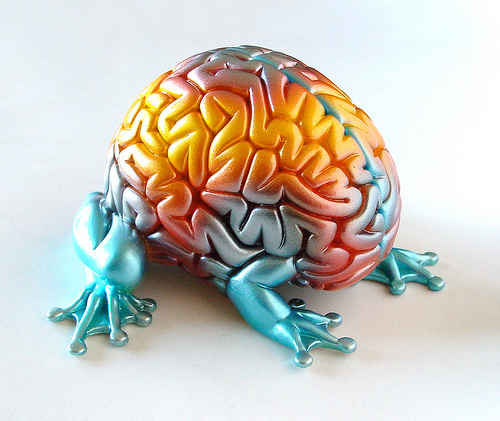
The Other Side of the Couch – Is Your Brain High Jacked?

Limbic Brain

I had an odd experience the other day.  I had made an appointment for an orientation to a wellness center, but when I arrived at the appointed time, my name could not be found in the computer. A little background would be in order – since I have a hyphenated last name, computers often struggle with me. However, they tried all possible combinations and nothing came up.  I was offered the opportunity to  a) come back an hour later, b) reschedule, or c) receive a free personal training session as a compensation.

What was interesting to me was my reaction.  I became tearful; my voice began to quiver; I stated that I was irritated and upset and that none of those options were acceptable, and I walked out.  As I walked to the car, I felt my heart pounding, and when I got to the car, I got in, slammed the door, and tried to figure out what on earth had happened.  I was reacting to this computer glitch as though I had been personally attacked and I was feeling hurt, powerless and angry.  My brain had been high jacked!

I knew that I was in the grip of an adrenaline rush powered by a variety of neurochemicals and that I was not responding rationally.  I also knew that something was powering this that was bigger than a computer glitch.  So I took a few minutes to sit with myself – but nothing came up.  I was still distressed.  I decided to leave and to check this out when I was a bit calmer.

Later, I looked again at what had happened and I discovered the iceberg beneath the seemingly insignificant experience.  For me, the iceberg included ambivalence about committing to an exercise program based on fear of injury (old stuff), a story that I was telling myself that said something like, “You’ll never be able to do this right. Why are you even trying?” (self-judgment), and a sense of hopelessness about my body.  Wow!  What I found out was that even getting in the door of this wellness center had been a huge stretch and that I was carrying a lot of self-judgment that was activated by this small disappointment.

I called and made another appointment, and I will take that free session as compensation!

This kind of experience is actually quite common in human beings.  Our limbic system, ruled by the amygdala and based on fear, can high jack our logical, thinking brain all too easily.

What can you do when your brain is high jacked?

  1. Recognize it – you want to react much more strongly than the situation warrants; you have physical responses – heart pounding, breathing quickened, voice changes; you want to react impulsively.
  2. Leave the situation if possible – take a break; drink water; go for a walk.
  3. If you are with a partner or a friend, explain that you need a time out.
  4. When the physical symptoms pass, sit with yourself and listen without judgment. Your body and brain know a lot about what has happened, and if you listen to yourself, you will learn.
  5. Do what is necessary to repair the situation.

Careful listening and self-compassion are the keys to a better understanding of your own brain.

About Susan Hammonds-White, EdD, LPC/MHSP:

Susan is a communications and relationship specialist, counselor, Imago Relationship Therapist, businesswoman, mother, and proud native Nashvillian. She has been in private practice for over 30 years. As she says, “I have the privilege of helping to mend broken hearts.” Contact Susan athttp://www.susanhammondswhite.com

Like what you’ve read? Feel free to share, but please… Give HerSavvy credit. Thanks!


3 Comments

Filed under Self Savvy

Flying Solo:  Pros and Cons of Being Self-Employed

Flying Solo

I am self-employed.  Notwithstanding a part-time hourly gig, I am entirely responsible for my work product, time management, working conditions, clientele and income.  In the past, I spent years working in a corporate environment; a place I learned is not for me.  But being my own boss is not without challenges, either.  Thankfully, I have my supportive HerSavvy friends to help me over the rough spots and to celebrate my victories big and small.  In fact many of us are self-employed, leading one Savvy gal to refer to us as her “advisory board.”  I LOVE IT!!!!  Indeed there is a veritable font of knowledge flowing through this group so I decided to ask the question: What are the pros and cons of being your own boss?  And being the generous women they are, they gladly opened up and shared some of their lessons learned.  So, in no particular order, here are some answers from our HerSavvy Advisory Board:

“For what it’s worth, I love being self-employed because I have complete and utter creative and aesthetic control over my products and how they are presented, marketed and packaged. There’s no group that has to sign off on my new collection or the colors of my logo. I also enjoy being able to accept challenges and quickly modify offerings/policy based on client feedback. What I often struggle with is switching between the creative (right brained) responsibilities and the business/analytical (left brained) tasks. I find that to be most effective, I often need a bit of space between the two.”

“What I like – no issues with changing schedules as needed.  What I don’t like – being all things – custodian, bookkeeper, office manager, marketer etc…until and unless you have funds to outsource all this, it is a lot of work to wear all these hats.”

“Practically, my biggest hurdle to overcome was technical support.  I had resources to address all the legal consulting issues specific to my profession.  It was having/maintaining the technical tools that was tough. In a broader sense, I had to critically analyze my greatest weakness(es) and find outside resources to bolster my practice.  It takes a critical, objective eye and the willingness to admit that ‘you can’t do it all.’  That can be very difficult for some people. For me the biggest pros were not bowing to bureaucratic requirements that got in the way of serving my clients and freedom to set my own hours, focus on the type of law I wanted to practice, etc.  I also had greater freedom about setting my rates and even accepting consideration other than money.”

“Pro: You are your own boss.  Con: You are your own boss.  But expanding on the Pro side, you have flexibility with your time.  Even though all of us that are self-employed put in many hours each week we can take the time to go to that special family event or take our vacations on our schedule and not someone else’s.   And on the Con side being your own boss means you wear many different hats and that can be stressful and very tiresome at time.”

“Pro: Flexible schedule.  Con: Having to keep a watch on every piece of the business (i.e., billing, scheduling, business filings, etc.); not having anyone else to help manage those things.”

“Pro: I absolutely love the ‘Flexibility’ of being self-employed!  Con: The need to continuously look for the next job!”

“I thrive on the accountability of it. You do good work for a client you get rewarded; there are not as many variables between you and the work you do, unlike in a large corporate firm where the performance or needs of partners. etc., may affect you. I like control so this allows me maximum control over my work and reward. On the other side it is occasionally lonely. While your employees may be friends with each other, as their boss I could not have the same level of camaraderie. This is especially true in a small environment when you have 2/3 people working for you.”

So, there you have it, straight from the mouths of the most successful, motivated, intelligent, passionate, creative and amazing women I have ever known.  If you are self-employed, let us know your pros and cons and how you keep it all together.  Stay Savvy, my friends!

About Barbara Dab:

Barbara Dab is a journalist, broadcast radio personality, producer and award-winning public relations consultant. She currently hosts two radio shows locally in Nashville, TN. Check out her website athttp://www.zoneabouttown.com.

Barbara is also creator of The Peretz Project: Stories from the Shoah: Next Generation. Check it out at http://www.theperetzproject.com If you, or someone you know, is the child of survivors of the Shoah, The Holocaust, and would like to tell your story please leave a comment and Barbara will contact you.

Like what you’ve read? Feel free to share, but please… Give HerSavvy credit. Thanks!

Leave a comment

Filed under Business Savvy

Volunteer Service: What Makes Sense?

Volunteer

For many of us volunteer service, whether it’s for a nonprofit or a professional or civic association, is a natural evolution of our professional career and personal passions.  If you’re good at what you do (and I suspect you are!) you may have many opportunities to serve.  How do you choose?  Here’s the process I use, in this order.

Is it in your company’s best interest?  If this opportunity furthers your company’s visibility and credibility and fits the corporate culture, then this is probably a yes.  The benefit doesn’t have to be direct (lead to business) so don’t focus solely on that.  Start first with company fit as there is very little volunteer service that doesn’t impact job hours.  Unless you’re the CEO, you’ll usually want to get a higher-up’s buy in.

Does it speak to you personally?  Ideally, the closer it aligns with your passions the more rewarding, and successful, your experience will be.  Service, of any kind, must be genuine.  A few years ago, I joined a small non-profit board because a trusted colleague asked and because I thought I could help, not because of any passion for the work.  My service lasted one year, with little reward and not much effective service.  Don’t waste their time or yours unless you have great interest.

Can I commit the time and effort for what they need?  First, get a clear picture of what this is.  There’s a great article that my colleague Jeff Jowdy wrote that outlines some solid questions.  Ask these and any that help define your obligations.  And, this is important, if you can’t commit, DON’T DO IT.  Recently I was given an incredible opportunity to serve my profession on their state licensing board.  It passed the first two questions with flying colors yet it was clear to me I did not have the time.  I made the tough decision to resign from another commitment (finding a replacement first so as not to leave a hole).  This was truly a tough choice but doing otherwise would have been a misstep.

This is my process.  Do you have any other questions you ask yourself when called on to serve?  Let HerSavvy know!

About Laura Reinbold, PE

Ms. Reinbold explores ways shecan help build our communities, from the geoprofessional side of the engineering profession.

Like what you’ve read? Feel free to share, but please… Give HerSavvy credit. Thanks!

Leave a comment

Filed under Business Savvy, Self Savvy

Going Natural, Part II

Linda SackLast month we delved into the world of wearing our natural hair color.  One native Nashvillian set herself apart with her beautiful silver hair.   She entered a contest for a skin care line who wanted a representative who was over 40.  Tish Hooker, later becoming known simply as Tish, was a beautiful 45 year-old who had stopped coloring her hair at 42.  From the prominent Fort family of Nashville, I knew her from local media and she wore the prettiest salt and pepper hair I had seen.  In the 80’s, I recall discovering her picture in a Germaine Monteil cosmetics advertisement in a national magazine, Vogue, Elle, or Glamour.

Wearing a full-length gown, I thought how beautiful she was. Today she is still strikingly beautiful.  Tish recalls shocking people with her silver hair when everyone else was coloring their hair.  You can read about how she took a gamble with her life and wound up in New York, and other multi-faceted life experiences in this 1984 article in The Spokesman – Review.

Since writing this, I have asked other friends who have gone natural about their reasons.  Kate Stephenson, an attorney with the best hair around, says her motivation was that she was tired of paying so much to having her hair colored and when she realized underneath was white and that it might be interesting, she stopped coloring at about age 45.  Having begun seeing white hair in her 20’s, she colored her hair for many years.  Using blonde at the end, she simply stopped coloring her short hair and it easily grew out.  Not remembering reactions of other people at the time, she gets lots of compliments on her short white hair today and has no regrets at all. Kate says to anyone thinking about doing it, “Go for it. Natural is good. We are what we are.”

Photo: Linda Sack and her lovely natural hair color.

About Renee Bates

Renee is the executive director of the non-profit, Greenways for Nashville, a member based organization. In addition to growing private support for the trails and green spaces, she enjoys oil painting, hiking, nature and working in the garden. Renee is married to David Bates of Bates Nursery and Garden Center, a 3rd generation business begun in 1932 by a savvy woman, Bessie Bates.

Like what you’ve read? Feel free to share, but please… Give HerSavvy credit. Thanks!

1 Comment

Filed under Business Savvy, Self Savvy

The Other Side of the Couch – What Makes a Relationship Last?  Kindness and Generosity

CoupleHow do we know that we have found the “right” mate?  How do we know, once we have found that person, that we will not be part of the 50% of new marriages that end in divorce?  Emily Esfahani Smith has written an excellent article in The Atlantic that appeared on June 12, 2014.  It is well worth reading.

“Science says lasting relationships come down to — you guessed it — kindness and generosity.”

“Every day in June, the most popular wedding month of the year, about 13,000 American couples will say, ‘I do,’ committing to a lifelong relationship that will be full of friendship, joy, and love that will carry them forward to their final days on this earth,” says Smith. “Except, of course, it doesn’t work out that way for most people.”

Click on this link to read the article. You will be glad you did!

http://www.theatlantic.com/health/archive/2014/06/happily-ever-after/372573/#ixzz3JeWDq5ml

About Susan Hammonds-White, EdD, LPC/MHSP:

Susan is a communications and relationship specialist, counselor, Imago Relationship Therapist, businesswoman, mother, and proud native Nashvillian. She has been in private practice for over 30 years. As she says, “I have the privilege of helping to mend broken hearts.” Contact Susan at http://www.susanhammondswhite.com

Like what you’ve read? Feel free to share, but please… Give HerSavvy credit. Thanks!


Leave a comment

Filed under Self Savvy

Have a HerSavvy New Year!

Happy New Year

I am the lucky HerSavvy gal who gets the first post of 2015!  I have written before that I am not a fan of “resolutions.”  Resolutions, to me, feel absolute, black and white.  Resolutions are either kept or broken.  If you keep one, you are successful.  If you break one, you fail.  Since I already carry my fair share of “Jewish guilt,” I see no need to pile more on right from the beginning of the year.

I do, however, believe in setting goals.  And while many people see the beginning of the year as a “blank slate,” I approach it as an opportunity to choose what issues or projects to carry with me into the future, and what to leave behind.  So, without further ado, here are my goals for 2015:

  1. Exercise good self-care. That means continue my quest for lifelong good health, fitness, energy and vitality.
  2. Focus my mental and intellectual energy where it is most meaningful. Change is difficult, but often necessary in order to pursue a purposeful and fulfilling life.
  3. Read more. I set this goal every year.  For me reading is a glorious pastime that engages my senses and refreshes my soul.
  4. Listen better. I believe listening is one of the most critical elements in good relationships.  Good listening builds bridges of understanding and trust.
  5. Practice patience. My mother used to say, “All good things come to those who wait.”  I did not understand what she meant for a very long time.  I thought you had to just sit and wait for things to happen.  I now know she was trying to teach me to be willing to work hard and not expect immediate results.  Important goals and dreams take time to realize.  Mom, I get it!

In the coming year, I wish all of you good health, love, patience and the courage to set goals and reach for your dreams.

About Barbara Dab:

Barbara Dab is a journalist, broadcast radio personality, producer and award-winning public relations consultant. She currently hosts two radio shows locally in Nashville, TN. Check out her website athttp://www.zoneabouttown.com.

Barbara is also creator of The Peretz Project: Stories from the Shoah: Next Generation. Check it out at http://www.theperetzproject.com If you, or someone you know, is the child of survivors of the Shoah, The Holocaust, and would like to tell your story please leave a comment and Barbara will contact you.

Like what you’ve read? Feel free to share, but please… Give HerSavvy credit. Thanks!

2 Comments

Filed under Self Savvy

Am I Beautiful?

Beautiful

Perhaps the better question to ask is, “How do we each reach our definition of beauty?” Standards of beauty have varied radically over the centuries and are more a statement about our cultural values than our actual physical beauty.

Beauty is a visible symbol of socio-economic status. In ancient Egypt, wealthy men and women shaved their heads and wore wigs. At parties, they removed their wigs and set scented wax cones atop their heads so that they dined with a beautiful scent wafting around them. (There are no tomb paintings showing wax falling in the diner’s eyes, unfortunately.)

During the Renaissance, a bit of plumpness meant your family was wealthy enough to eat on a regular basis, unlike poorer people who often starved. That’s why Titian’s female models are, how to say it politely, fat, by modern standards.

In the 17th and 18th centuries, higher income people tended to be pale.  Pallor separated them from the ruddy-cheeked farmers and other hoi polloi who did manual labor. After the Industrial Revolution, the beauty standards reversed. Poorer people were pale from long hours on the factory floor, while higher income people discovered the joys of nature and got a tan.

Today, our standard of beauty dictates that we must be wrinkle-free, slender and physically fit.  Higher income people can afford the Botox and cosmetic surgery to look young. They also have the disposable income to pay for a healthier diet and for the exercise programs to maintain a “healthy” weight. Meanwhile, poorer people have wrinkles, eat a less healthy diet and probably lack the time, mental energy and money needed for a regular exercise regimen.

Our modern standard of beauty also addresses our fear of dying. If we work out constantly, we will look and feel young and hopefully avoid chronic diseases that lead to “premature death” as the TV ads euphemistically put it. This is not a new obsession. Fear of growing old and dying was chronicled 4000 years ago in the “Epic of Gilgamesh.”

So what can we do if our personal beauty doesn’t match (or even come close) to society’s standard? Find an historical era where the standard of beauty matches your body type. Then buy some chocolate and a bottle of wine and salute your beauty. Am I beautiful? You bet!

About Norma Shirk

Norma started her company, Corporate Compliance Risk Advisor, to help employers create human resources policies for their employees and employee benefit programs that are appropriate to the employer’s size and budget. The goal is to have structure without bureaucracy.

Like what you’ve read? Feel free to share, but please… Give HerSavvy credit. Thanks!

Leave a comment

Filed under Self Savvy

Biting the Elephant

I love project management: Planning towards a defined goal using the budget, schedule and resources available.  And I’m good at it.  People have always complimented me on my ability to get things done.  For me, it’s not rocket science.  In fact, it’s not that difficult.  I call it “Biting the Elephant.”

Elephant

When faced with a large project or personal mountain ahead of me, from winning a large geoprofessional job to planning a conference, I break it down into manageable tasks.  Simply, I make a plan.

The more I plan, I find, the easier it is to “git ‘er done.”  Frankly, the plan may change (and usually does) but that’s not important.  Wrapping my brain around what steps it takes to succeed gets me halfway there.  Then, I just have to do it or pull in the resources needed for what I can’t accomplish.  That’s called follow-through and it’s critical to Biting the Elephant.  Great plans are wonderful but they mean nothing without action.  Like Nike:  Just Do It.

So, when faced with what seems like an insurmountable task, take a breath, make a plan, see it through and enjoy seeing your hard work realized.

About Laura Reinbold, PE

Ms. Reinbold explores ways http://www.ttlusa.com can help build our communities, from the geoprofessional side of the engineering profession.

Like what you’ve read? Feel free to share, but please… Give HerSavvy credit. Thanks!

Leave a comment

Filed under Business Savvy, Self Savvy

Homage to the Big Rigs (and their Drivers)


Big Rig 5

I love the big rigs. The more chrome and clearance lights the better. At night, rolling down the highway or tooling around a truck stop, they are more brilliant than a Christmas tree.  I love to listen to the raw power of a 500 or 600 horsepower motor.  I even like the noisy engine brakes because they are one of the greatest safety inventions ever on big rigs.

Big rigs provide instant metrics on the health of the economy.  The higher the number of big rigs on the road, the healthier the economy is because they deliver goods, including food, the “last mile” from the port, warehouse or railroad siding to the store.  Without them store shelves would be empty.  So when I inhale a lungful of diesel exhaust fumes from a big rig, I smile because I know the economy is humming along.

Despite their importance, I often hear people denigrating big rigs and their drivers. Trucks are deemed to be a dangerous nuisance on the highways and their drivers are stigmatized as uneducated bumpkins too stupid to get a “real” job.  But most drivers are hard-working men (and a few women) who are supporting their families. I know because I’m the daughter, sister, niece, and cousin of truck drivers.

Becoming a big rig driver requires studying federal safety regulations, passing the commercial driver’s license (CDL) exam, and undergoing two years over-the-road supervised training.  After that they endure a solitary life riding the nation’s highways and missing birthdays, anniversaries, holidays and their children’s school activities. Not surprisingly, is there is a growing driver shortage as fewer people enter this profession.

As to the charge that big rigs are dangerous, according to the American Trucking Associations, only 30% of highway accidents involving big rigs are caused by the truck drivers. That means 70% of the accidents are caused by the rest of us.  So here are a few basic safety tips.

  1. If you can’t see the truck’s mirrors, the driver can’t see you. Slow down, go around, or move in your lane until you can see your vehicle in the truck’s mirror.
  2. Signal your intentions early and avoid sudden movements. Basic physics informs us that 80,000 pounds needs more distance to slow to a stop than a 3000 pound car or SUV.  (Avoid flitting into the car-length’s space in front of the tractor.) The driver needs time to see you and prepare for what you plan to do.
  3. Never sit in the truck’s blind spots which include: immediately in front of the tractor (you can’t be seen over the hood); beside the fifth wheel where a trailer attaches to the tractor; beside the trailer’s rear axle; and immediately behind the trailer.

So the next time you pass a big rig on the road, join with me in paying homage to the big rigs. They keep the economy moving and their drivers are some of the hardest working people you’ll probably never meet.

About Norma Shirk

Norma started her company, Corporate Compliance Risk Advisor, to help employers create human resources policies for their employees and employee benefit programs that are appropriate to the employer’s size and budget. The goal is to have structure without bureaucracy.

Like what you’ve read? Feel free to share, but please… Give HerSavvy credit. Thanks!

1 Comment

Filed under Fun Savvy

Going Natural

Kate Stephenson and Mark BatesIt is being discussed more and more.  Women in their 40’s, 50’s, and 60’s are deciding to cut the hair color and return to their ever lightening roots.  I’m curious, so I’ve asked some friends who have stopped coloring to share their experience with me.

Linda had been coloring her hair from her 20’s.  Because it grew so fast, she would have a color line within a week or so, and needed to color every 2 weeks.  About 6 years ago she decided to stop and go back to her own hair color, which she calls silver, or platinum.  When I asked her why, she said it was because of the pain it was causing…the physical pain from the chemicals, and the emotional pain, being so tired of feeling self-conscious when the gray would start growing out.  “At the time I was dating someone who was not in favor of the silver.  Soon after the relationship ended, I chopped off all of the color damaged, dead hair and took it as short as I could,” adding that it was a bit of a shock, even to her.  When I asked her if she saw any downside to going natural she offered, “After I started growing the silver out I’ve had nothing but compliments. The only reason that someone would not get compliments is if they didn’t style their hair.“

When I asked her what advice she would give to anyone thinking about taking the plunge she said, “If they had darker hair, I would encourage them to start by going with some highlights, blonde goes to silver easier– because when you go from dark to silver, it is too difficult, and with highlights you won’t have that nasty skunk line.  Get as close to platinum as possible.  Otherwise, chop it all off.  It felt amazing.”

Because Linda has beautiful olive skin, hazel eyes and looks much younger than her years, when she was coloring her hair blonde she got hit on often by younger men, fifteen to twenty years younger.  Now that she has gone silver, that doesn’t happen anymore.  She is grateful.  The younger men were not always the most tactful and it would often be hurtful when they found out her age.

“I didn’t feel natural, or pretty, coloring my hair.  I am so grateful that I listened to my intuition, and not my ex-boyfriend.”  Linda adds that just a little bit of platinum highlight keeps it light around her face.  She shares that her hair is much healthier and thicker, another reason to be very happy about the decision to go natural.

When I asked Linda how her business life has been affected she dropped her voice to that solid, personal truth telling tone, “I feel embracing my natural hair color and doing what I wanted to do has brought me in line with being authentically who I am.  This has made me feel more comfortable and has led me to coming into my own.  People see my natural hair and expect me to be a more real person, or maybe I am a more real person.“  Linda Sack is a licensed message therapist and came to that profession after she made the decision to stop coloring her hair, leaving a corporate career behind, and feels that massage therapy is perfect for her.

My lovely friend Marilyn Shriver, who colored for over 25 years, and has the most beautiful white hair now, says, “What kept me coloring was that someone told me that if I let my hair go natural, because I was fair, I would disappear from the neck up.”   This turned out to be mis-information.  She says, “I get more compliments on my hair since I stopped coloring it.  My obsession with hair has diminished.  The hair is much better hair and I have accepted that I am the age that I am.  Everybody’s aging at the same rate.”

So, I am thinking about it more.  The first reason is because my hair is thinning from the chemicals.  Another, besides embracing the real, I’d like to simplify my life and spend time doing the things I enjoy most.

This is part one of a two-part article.  Come back next month as I continue the exploration of going natural with a native Nashvillian who was selected from a group of 7,000 women to represent a world wide cosmetic company, not entirely because of her beautiful platinum locks, but she wouldn’t have gotten the job without them.

About Renee Bates

Renee is the executive director of the non-profit, Greenways for Nashville, a member based organization. In addition to growing private support for the trails and green spaces, she enjoys oil painting, hiking, nature and working in the garden. Renee is married to David Bates of Bates Nursery and Garden Center, a 3rd generation business begun in 1932 by a savvy woman, Bessie Bates.

Like what you’ve read? Feel free to share, but please… Give HerSavvy credit. Thanks!

Photo Credit: Nfocus Magazine; Kate Stephenson & Mark Bates attend Authors in the Round Dinner, Humanities Tennessee

Leave a comment

Filed under Business Savvy, Self Savvy