Category Archives: Self Savvy

A Ring Blessing

Tiffany Band

For our 20th Wedding anniversary, my husband gave me a Tiffany, platinum diamond wedding band.  I remember how thrilled and thankful I was to receive such a nice gift.  For our 25th wedding anniversary, my husband gave me a 2nd Tiffany, platinum diamond wedding band, the same as the 1st.  I was again super thrilled to have all this sparkle on my finger.

Since the rings moved around on my finger, I decided to have them put together as one double diamond band.  Tiffany didn’t understand it at first, but accommodated my wishes.

I like to lotion my hands after I wash them.  I typically remove my rings to put the lotion on, so that they lotion won’t get on the diamonds.  Well, I learned a valuable lesson.  Sometimes, I forget to put them back on and I leave them on my nightstand table, on the bathroom sink, in the kitchen or in my lap if I’m driving in the car.

Yesterday, I was rushing and extremely tired from traveling three weekends in a row.  I was in my car, on my way to an evening meeting and I did what I always do… I removed my rings, laid them in my lap and put lotion on my hands.  I went to the meeting thinking I left my rings on the bathroom sink.  My hands felt naked during the entire meeting and I kept thinking, I’m going to get my rings as soon as I get home.

Upon arriving home, after my three hour-long meeting, my husband had prepared a wonderful dinner.  I was so excited that I immediately sat down to eat and forgot about putting my rings on.  I went to bed and woke up at 3am (you know – the over 50 bathroom rule during the middle of the night).  I looked on the sink and didn’t see my rings.  I was looking for two rings, my wedding band and my 10 year anniversary ring that I wear on my right hand.  I decided to go back to bed and look for them the next morning, thinking they were probably in my home office or on the kitchen counter.

I got back up at 5am and decided to look for my rings.  They were not in my home office, they were not on the kitchen counter and they were not in the bathroom. They were NO WHERE to be found! I started to panic.  As a matter of fact, I was hyperventilating because I couldn’t remember the last time I had them.  After searching for 20 minutes, I threw on my clothes, jumped in my car and drove to the site where I parked my car, at the meeting the night before.  My rationale: I left the meeting late, it’s early and if I laid the rings in my lap for my lotion routine, they could have possibly fallen on the ground and could still be there.

On my way to the meeting site, I said a prayer and promised God that I would be more responsible and appreciative of my rings, if I found them.  I drove to the site and the rings were laying in the spot where I got out of my car, just as if I had laid them there.

I was so thankful that I found my rings and I will be more responsible.  I call this my “ring blessing.”  God always has a way of letting me know that he’s looking out for me, even when I’m careless.  My advice to everyone – if you remove your rings to lotion your hands – DON’T.  You can always clean the lotion off your rings and get the shine back.

About Pat Brewer Hairston

Pat is a Global Supply Chain Executive and currently President of Global Supply Chain Solutions, LLC (GSCS) based in Nashville, Tennessee. GSCS provides Global Supply Chain consulting services to clients across all industries. They help companies identify problem areas and improve the end-to-end efficiency in an organization’s supply chain. GSCS also provides Negotiation and Supplier Diversity Training.


1 Comment

Filed under Self Savvy

The Other Side of the Couch –Alone?

AloneSo many people are afraid of being alone.  Over and over I hear in my office from clients – I can’t  leave; I would be alone,  or I can’t leave him or her, they would be alone – as though being alone is the worst thing that could ever happen to a human being, as though being alone is a penance, a punishment, a horror.

I know that aloneness is used as punishment.  Maximum security, solitary for years on end, drives humans crazy, literally.  Some cultures use shunning to punish, and people actually die from it.  And yet I have always wondered about that experience – a belief leading to that ending.

Being alone is one of the joys of my life.  Perhaps because I choose it, decide it when I want to do so – perhaps because I spend the majority of my days in deep places with others.  Being alone with no other human energy pulling on me is like a drink of clear, pure water, a resting place, a respite.  I return to relationship refreshed.

And yet, when I am alone, am I alone?  I am with me, and I am in relationship with all that is, and in those moments of “alone” I am yet more aware and connected to all – to the singing teakettle, the doors that call and close, the aliveness of memory, the presence of loved ones called to mind and into communion.

Perhaps “alone” is nothing more than a belief.  I am alone means I am here, in this amazing and infinite world of all possibilities.  I am always home.

What is your experience of being alone?  Do you dread it, seek it out, run from it?  How is alone different from lonely?  I invite you to spend a little time with experiencing your own relationship to the idea of being alone – you might find there is more to it than you have given yourself time to know.

About Susan Hammonds-White, EdD, LPC/MHSP:

Susan is a communications and relationship specialist, counselor, Imago Relationship Therapist, businesswoman, mother, and proud native Nashvillian. She has been in private practice for over 30 years. As she says, “I have the privilege of helping to mend broken hearts.”  Contact Susan at http://www.susanhammondswhite.com

Like what you’ve read? Feel free to share, but please… Give HerSavvy credit. Thanks!

1 Comment

Filed under Self Savvy

To Trim, or Not to Trim

Enter a caption

2016-04-11 12.35.15 copy

My friend Marina sent me a note today, and I asked her if I might share it with you.  She said, “Regular therapy and gardening therapy are about the same price range.  They both create a special type of beauty in seeing and feeling and being at one with one’s life.”  This was nice, and I agree that it is therapeutic.  For me, trimming and pulling weeds do it, and they are both free.  Now I don’t propose a replacement for regular therapy, but for a supplement, absolutely.

“When can I cut back my hydrangea? Is it o.k. to trim my crape myrtle now? “I often get asked about this around this time of year, April. I’m glad to answer these perennial questions. (pun intended) I thought you might like to hear some rules about trimming that might inspire a venture into your outdoor therapy:

1. If it blooms in the early spring, do not cut it now. Wait until just after it finishes the blooming cycle unless you are willing to sacrifice blooms this year. Examples would be Oakleaf and Hydrangea macrophylla (the old-fashioned blue or pink ones), lilac, azalea, and rhododendron. Even if you think stems are dead on your hydrangea, wait, I tell you. I have removed what I thought was dead only to realize I cut the bloom stock off by mistake.

Hydrangea paniculata varieties like Annabelle and Limelight bloom on new growth. Trim those in late winter, before new growth appears. February in Middle Tennessee works well. The paniculata grow stronger when trimmed back from 4” to 12” above the ground. Leave the sturdier stems up to 18-24” long on the Tardiva hydrangea.  You may also allow it to be taller and tree form shaped.
2. “Can I cut my crape myrtle now?” Yes, even though the leaves have begun appearing, is not a terrible thing, if you must. They won’t die however, we have a term for the look of wholesale trunk decapitation: Crape Murder. You see these all over the place, flatly cut off. Yuck. The plants are prolific foliage producers and burst back out at these points, but I don’t like it. I prefer to leave the branching alone. Simply thin out the smaller trunks, and remove spindly branches from the heads in favor of larger ones. In this way, that elegant line leading your eye from the ground to the tip end, uninterrupted. Artistry in nature.
3. When can I trim my boxwoods? Preferably, late winter but if it has gotten past and you must, trim them anytime before August 1. The reasoning is that new growth will have time to get tough before the freezes of winter come. This is also true about holly, and most hedge type plants. Freeze damage looks yellow, dry and dead, and nobody wants to see that.
4. “What do I need to do about my azaleas and rhododendron to make them bloom better?” Fertilize them three times, May 1, June 1 and July 1. I know, it’s not about trimming, but it is a frequent question. There are other plants that use those dates in a different way: Chrysanthemums. If you have these late summer beauties in the landscape and want them to bloom prolifically in the fall, cut 1/3 of the plant off each time at those same calendar intervals and you will have a bounty of blossoms. Don’t forget to fertilize. I like organic everything so bone meal, worm castings, or both if you are serious. All of my blooming shrubs and perennials do well with these.

This spring I’ve taken hundreds of photographs for possible paintings later. The bright colors of blooms and light green foliage on the trees is irresistible. The photo above shows a Flame Azalea, which is a rhododendron, and also a native. I am partial to orange, a fun, and social color.

About Renee Bates

Renee is an artist focused on growing a newfound ability to express herself through oil painting, recently leaving her role as executive director of the non-profit, Greenways for Nashville. Renee is inspired by nature and enjoys hiking, birding, and the garden. She contributes to HerSavvy, a blog featuring writings from a group of well-informed women wishing to share their support and experience with others. Married to David Bates of Bates Nursery and Garden Center, enjoying flora and fauna is a family affair.

Leave a comment

Filed under Fun Savvy, Self Savvy

The Other Side of the Couch – Down, Down Below the Street


Sesame Street


When my daughter was small one of our favorite activities was to watch “Sesame Street” together.  This wonderful Children’s Television Workshop program was designed to engage both children and adults on a number of levels.  I often found that I learned things from watching the show, and I certainly loved watching my little girl learn about the world.  A favorite segment was called “Down, Down Below the Street,” sung by the acapella group 14K Soul.   The song introduced the idea that lots of things are going on in the sub-structure of a city, like all the various pipes and connections that bring light, heat and water and that allow for messy things to be discarded.   It’s a below-the-surface process that works without the folks above the street being completely aware of what is going on.

It seems to me that this is a lot like what goes on in our relationships.  Things just go along, seeming to work themselves out without many hitches, and we are not really consciously aware of the process – until the pipes break or the electricity fails (metaphorically speaking), and we suddenly find ourselves in the relational wilderness of broken expectations and destroyed trust.

One of the hardest hurdles that I experience in working with couples is that of the repeated “I’m sorry” that does not result in behavior change.  One partner does something that is hurtful to the other, and in the best of all possible scenarios, the couple is able to talk about this in a non-blaming way (This is what happened for me when you did “x” and “this is what was going on for me when I did “x”).  Both come away from the conversation with a deeper understanding and compassion for each other.

However, the next time that “x” happens, things are not going to go so well – and if “x” keeps on happening, even though promises are made to refrain from “x” or do something other than “x”, trust is eroded.

When that happens, one has to dig a little deeper to understand what is really going on – because it isn’t what is on the surface.  What is “down below the street” in the relationship has to be addressed.  Maybe one partner has been holding out on saying something about an issue that is really bothersome, or maybe someone has strayed beyond the agreed-upon boundaries of the relationship, or maybe the chores aren’t being done – it could be any content issue, but the REAL down-below-the-street issue is WHAT REACTIVE BEHAVIOR DOES THIS BRING UP IN ME OR MY PARTNER?  How does the way I respond to this issue bring me closer to or farther away from my partner?  And is that distance what I want, or is it a reaction to stuff I haven’t addressed in my own life?

Relationships are full of “sunny days” (“sunny days, chasing the clouds away”) and at the same time Down-Below-the-Street is always part of life on any street we take.  I hope you will take the time to be curious about your own reactive behaviors, and I wish you lots of sunny days.

About Susan Hammonds-White, EdD, LPC/MHSP:

Susan is a communications and relationship specialist, counselor, Imago Relationship Therapist, businesswoman, mother, and proud native Nashvillian. She has been in private practice for over 30 years. As she says, “I have the privilege of helping to mend broken hearts.”  Contact Susan at http://www.susanhammondswhite.com

Like what you’ve read? Feel free to share, but please… Give HerSavvy credit. Thanks!

Leave a comment

Filed under Self Savvy

More Things I Didn’t Know (When I Started My Business)


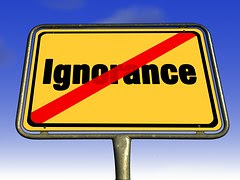
Ignorance 2

Recently I wrote about some of the things that I didn’t know when I started my consulting business. My first list focused on money issues. That’s no surprise. I’ve had a few financial near death experiences since starting my business almost five years ago.

Now I’m back with a second list of things I didn’t know when I started my business. I’m betting I’m not the only one who didn’t know:

  1. Which services my prospective clients would actually consider critical enough to buy. My first efforts involved selling a service which I thought was important but no one wanted to buy. Clearly I had misjudged the market. So I started over, assessing what prospects and clients said they needed. Then I had to continuously tweak my services to keep up with changing demand.
  1. How to identify my ideal client and niche market. This is a corollary to the above point. I’ve marketed my services to plenty of businesses who couldn’t afford me at any price or didn’t care about human resources. So I created a spreadsheet of key data about each client to identify my ideal client. Now I regularly update my spreadsheet to continue defining my niche market. I recently listened to a presentation by Marcus Whitney, co-founder of Jumpstart Factory, in which he advocated reviewing client metrics every two weeks in order to continuously refine the profile of your ideal client. It’s nice to have validation that I’m finally on the right track.
  1. I’ll always have to talk myself off the ledge. Every time I got a new client I was ready to break out the champagne. Every time my services were rejected I wanted to throw myself into a volcano. Then a very good friend who also runs a small consulting business told me, “You’ll always be talking yourself off the ledge.” That’s a typical day in the life of a small business owner.
  1. That my stubbornness would be one of my best skills. Okay, call it persistence. I sell a service, not a product. That means I must meet dozens of people each week, educate them about my services and what my ideal client looks like, and then hope for a referral. I prefer coffee meetings since it’s less expensive than a lunch or dinner and eliminates the awkwardness over who pays for the meal.  But a meeting does not a referral guarantee. I’ve had many days with caffeine highs when I wondered if I made the right career choice. Then my stubborn streak would kick in and I refused to accept failure.  Ironically, my stubborn streak was a detriment when I was an employee.

The list could go on because owning a business is a process of experimentation in which you never really get it “right.” You just keep learning and that’s fine with me.

About Norma Shirk

Norma started her company, Corporate Compliance Risk Advisor, to help employers create human resources policies for their employees and employee benefit programs that are appropriate to the employer’s size and budget. The goal is to have structure without bureaucracy. Visit Norma’s website: www.complianceriskadvisor.com/.

Like what you’ve read? Feel free to share, but please… Give HerSavvy credit. Thanks!

Leave a comment

Filed under Business Savvy, Self Savvy

Leadership Lessons:  What’s Your Style?

Style 3

I was fortunate to have two years to plan for my presidency of our synagogue’s Board of Trustees.  And for several years before that, I was a member of the Board and Executive Committee.  Those prep years were invaluable for helping me to observe the presidents who came before and to learn about various leadership styles.  One thing is clear: there is no “perfect” way to lead.  As in politics, there are many different types of leaders and it is important for each to bring her unique skills and talents to the table.  I do, however, have some observations about various styles.  Here they are, in no particular order.

1. The Micro-Manager

We’ve all worked with and for these folks.  They love to have their hand in just about every aspect of an organization and, if you’re not careful, will “check in” several times a day with staff and others to make sure things are “going okay.”  This is really their attempt to control all aspects of the organization, project or event.  Micro-managers can be sweet and lovable, but also very annoying.  Give good direction, trust your team and then let go.  If they need you, they’ll ask.  If you see someone veering off course, you can always jump back in.

2. The “Hands-off” Leader

Everyone likes to say they are “very laid back,” but in practice a laid back or “hands off” leader can be difficult as well.  This person, while well-meaning, is often not very confident in her abilities as a leader and, consequently, doesn’t lead.  Relaxed is good, empowering others is great, but a strong leader models the behavior they want to see in their team.  If your leader lacks vision and drive, if she gives no direction, things can fall apart quickly.

3. Where Does the Buck Stop?

Some people really want to be a leader, but they lack something I believe is one of the most important qualities: accountability.  Regardless of who falls down on the job or which ideas don’t pan out, the leader of an organization must be willing to take responsibility.  No, everything is not your fault, but making decisions and managing outcomes are key parts of being a leader.  Be mindful of who is on your team and what they can deliver and manage your own expectations.  When things don’t go as planned, be ready to face the music.

4. “I’m Just Not Organized”

Not everyone is a detail oriented, chart-making, list-keeping type of leader.  But it is important to develop your own way of staying organized.  In any organization there are many things that require attention on a daily basis.  Some things are more urgent than others, but it’s important to be able to prioritize and manage time.  Remember, everyone is looking to you to set the tone.  If being organized is simply not your innate style, enlist the help of a trusted assistant.  Just remember you cannot blame the assistant if the system breaks down.  See #3 above!

5. “I Can Do It All Myself”

When I was young, my mother told me that a good leader knows when to ask for help.  Along with accountability, I believe this is also one of the most important skills a leader should have.  In planning for my presidency, I got to know a lot of people in the congregation and developed key relationships with people I knew I’d want on my team.  For an extrovert like me, getting to know people is one of the most fun parts of being a leader.  I admit I am still amazed when people agree to help or be on the team, but it is gratifying to work together toward a common goal.  Do not be afraid to ask for help.  No one can do it all by themselves.  Those that try are doomed to either failure, or plenty of sleepless nights and frustrating days.


So there you have it, my take on leadership styles.  How do you find yours?  This process takes soul searching, honesty, observation and trial-and-error.  If you’ve already completed this process before you take leadership, good for you!  If not, remember #5 on my list:  ASK FOR HELP!  There are plenty of mentors out there waiting to give advice and guidance.  And if you don’t have someone, contact me here at HerSavvy.com.  I would love to be a part of your team!

About Barbara Dab

Barbara Dab is a journalist, broadcast radio personality, producer and award-winning public relations consultant.  She is the creator of The Peretz Project: Stories from the Shoah: Next Generation.  The Peretz Project, named for her late father-in-law who was a Holocaust survivor, is collecting testimony from children of survivors.  Check it out at http://www.theperetzproject.com.  If you are, or someone you know is, the child of survivors of the Shoah, The Holocaust, and you would like to tell your story please leave a comment and Barbara will contact you.

Like what you’ve read? Feel free to share, but please… Give HerSavvy credit. Thanks!

Leave a comment

Filed under Business Savvy, Self Savvy

The Other Side of the Couch – What’s with the Weather?

Weather

No, I am not going to rail about El Nino or debate climate change; neither am I going to use such weather clichés as, “If you don’t like the weather in New England now, just wait a few minutes” – attributed to Mark Twain.  (In considering this topic I did a search on weather quotes and found that the attribution to Twain was unsourced; however, he did give a talk to the New England Society’s Seventy-First Annual Dinner, New York City, Dec. 22, 1876, in which he reported counting 137 different kinds of weather in New England within 24 hours! He might have been exaggerating for effect, being Mark Twain.)

Today I am more interested in the topic of inner weather.  We human beings like to think of ourselves as higher than or perhaps exempt from the effects of environment on our experiences.  We live our lives in this country, often, in urban centers filled with noise and traffic.  We spend our days in office cubicles surrounded by the twitters and whirring of computers, ringing phones, printers and all the other technological advances of the 21st century.  We go home to televisions, streaming video, video games.  Many of us don’t get outside more than the ten minutes it takes us to move from home to car, car to office.  Perhaps we live in cities with public transportation, and we ride subways or ells or buses.  If we are fit and lucky and it is safe, we might get to ride bicycles.  We spend more and more time removed from the weather.

We are told that we need to spend at least 15 minutes daily getting outside sunshine in order to have appropriate levels of Vitamin D, a vitamin that has in recent years been determined to be both very important to human health and very likely to be deficient in many people in the United States.  We don’t get out very much these days.

I am not (yet) an outdoor person.   I don’t like to sweat, and I don’t like being cold.   A perfect day would be sunny with a slight breeze, about 72, with a lovely, relatively easy trail that goes through a beautiful forest filled with deer and other wildlife, but NOT filled with insects.  As it happens, such a beautiful place exists about a mile from my home; however, the 72 degree days happen rarely, and the insects disappear only with the appearance of much colder weather.  What to do.

My goal for myself is to become more of an outdoor person so that my inner weather will be fortified by all the good things the outdoors can offer – increased Vitamin D, but more than that, the experience of beauty, the joy of movement, the removal from the pace of life that we experience these days.  I’ll let you know how it goes.

Want to change your own inner weather?

  1. Take a walk at lunchtime – any movement helps, even through a steel canyon.
  2. Get up 15 minutes earlier and GO OUTSIDE – rain or shine. Even a balcony on a high-rise will do.
  3. Get a dog. Dogs are great about making us outdoor people.
  4. If you have a pet, pet your pet. Even if you are not outside, the act of interacting with a pet has beneficial effects on anxiety, blood pressure, even digestion.
  5. Create something beautiful. Just for the joy of it.
  6. Really look at a leaf, or a stick, or a stone. Think about its life journey.

About Susan Hammonds-White, EdD, LPC/MHSP:

Susan is a communications and relationship specialist, counselor, Imago Relationship Therapist, businesswoman, mother, and proud native Nashvillian. She has been in private practice for over 30 years. As she says, “I have the privilege of helping to mend broken hearts.”  Contact Susan at http://www.susanhammondswhite.com

Like what you’ve read? Feel free to share, but please… Give HerSavvy credit. Thanks!

Leave a comment

Filed under Self Savvy

History is Alive

Books

I am frequently asked why I love history so much.  History is alive. It’s full of people and how they lived their lives.  Since we learn by observing other people, historical persons are the ultimate role models.

For example, George Washington was brilliant at projecting confidence.  The worse things got, the more he appeared calm and confident. His attitude inspired his troops to continue fighting for eight years in the Revolutionary War. Any business owner understands the importance of projecting confidence to employees, clients, and competitors. Confidence breeds success.

Another guy I’m partial to is General George Thomas, nicknamed the Rock of Chickamauga.  Why? When the entire Union line broke and scampered back to Chattanooga, Tennessee, he refused to retreat and ordered his men to stop the Confederates. He turned a potential disaster into merely an embarrassing day for the Union Army.

Every business owner has experienced a version of Chickamauga when a key client cancelled a contract leaving a giant hole in the company’s bottom line or a project went hideously wrong. Successful business owners hold their nerve, trust their team and battle on to retrieve something from the mess.

History also gives us perspective. Without historical comparisons, we have a tendency to believe the challenges we face are brand new. But there truly is nothing new under the sun because human nature doesn’t change.

Take a look back at the first “world war” known as the Peloponnesian War which lasted from 431 – 404 B.C. Athens and Sparta fought across Greece, then on to North Africa, Sicily, Spain, and all Mediterranean points in between. They trashed the known world fighting for economic and political control. The war created an opportunity for the competing Persian Empire to try to conquer Europe.  It all seems a bit like Microsoft and Apple who were so busy fighting each other they failed to recognize the threat posed by Google.

The Peloponnesian War is described in wonderful detail by Thucydides. He had time to write because he was unemployed after disagreeing with his superiors about the Athenian strategy to defeat Sparta. He’s an early example of making a career transition, in his case from soldier to historian.

Thucydides tells of heroic battles and the suffering of civilians, of spies and traitors. His most memorable character is Alcibiades who sold out his home town of Athens to the Spartans, then switched sides, before pulling yet another switcheroo. Alcibiades eventually sold out all the Greeks to the Persians.

Alcibiades must have been charming because it took years for the Athenians and Spartans to stop trusting him. Today, Alcibiades would be labeled as anti-social or sociopathic. I’ll bet you’ve met an Alcibiades at some point in your career.

These few examples illustrate why I love history.  I have role models for every possible event in my life.  I can see how current challenges are the same or different than historical events and that guides my strategy on how to react.  No how-to book will ever match what I can learn from history.

About Norma Shirk

Norma started her company, Corporate Compliance Risk Advisor, to help employers create human resources policies for their employees and employee benefit programs that are appropriate to the employer’s size and budget. The goal is to have structure without bureaucracy. Visit Norma’s website: www.complianceriskadvisor.com/.

Like what you’ve read? Feel free to share, but please… Give HerSavvy credit. Thanks!

Leave a comment

Filed under Business Savvy, Self Savvy

Lessons in Leadership: Learning to Listen

Listening

I have recently been elected President of our synagogue’s Board of Trustees, a position for which I had been preparing for several years.  The last couple of years leading up to my presidency, I began paying special attention to the current president, observing her leadership style and comparing it to other past presidents.  And now that I have been in the role for a few months, I’m figuring out my own style and learning some valuable lessons.

First and foremost for me is learning to listen.  My profession as a news reporter requires me to both ask questions and listen for answers.  The goal is to seek out information relevant to the story I am pursuing, digest it and present it in a clear, balanced, fair manner.  It is up to the consumer to draw her own conclusion about the information.

As a leader, I am required to listen first to my constituents’ thoughts, problems, suggestions, complaints, etc.  Often what people want most is to be heard.  For example, there is one older woman, recently widowed, who calls me regularly and will also pull me aside in synagogue to chat.  At first I tried to avoid her, fearing criticism or complaining.  But after thinking about it, I decided to dive in head on when she calls or asks to talk.  What I found is that she is lonely, cares deeply about the congregation and really trusts my leadership.  Now when she wants to talk I gladly spend time with her.  The key for me is to just listen, ask minimal questions and when she is done, I thank her for her thoughtfulness, concern and dedication.

This practice of listening also applies to other leaders in the community.  There is one particular Board member who calls often to voice his opinion, usually on a topic recently covered in a meeting.  With this person, I often screen his calls because he leaves long voice messages, covering much of what he wants to discuss.  He is a really nice, caring guy, but also long winded.  Again, what he wants most is to be heard, so by waiting until I have sufficient time, he can get that need met.  I’ve learned he is insecure about speaking up at meetings and sometimes needs a little more time to formulate his thoughts and opinions.  The meetings are often fast paced, with the same few folks doing most of the talking, and he just isn’t comfortable.  But I value his opinions and I am trying to encourage him to speak up more.

Just before I took office I met with my friend who was the outgoing President.  She said that she thinks of congregants like her kids.  Sometimes they just want comfort and to know someone is listening.  She encouraged me to find my own leadership style and advised me to never forget that I am always being evaluated and observed by others.  It was good advice.

What are your leadership lessons?  Let us know and be watching for more of mine.

About Barbara Dab

Barbara Dab is a journalist, broadcast radio personality, producer and award-winning public relations consultant.  She is the creator of The Peretz Project: Stories from the Shoah: Next Generation.  The Peretz Project, named for her late father-in-law who was a Holocaust survivor, is collecting testimony from children of survivors.  Check it out at http://www.theperetzproject.com.  If you are, or someone you know is, the child of survivors of the Shoah, The Holocaust, and you would like to tell your story please leave a comment and Barbara will contact you.

Like what you’ve read? Feel free to share, but please… Give HerSavvy credit. Thanks!

3 Comments

Filed under Business Savvy, Self Savvy

The Other Side of the Couch – Hurricanes and Turtles

Snapping Turtle

My husband and I share our home with two cats – two animals that are as different as chalk and cheese. Oscar is a grey, black and brown tabby with a white nose and cheeks, a white bib, and four white paws. He has green eyes with black liner around each.  Oscar can only be described as portly – he is the older of the two by eight years.  He commands the high ground in the house in some ways.  His preferred hangout is the loft above the den/office where he naps during the day, but his preferred nighttime stance is curled up right against my hip, wedged just tightly enough that turning over will place him in some danger if he doesn’t move quickly enough.

Jasmine, on the other hand, at age three, is the social committee.  A Maine Coon mix with the typical ruff, long fur and feather tufts between her toes, she is also remarkably gentle, loves to be brushed, talks all the time, and has a purr that can be heard across the room.  Although much lighter in weight, with all her fur she looks to be almost the same size as Oscar.

Jasmine joined our family about a year ago, and the introduction between these two took a while.  However, Oscar was tolerant, and Jasmine was persistent.  Now they often squabble, but also can be found lying on the bed together at times.  Jasmine does not climb up into Oscar’s lair, and Oscar does not climb on Jasmine’s cat condo.  They will eat each other’s food if either can get away with it.  Water bowls and boxes seem to be shared territory.

If Oscar and Jasmine were a human couple, I would say that Oscar is the minimizer – the one who just wants to shut things down and avoid conflict – while Jasmine is the maximizer – what do you MEAN you don’t want to talk about it, we have to get to the bottom of this right NOW!

Maximizers and minimizers are roles that turn up in most coupleships.  The problem is that both individuals who play these roles tend to think that their way of doing things is the way things should be done.

If you are the person in your relationship who tends to be more verbal, to want to initiate talking or getting to the bottom of a problem, or who has a hard time when your partner wants to take time out from dealing with a situation, you could be a maximizer.  Another metaphor for this role is that of being the hurricane or the tiger – you have outward moving energy that wants to be expressed.

If you are the person in your relationship who just wants to get things back under control and to shut down any problems, on the theory that most things will take care of themselves if they are not made too much of, you are probably a minimizer – you have inward moving energy that wants to close off.  A metaphor for this energy is that of the turtle – pulling into its shell for safety (but remember that turtles can be snapping turtles, too, if necessary).

If you recognize yourself in these descriptions, you might also want to know that the more you minimize or maximize, the more likely it is that your partner will do the opposite – and that will get you both stuck in an ongoing power struggle.

If you are stuck:

  1. Step back and take a time out.  Don’t return until you have calmed down.
  2. Recognize your own energy type and try to incorporate some of the opposite energy.
  3. Accept your partner’s energy with grace. You are not likely to change this essential quality – best to learn how to appreciate and manage it.
  4. Squabble if you must, but always end up peacefully – like Oscar and Jasmine.

After all, lying on the bed together isn’t a bad outcome!

About Susan Hammonds-White, EdD, LPC/MHSP:

Susan is a communications and relationship specialist, counselor, Imago Relationship Therapist, businesswoman, mother, and proud native Nashvillian. She has been in private practice for over 30 years. As she says, “I have the privilege of helping to mend broken hearts.”  Contact Susan at http://www.susanhammondswhite.com

Like what you’ve read? Feel free to share, but please… Give HerSavvy credit. Thanks!

1 Comment

Filed under Self Savvy