Category Archives: History

Why is This Year Different?

traditional jewish matzo

Photo by cottonbro on Pexels.com

This Wednesday evening marks the beginning of the Jewish holiday of Passover.  It is a well-known fact that it is also the most celebrated of all the holidays.  The observance lasts eight days during which we focus on the theme of our people’s exodus from slavery in Egypt, crossing the Red Sea in a hurry with little time to prepare.  The first night consists of a festive meal, or Seder, when we retell the story through questions and answers, singing, eating and drinking four cups of wine.  The point of this exercise is to both remind us that freedom is precious, and to teach the younger generations about our story.

One of the highlights of every Seder is the asking of The Four Questions.  These questions are designed to provoke discussion and thought around the significance of the holiday.  Usually asked by the youngest person at the table, the refrain is always, “Why is this night different from all other nights.”  The answers to the four questions are the heart of the rest of the Seder.  But the overarching theme is always: freedom.


Over the last couple of weeks, I admit I’ve engaged in bouts of self-pity.  I have felt afraid for myself and my family.  I have been depressed about the changes in my life.  I have been angry, too, that those in leadership who could have mitigated some of the damage, did nothing.  And I have felt sad and helpless.  These negative thoughts and feelings are foreign to me.  I am usually an optimistic person who can find fun and joy in most places.  But our current state of affairs has been really tough for me to accept.

A therapist would probably say I’m moving through the stages of grief, and that’s likely the case.  I know from grief.  My people know from grief.  Generation after generation of Jewish people have been chased around the globe, experiencing plagues, famine, Holocaust and antisemitism.  And we are not alone in this.  Other cultures and peoples have faced similar obstacles and discrimination.  I can’t speak for the others, but I can speak for myself and my people.  The one thing we do to defend ourselves against the darkness is to survive.  We survive by carrying on our traditions.  We survive by being joyful.  We survive by telling the stories.  We survive by holding tight to each other, even if it is only in memory.

Most years we host a large group of friends and family to join our Seder.  I spend weeks planning and preparing the ritual foods and the traditional festive delicacies.  This year, obviously, the usual crowd will not be joining us live in our home.  It was with a heavy heart that a couple of weeks ago I emailed everyone to cancel.  And it was at that point that I really felt the enormity of what we are dealing with today.  I was also able to relate to the story of my ancestors and the challenges they faced.  Personally, my world has become pretty small and my life has slowed to a pace way out of my comfort zone.  But we will have our Seder.  We will include my son in California via Zoom.  I will make my chicken soup the way my mother taught me.  My husband, who will now be home, will make the brisket.  We will drink four cups of wine (really, the best part).  And, we will retell the story of our exodus and our journey to freedom.

The final prayer of the Seder meal is one in which we express our hope that next year we will celebrate in Jerusalem.  For me, the meaning is not to literally be in Jerusalem, although that would be amazing.  I think of Jerusalem as my spiritual home, the place where I can feel free to express my faith and tradition.  But my actual home, here in Nashville, is also a place where I can feel free to be myself and to enjoy life with my family and friends.  So, this year when we say the prayer, I will be thinking ahead to next Passover, when I can once again open my home and share the story of our survival and freedom with 30 of our nearest and dearest.  In the meantime, stay healthy, stay home and wash your hands.  xo


About Barbara Dab

Barbara Dab is a journalist, broadcast radio personality, producer and award-winning public relations consultant.  She is the current Editor of The Jewish Observer of Nashville, and a former small business owner.  Barbara loves writing, telling stories of real people and real events and most of all, talking to people all over the world.  The Jewish Observer newspaper can be read online at www.jewishobservernashville.org .

Like what you’ve read? Feel free to share, but please… Give HerSavvy credit. Thanks!


2 Comments

Filed under family, History, Self Savvy, Uncategorized

How Not to Handle an Equal Pay Claim


The U.S. Soccer Federation (USSF) is in a tailspin at the moment due to self-inflicted wounds. These self-inflicted wounds are just the latest PR disaster in their handling of the lawsuit filed by players on the U.S. Women’s National Team (USWNT) demanding equal pay.

The Equal Pay Act dates to 1963 so the USSF can’t claim they were blind-sided by a new federal law.  The law prohibits disparity in pay between men and women doing the same job.  It was bolstered in 1972 with Title IX of the Education Amendments which prohibited sex discrimination in education and forced schools at all levels to create women’s sports programs.

Since then the USWNT has won the World Cup four times and Olympic gold medals 4 or 5 times.  They are the global standard for women’s professional soccer that all other nations strive to match.  Meanwhile, our men’s team has had trouble recently qualifying for the Olympics and has never made it past the Elimination Round of the World Cup.

That brings us back to the USSF’s bumbling response to the equal pay lawsuit.  Instead of admitting the women might have a point, the USSF has argued that the women’s game is inferior to the men’s game.

On March 9th, the USSF filed its latest pleading which argues that the US Men’s National Team players are paid more than the world-topping women’s players because the men’s game requires more skill, is more physically demanding, and involves more responsibility.   That’s a PR own goal coming from the organization responsible for promoting both national teams.

The USSF has also tried to argue that the men’s game generates more revenue which justifies the pay disparity.  In depositions, the women have pointed out that the USSF spends a lot more money and resources promoting the men’s team than the women’s.  Besides, recently the women have generated higher revenue per game than the men’s team.

The immediate outrage sparked by the USSF’s blatantly sexist pleading was so overwhelming that Carlos Cordeiro resigned as its president before the week ended. But Mr. Cordeiro didn’t operate in a vacuum. The board set the strategy and approved his handling of the lawsuit. They should also resign.

Meanwhile, the USSF has appointed Cindy Parlow Cone, a former USWNT player, as the president while they search for a permanent replacement.  Ms. Cone has been given the thankless task of cleaning up the mess left by the men and trying to salvage USSF’s brand.  Wish her luck.


About Norma Shirk

My company, Corporate Compliance Risk Advisor, helps employers (with up to 50 employees) to create human resources policies and employee benefit programs that are appropriate to the employer’s size and budget. The goal is to help small companies grow by creating the necessary back office administrative structure while avoiding the dead weight of a bureaucracy.  To read my musings on the wacky world of human resources, see the HR Compliance Jungle (www.hrcompliancejungle.com) which alternates on Wednesday mornings with my history blog, History By Norma, (available at http://www.normashirk.com). To read my musings on a variety of topics, see my posts on Her Savvy (www.hersavvy.com).

Like what you’ve read? Feel free to share, but please….. Give HerSavvy credit. Thanks!

Leave a comment

Filed under Business Savvy, Fun Savvy, History

go_vote

Years ago I worked for Los Angeles’ County’s central labor council, which is the political organizing body for the local AFL-CIO.  It was an exciting time and I learned about grassroots organizing and political mobilization.  Probably the most powerful message for me is that we are incredibly privileged to live in this country, flawed though it is, and to have the right to make our voices heard in a peaceful manner. 

Many of our union members were immigrants who fled countries where they did not have the right to vote, enough food and water, education for their children and basic health care.  It was always so moving for me to watch new American citizens vote for the first time.  In fact, it was my honor at times to help drive people to the polls.  The weekends leading up to election day are known as GOTV, or Get Out The Vote.  We would head into neighborhoods with historically low turnout, and knock on doors.  I visited places I never knew existed in my own hometown and talked to so many people who were grateful for the opportunity to participate in their government.  It was probably one of the most formative experiences of my adult life. 

I’ve become passionate about the voting process and encourage everyone I know to make sure they vote, particularly young people, who often feel disenfranchised by a cumbersome system designed to discourage people from getting to the ballot box.  Today, more than ever, it is imperative that everyone who is qualified, gets registered and then goes to the poll.  This is the primary way to make our voices heard and to decide who we want working for us.  When so much feels out of our control, the one thing we can control is our own voice.  So today, wherever you are, think about what it means to live in a democracy.  And if you live in a state that has a primary, make sure you Get Out The Vote.  Our future depends on you.


About Barbara Dab

Barbara Dab is a journalist, broadcast radio personality, producer and award-winning public relations consultant.  She is the current Editor of The Jewish Observer of Nashville, and a former small business owner.  Barbara loves writing, telling stories of real people and real events and most of all, talking to people all over the world.  The Jewish Observer newspaper can be read online at www.jewishobservernashville.org .

Like what you’ve read? Feel free to share, but please… Give HerSavvy credit. Thanks!


Leave a comment

Filed under History, Self Savvy, Uncategorized

Defining Beauty

Standards of beauty have changed radically over the centuries and say more about our cultural values than anyone’s actual physical beauty.  Attaining the appropriate standard of beauty depends almost entirely on a person’s socio-economic status.

During the Renaissance, a bit of plumpness meant your family was wealthy enough to eat more than one meal a day, unlike poorer people who mostly starved.  That’s why Titian’s female models are, to say it politely, fat by modern standards.

In the 17th and 18th centuries, wealthy people wanted to be pale to separate themselves from the ruddy-cheeked people who did manual labor.  Upper class women regularly ingested small doses of arsenic because it gave their skin a pale, pearly sheen.  They also wore clothes of velvet, linen and other expensive cloth as a visible symbol of their wealth.

One reason for the sartorial splendor was that people rarely bathed.  Bathing only became fashionable for aristocrats and socialites in the early 1800’s when they learned that Beau Brummell bathed every day.  Brummell was the Kardashian of his day, famous for being famous.  He also started the tuxedo tradition in which every sharp dressed man wears a white shirt with a black coat and pants.

By the middle of the 19th century, women’s beauty was defined by an hourglass figure. The ideal woman had an 18-inch waist and couldn’t take a deep breath.  Women wore corsets so tight that it reshaped their internal organs, often leading to complications during childbirth.

In the 1920’s, liberated women rebelled against their corsets and opted for a new flat-chested look, wearing dresses that fit like flour sacks.  They also continued using arsenic to whiten their skin and then slathered on mascara, rouge and other beauty products.

In the 1960’s, we finally awoke to the fact that women of color face a host of beauty questions that white women don’t.  Consider the great debate about hair; about whether to go “natural” or use a relaxer to straighten their hair.

Today’s beauty standard dictates that we must be wrinkle-free and maintain a “healthy” weight.  Higher income people can afford the Botox and cosmetic surgery to look young. They also have the income to pay for a healthier diet and to regularly work out at the gym.  Meanwhile, poorer people have wrinkles, eat a less healthy diet and don’t have the time or money to go to the gym on a regular basis.

For those of us who don’t meet the current standards, I suggest a different approach to the question of beauty.  Buy some champagne.   After a couple of glasses, you won’t care.


About Norma Shirk

My company, Corporate Compliance Risk Advisor, helps employers (with up to 50 employees) to create human resources policies and employee benefit programs that are appropriate to the employer’s size and budget. The goal is to help small companies grow by creating the necessary back office administrative structure while avoiding the dead weight of a bureaucracy.  To read my musings on the wacky world of human resources, see the HR Compliance Jungle (www.hrcompliancejungle.com) which alternates on Wednesday mornings with my history blog, History By Norma, (available at http://www.normashirk.com). To read my musings on a variety of topics, see my posts on Her Savvy (www.hersavvy.com).

Like what you’ve read? Feel free to share, but please….. Give HerSavvy credit. Thanks!

4 Comments

Filed under History, Self Savvy

A Ray of Sunlight Through the Smoke

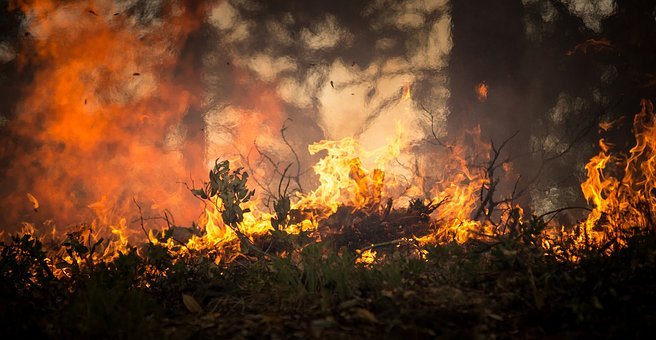
The images from Australia are truly shocking. Much of New South Wales, South Australia and Victoria states have been reduced to cinders.  Volunteer firemen and others have succumbed to smoke and flames.  Many people have lost their homes; entire towns have burned to the ground.

As bad as the situation is for humans, it’s worse for plants and animals. Animals who survive their burns and loss of habitat face death by starvation as their food sources are temporarily wiped out.

Meanwhile, Prime Minister Scott Morrison is a climate change denier.  He appears to argue that climate change doesn’t exist because it’s not the sole cause of the fires.   I’m not sneering at Mr. Morrison.  The U.S. has politicians just as breathtakingly stubborn about denying climate change.

The American west faces a fire threat of Australian proportions thanks to climate deniers. Beginning with Ronald Reagan’s administration, our government has persistently underfunded the controlled burn program in the American west, meaning that our “fire season” is now longer and more devastating.

The underfunding meant much of Yellowstone National Park burned to the ground in 1988.  It’s only gotten worse as weather patterns have changed in recent years.  Yet like their Australian mates, U.S. climate change deniers insist that since it’s not the sole cause of western wildfires, climate change must be a myth.

But amid all the willfully ignorant blather from politicians, there is a ray of sunshine. Ordinary people understand what is at stake and are taking action. Volunteer firemen across southern Australia have put their lives and livelihoods in jeopardy to fight the fires and save lives.

Craft guilds around the world support local Australian guilds that are knitting, crocheting and sewing pouches for injured animals. Orphaned baby bats, koalas, and kangaroos (and many other species) have a chance at life thanks to the surrogate pouches and the volunteers nursing them back to health.

Ordinary people also understand that there are few sole causes to any natural or human-made disaster. They understand that it’s about admitting that our activities affect our world and its natural resources including the climate.


About Norma Shirk

My company, Corporate Compliance Risk Advisor, helps employers (with up to 50 employees) to create human resources policies and employee benefit programs that are appropriate to the employer’s size and budget. The goal is to help small companies grow by creating the necessary back office administrative structure while avoiding the dead weight of a bureaucracy.  To read my musings on the wacky world of human resources, see the HR Compliance Jungle (www.hrcompliancejungle.com) which alternates on Wednesday mornings with my history blog, History By Norma, (available at http://www.normashirk.com). To read my musings on a variety of topics, see my posts on Her Savvy (www.hersavvy.com).

Like what you’ve read? Feel free to share, but please….. Give HerSavvy credit. Thanks!

2 Comments

Filed under Business Savvy, History

Happy Hanukkah 2019

fullsizeoutput_2ddd

Tonight, people around the world will be celebrating Christmas Eve, to be followed in the morning by a Christmas Day extravaganza of gifting, eating, spending time with family and friends and maybe attending a church service.  For my family, tonight is the third night of Hanukkah, a fairly minor holiday within the Jewish holiday calendar, but one with some significant lessons, nonetheless.

To begin, this year the holiday falls just after the Winter Solstice, which is the day with the least amount of daylight.  As we light the candles, adding one each night for eight nights, it’s easy to imagine the Menorah lighting our way in the darkest days of the year.  And this lesson is the one most often discussed, that even in the darkest of times, there is light.  And it’s a lovely lesson to share.  But there is actually more to it than that.

The story of Hanukkah goes that when the Greeks desecrated the ancient Temple in the first Century BCE, a small but mighty band of Jewish rebels rose up and liberated it.  In preparing the Temple for rededication, there appeared to be only enough oil to light the holy lamp for one day but miraculously the oil lasted for eight until more could be prepared.  The Hanukkah festival was created to remember that miracle.  But here’s the thing: there’s no actual proof the miracle happened and the history about the events that occurred is a bit murky, according to Jewish scholars and historians.  But that’s the case with many biblical era events, isn’t it?

For me, the veracity of the story is less important than the symbolism.  In addition to lighting the candles in a special candelabra, or Menorah, there is also a specific order for lighting the candles.  It all starts with the Shamash, or helper candle.  This one is lit first and is used to light each of the other candles.  They are placed in the Menorah from right to left, with new candles being added each night.  The Shamash starts lighting the newest candle first, continuing until all are lit for the night.

So many rules, amiright???  Yes, lots of rules for even the smallest task.  But think about it, when there are rules it forces one to be mindful, to consider what is required and to remember.  Each year my family discusses the order for lighting the Menorah and each year we discuss the meaning of the lights and we remember the story.  We remember our history and our place in it, our place in today’s world and our place in our family.  As we light the Hanukkah candles, we think about that small band of rebels who stood up for their beliefs and we are reminded that each of us can make a big difference it the world.  And just like the Shamash, we need to help each other to be a light in the darkest of times, wherever we are and whatever is happening.

So, here’s wishing you all a season of joy and charging each of you to be a light in the darkness.


About Barbara Dab

Barbara Dab is a small business owner, journalist, broadcast radio personality, producer and award-winning public relations consultant.  She is the proud owner of Nashville Pilates Company, a boutique Pilates studio in Nashville’s Wedgewood/Houston neighborhood.  Check it out at  www.nashvillepilatescompany.com.  She is also the creator of The Peretz Project: Stories from the Shoah: Next Generation.  The Peretz Project, named for her late father-in-law who was a Holocaust survivor, is collecting testimony from children of survivors.  Visit http://www.theperetzproject.com.  If you are, or someone you know is, the child of survivors of the Shoah, The Holocaust, and you would like to tell your story please leave a comment and Barbara will contact you.

Like what you’ve read? Feel free to share, but please… Give HerSavvy credit. Thanks!


1 Comment

Filed under family, History, Self Savvy, Uncategorized

Hidden History


Long ago, a very obnoxious history teacher of mine insisted that we should look beyond the words on the page at the author.  Every author’s writing is based on the biases formed by the author’s social position, political beliefs and so on.  That was my introduction to hidden history.

History is the written record of human life and activities.  Of course, a nanosecond after writing was invented, people had to decide what was worthy of being recorded.  History is not a record of everything that people do; only what is deemed important to the people of the day.

In ancient Mesopotamia (modern Iraq and Syria), cuneiform tablets contain lists of livestock and grain that were bought and sold in an ancient version of our commodities markets.  A cuneiform tablet also contains the oldest known warranty by a jeweler to his customer, promising to repair a ring if it should break.

In medieval Europe, ordinary people had few legal rights or protections so their lives weren’t considered worthy by the few literate people.  That’s why Froissart’s account of the Hundred Years war recorded only what happened to kings and queens and the aristocracy.  About 500 years later after the creation of academic disciplines like sociology and psychology, Eileen Power’s Medieval People finally gave us the story of Bodo the Peasant.

The historical record also skimps on the lives of women and minorities. Margery Kempe dictated her autobiography in the 1430’s but it was never published and was eventually forgotten.   In 1934, the manuscript was discovered in an English country house by a researcher looking for unrelated materials.  Thanks to this accident, we can laugh at Margery’s adventures in Memoirs of a Medieval Woman, edited by Louise Collis.

Of course, memoirs may contain information that contradicts accepted wisdom, like the de la Pena diary which surfaced in the 1950’s.  Jose Enrique de la Pena was an officer in the Mexican Army that attacked the Alamo in 1836.  His diary says that David Crockett surrendered and was then shot.  Needless to say, the Texas version of the Alamo (a “shrine to Texas Independence”) story is that all the heroes died on the barricades.  Bitter fights continue around the efforts to authenticate the diary.

My old history teacher may have been obnoxious but I still remember his advice.  Look beyond the surface of the author’s words and find the hidden history.


About Norma Shirk

My company, Corporate Compliance Risk Advisor, helps employers (with up to 50 employees) to create human resources policies and employee benefit programs that are appropriate to the employer’s size and budget. The goal is to help small companies grow by creating the necessary back office administrative structure while avoiding the dead weight of a bureaucracy.  To read my musings on the wacky world of human resources, see the HR Compliance Jungle (www.hrcompliancejungle.com) which alternates on Wednesday mornings with my history blog, History By Norma, (available at http://www.normashirk.com). To read my musings on a variety of topics, see my posts on Her Savvy (www.hersavvy.com).

Like what you’ve read? Feel free to share, but please….. Give HerSavvy credit. Thanks!

1 Comment

Filed under History, Self Savvy

A Thoroughly American Feast

Next week we will celebrate Thanksgiving, an annual food fest for family and friends.  The cuisine reflects our diverse culture. Most of us will eat New World foods like turkey, squash and cranberries.  These foods and the rest of the feast will be prepared from recipes handed down the generations.

The food may vary from kosher to halal; from tacos and burritos to pickled red beets and pumpkin pie; from sweet and sour pork to chutneys and curries. My family traditionally had ham with Pennsylvania Dutch delicacies like mashed potatoes doused in browned butter; shoo fly pie (like a chess pie made with molasses instead of sugar) and deep dish apple pie.

Thanksgiving is also a holiday of giving. Many people deliver Meals on Wheels to the elderly or serve meals at homeless shelters.  Each year there seem to be new opportunities to help others who are facing adversity.

All of these activities follow traditions established at the first Thanksgiving. According to tradition, the first Thanksgiving was held in 1621 when the Pilgrims sat down to a feast with Squanto and the Wampanoag Indian tribe. The meal was a celebration of surviving a hard year for the Pilgrims and recognition that they couldn’t have done it without the help of the Wampanoag.

Thanksgiving is the most “American” holiday we celebrate.  It was multi-cultural from the beginning. It combines old and new foods that are prepared using both traditional and new fusion cuisine methods.   It reminds us that family means more than just our blood relatives.

Have a happy and safe Thanksgiving!


About Norma Shirk

My company, Corporate Compliance Risk Advisor, helps employers (with up to 50 employees) to create human resources policies and employee benefit programs that are appropriate to the employer’s size and budget. The goal is to help small companies grow by creating the necessary back office administrative structure while avoiding the dead weight of a bureaucracy.  To read my musings on the wacky world of human resources, see the HR Compliance Jungle (www.hrcompliancejungle.com) which alternates on Wednesday mornings with my history blog, History By Norma, (available at http://www.normashirk.com). To read my musings on a variety of topics, see my posts on Her Savvy (www.hersavvy.com).

Like what you’ve read? Feel free to share, but please….. Give HerSavvy credit. Thanks!


1 Comment

Filed under family, History

HOPE

My last post was pretty depressing, I know. The issue of plastic overtaking our environment, killing off wildlife, and affecting our health IS depressing. This post comes to you with hope for the future. As an ex-partner of mine would say, “Science created it and science can un-create it.” I’m counting on that.

Well, now, there is a lot out there about a “natural” remedy for the problem. Is it really possible that nature has provided “plastic-eating bacteria?”

“Scientists accidentally create mutant enzyme that eats plastic bottles,” a headline from The Guardian touts:

Scientists have created a mutant enzyme that breaks down plastic drinks bottles – by accident. The breakthrough could help solve the global plastic pollution crisis by enabling for the first time the full recycling of bottles.

The new research was spurred by the discovery in 2016 of the first bacterium that had naturally evolved to eat plastic, at a waste dump in Japan. Scientists have now revealed the detailed structure of the crucial enzyme produced by the bug.

The international team then tweaked the enzyme to see how it had evolved, but tests showed they had inadvertently made the molecule even better at breaking down the PET (polyethylene terephthalate) plastic used for soft drink bottles. “What actually turned out was we improved the enzyme, which was a bit of a shock,” said Prof John McGeehan, at the University of Portsmouth, UK, who led the research. “It’s great and a real finding.”

The mutant enzyme takes a few days to start breaking down the plastic – far faster than the centuries it takes in the oceans. But the researchers are optimistic this can be speeded up even further and become a viable large-scale process.

From another The Guardian post:

Nature has begun to fight back against the vast piles of filth dumped into its soils, rivers and oceans by evolving a plastic-eating bacteria – the first known to science.

In a report published in the journal Science, a team of Japanese researchers described a species of bacteria that can break the molecular bonds of one of the world’s most-used plastics – polyethylene terephthalate, also known as PET or polyester.

The Japanese research team sifted through hundreds of samples of PET pollution before finding a colony of organisms using the plastic as a food source. Further tests found the bacteria almost completely degraded low-quality plastic within six weeks. This was voracious when compared to other biological agents; including a related bacteria, leaf compost and a fungus enzyme recently found to have an appetite for PET.

Here in the U.S., Morgan Vague, Clinical Research Coordinator at Oregon Health and Science University School of Medicine in Portland, Oregon, presents a TED Talk about her research. She talks realistically about the problem we face and how “my bacteria” can help.

How about the solution presented here in an article from Fast Company discussing the enzyme used by bacteria to digest plastic and how it can be developed?

Around the world, several research projects are exploring the potential of enzymes, the part of the microorganisms responsible for digesting the plastic, to help. In the U.K., scientists studying the Japanese bacteria accidentally created a version of the bacteria’s enzyme that worked even better, breaking down plastic bottles in days rather than weeks. At the National Renewable Energy Laboratory in the U.S., scientists are also working on the enzyme—called PETase, because it can eat PET plastic—to make it work faster. Researchers in Germany studied the structure of PETase to optimize it. And in France, a startup called Carbios has developed its own enzyme, which can fully break down PET plastic so it can be recycled into new, consumer-grade plastic of the same quality as virgin PET. Major corporations including PepsiCo and Nestlé are now partnering with the company, which plans to begin building its first demonstration plant this fall.

Like some other new recycling technology, using enzymes has advantages over traditional methods of shredding up old products. The plastic doesn’t have to be clean, and can be broken down completely. “We take these plastics back down to some of their precursor components, and then they are maybe in a better position then to be reused and reincorporated into new materials,” Hallinan says. Creating precursors for making plastic, rather than recycling whole plastic into a lower-grade material, might incentivize more recycling because there’s a better market for the final product. “There might be more economic appetite, more industrial appetite, for those types of materials.”

Then, there are the two students, Jeanny Yao and Miranda Wang, who have been studying and have invented bacteria that “eat plastic from the ocean and turn it into water.” Seeing a headline with their work is what got me looking deeper in this possible “miracle” cure.

I’m certainly not convinced these bacteria are the silver bullet we need, but, combined with limiting plastic production, returning to the days of re-usable materials like glass, and the biodegradable, sustainable materials paper and cardboard, even recyclable aluminum, we may be able to get some control of the situation. At least, we can hope.

About Jan Schim

Jan is a singer, a songwriter, a licensed body worker specializing in CranioSacral Therapy, and a teacher.  She is an advocate for the ethical treatment of ALL animals and a volunteer with several animal advocacy organizations.  She is also a staunch believer in the need to promote environmental responsibility.

Like what you’ve read?  Feel free to share, but please… Give HerSavvy credit.  Thanks!

Leave a comment

Filed under History, Self Savvy, Uncategorized

Waste

Navigating through Nashville is difficult these days with all the construction projects in various stages of completion. The skyline of downtown Nashville is dotted with more than a dozen giant construction cranes.  New hotels, businesses, apartments and condos are opening on a daily basis.

Growth is good. But there’s one thing the city’s cheerleaders aren’t talking about. Waste disposal.

New construction projects must include some infrastructure, such as waste water lines that tie into the sewerage system.  But the city’s sewerage system is outdated. Ancient water mains collapse with depressing regularity.  More pipes will collapse by next spring as the soil contracts over winter and expands with the spring thaw.

During the Great Flood of 2010, only one water treatment plant remained functional.  Since then, the city’s population has increased by tens of thousands of people.  With all that growth, the city should have built more treatment plants but hasn’t.  Meanwhile, thousands of new residential properties and hotels are tying into our decaying system.  Usage is expanding but the system isn’t.

I was reminded of these depressing facts of life recently when I received a notice from Metro Water Services saying that they would be asking for a rate increase.  As someone who grew up in rural areas where cesspits and outhouses were the only options, I place a high value on flushing toilets and safe drinking water.  This is one time I don’t think I’ll protest paying higher taxes.


About Norma Shirk

My company, Corporate Compliance Risk Advisor, helps employers (with up to 50 employees) to create human resources policies and employee benefit programs that are appropriate to the employer’s size and budget. The goal is to help small companies grow by creating the necessary back office administrative structure while avoiding the dead weight of a bureaucracy.  To read my musings on the wacky world of human resources, see the HR Compliance Jungle (www.hrcompliancejungle.com) which alternates on Wednesday mornings with my history blog, History By Norma, (available at http://www.normashirk.com). To read my musings on a variety of topics, see my posts on Her Savvy (www.hersavvy.com).

Like what you’ve read? Feel free to share, but please….. Give HerSavvy credit. Thanks!
 

Leave a comment

Filed under Business Savvy, History