Tag Archives: women in health care

The Other Side of the Couch – Is Your Brain High Jacked?

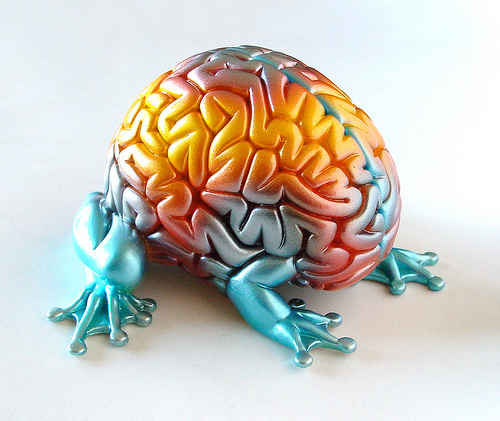
Limbic Brain

I had an odd experience the other day.  I had made an appointment for an orientation to a wellness center, but when I arrived at the appointed time, my name could not be found in the computer. A little background would be in order – since I have a hyphenated last name, computers often struggle with me. However, they tried all possible combinations and nothing came up.  I was offered the opportunity to  a) come back an hour later, b) reschedule, or c) receive a free personal training session as a compensation.

What was interesting to me was my reaction.  I became tearful; my voice began to quiver; I stated that I was irritated and upset and that none of those options were acceptable, and I walked out.  As I walked to the car, I felt my heart pounding, and when I got to the car, I got in, slammed the door, and tried to figure out what on earth had happened.  I was reacting to this computer glitch as though I had been personally attacked and I was feeling hurt, powerless and angry.  My brain had been high jacked!

I knew that I was in the grip of an adrenaline rush powered by a variety of neurochemicals and that I was not responding rationally.  I also knew that something was powering this that was bigger than a computer glitch.  So I took a few minutes to sit with myself – but nothing came up.  I was still distressed.  I decided to leave and to check this out when I was a bit calmer.

Later, I looked again at what had happened and I discovered the iceberg beneath the seemingly insignificant experience.  For me, the iceberg included ambivalence about committing to an exercise program based on fear of injury (old stuff), a story that I was telling myself that said something like, “You’ll never be able to do this right. Why are you even trying?” (self-judgment), and a sense of hopelessness about my body.  Wow!  What I found out was that even getting in the door of this wellness center had been a huge stretch and that I was carrying a lot of self-judgment that was activated by this small disappointment.

I called and made another appointment, and I will take that free session as compensation!

This kind of experience is actually quite common in human beings.  Our limbic system, ruled by the amygdala and based on fear, can high jack our logical, thinking brain all too easily.

What can you do when your brain is high jacked?

  1. Recognize it – you want to react much more strongly than the situation warrants; you have physical responses – heart pounding, breathing quickened, voice changes; you want to react impulsively.
  2. Leave the situation if possible – take a break; drink water; go for a walk.
  3. If you are with a partner or a friend, explain that you need a time out.
  4. When the physical symptoms pass, sit with yourself and listen without judgment. Your body and brain know a lot about what has happened, and if you listen to yourself, you will learn.
  5. Do what is necessary to repair the situation.

Careful listening and self-compassion are the keys to a better understanding of your own brain.

About Susan Hammonds-White, EdD, LPC/MHSP:

Susan is a communications and relationship specialist, counselor, Imago Relationship Therapist, businesswoman, mother, and proud native Nashvillian. She has been in private practice for over 30 years. As she says, “I have the privilege of helping to mend broken hearts.” Contact Susan athttp://www.susanhammondswhite.com

Like what you’ve read? Feel free to share, but please… Give HerSavvy credit. Thanks!


3 Comments

Filed under Self Savvy

The Other Side of the Couch –Listening

Listening

I recently had the pleasure of attending an unusual conference in our nation’s capital. NO, the conference had nothing to do with politics (although we did have a surprise visit from “President Obama” – for split seconds the audience really did think this very talented impersonator was the real thing!)  The theme of the conference was Joyful Aliveness, and the hotel was rocked by shouts of “You are Amazing!” from the presenters, the participants, and anyone else who was brought in for any purpose.

I was attending the annual conference of Imago Relationship Therapists. IRI is an international organization that brings together Imago therapists from all over the world.  This year there were participants from 21 different countries, including 8 from Estonia, 17 from South Korea, and 4 from South Africa.

Imago Relationship Therapy, first developed by Harville Hendricks and his wife, Helen LeKelly Hunt, is a way of healing relationships through the use of a variety of processes, most importantly through the use of Dialogical processes.  First developed nearly 25 years ago, Imago is used by over 1000 therapists around the world, changing the world, as we say “one couple at a time.”  (For more information, check out www.gettingtheloveyouwant.com, or just google it on Youtube.)

Imago processes are based on very precise and attuned listening, a skill that most people have never been taught.  What more often than not happens when two people are talking about a subject that brings up any feeling of conflict is that while one person is talking and the other is ostensibly listening, what is really going on is that the supposed listener is actually listening to what is going on inside his or her own head, so as to effectively challenge or contradict the other.  The same thing goes on when the other person is called upon to listen.  WE DON’T LISTEN, and we, therefore, often base our behavior on erroneous information.

What was beautiful about this conference was that I was in a community of trained and respectful listeners who, even in the midst of disagreement (and there were disagreements), were able to listen, take in new information, even change their positions based on new information.  I enjoyed it so much!

Below is a poem that was shared after the conference.  It sums up my thoughts about listening.  Enjoy!


“Reduced to Joy” by Mark Nepo

We can grow by simply listening, the way the tree on

 that ridge listens its branches to the sky,

 the way blood listens its flow to the site

 of a wound, the way you listen like a basin when

 my head so full of grief can’t look you in the eye.

 We can listen our way out of anger, if we let the heart

 soften the wolf we keep inside.

 We can last by listening deeply,

 the way roots reach for the next inch of earth,

 the way an old turtle listens all he hears into the pattern of his shell.


About Susan Hammonds-White, EdD, LPC/MHSP:

Susan is a communications and relationship specialist, counselor, Imago Relationship Therapist, businesswoman, mother, and proud native Nashvillian. She has been in private practice for over 30 years. As she says, “I have the privilege of helping to mend broken hearts.”

Like what you’ve read? Feel free to share, but please… Give HerSavvy credit. Thanks!

Leave a comment

Filed under Self Savvy

The Other Side of the Couch – What Is It about “Frozen?”

Frozen 2

I was attending a theater performance some days ago and noticed a young girl sitting in front of me.  She was wearing a very pretty dress and when I commented on it, she looked at me as though I were completely “not with it” and informed me, “I am Anna.”  Now, had she been wearing the Elsa costume I would have caught on much more quickly.  I nonetheless realized that I was in the presence of one of the myriad of young girls (and young boys, for that matter) who have been caught up by the amazing movie “Frozen.”  For those aliens who have completely missed out on this phenomenon, the movie is loosely (very loosely) based on the Hans Christian Anderson fairy tale, “The Snow Queen.”  However, in this story, the hero is an anti-hero, the main characters are two sisters, and the final redemption happens as the result of sacrificial love.

Elsa, the snow queen, sings the anthem “Let It Go,” a song that has taken the hearts of young people (and many adults) by storm.  Elsa has tried to hide her power, has been afraid to use it, and finally reaches a point of letting it out or letting it go…also letting go of the restrictions and fears with which she has lived.  Her gift, her power, was considered dangerous by her family and had indeed inadvertently caused harm to her sister.  Elsa herself was afraid of her power, and so, contained it, rejecting her own strength in the process and never learning how to use and control it.

In an article that appeared on June 25, 2014 in the New Yorker Magazine, Maria Konnikova describes an experiment set up by George Bizer and Erika Wells, psychologists at Union College.  They became interested in the “Frozen” phenomenon and decided to ask some questions of “every psychologist’s favorite population: college students.”

“While responses were predictably varied, one theme seemed to resonate: everyone could identify with Elsa. She wasn’t your typical princess.  She wasn’t your typical Disney character.  Born with magical powers that she couldn’t quite control, she meant well but caused harm, both on a personal scale (hurting her sister, repeatedly) and a global one (cursing her kingdom, by mistake). She was flawed—actually flawed, in a way that resulted in real mistakes and real consequences. Everyone could interpret her in a unique way and find that the arc of her story applied directly to them. For some, it was about emotional repression; for others, about gender and identity; for others still, about broader social acceptance and depression. ‘The character identification is the driving force,’ says Wells, whose own research focusses on perception and the visual appeal of film. ‘It’s why people tend to identify with that medium always—it allows them to be put in those roles and experiment through that.’ She recalls the sheer diversity of the students who joined the discussion: a mixture, split evenly between genders, of representatives of the L.G.B.T. community, artists, scientists. ‘Here they were, all so different, and they were talking about how it represents them, not ideally but realistically,’ she told me.”

Elsa has become a symbol in many different ways to many different groups.  The song itself, although it is now driving some parents crazy, allows for an experience of internal letting go, of just being who you are in the moment.  In a society that often values stiff-upper-lip attitudes toward emotions other than joy and happiness, some kind of relief is experienced in just throwing everything to the winds.  Elsa’s salvation ultimately came when she allowed her power out and learned through her sister’s sacrifice to control it for good.

Is there “letting go” that needs to happen in your own life?

About Susan Hammonds-White, EdD, LPC/MHSP:

Susan is a communications and relationship specialist, counselor, Imago Relationship Therapist, businesswoman, mother, and proud native Nashvillian. She has been in private practice for over 30 years. As she says, “I have the privilege of helping to mend broken hearts.”

Like what you’ve read? Feel free to share, but please… Give HerSavvy credit. Thanks!


Leave a comment

Filed under Fun Savvy, Self Savvy

The Other Side of the Couch: Worrying

Young Woman Biting Her Finger Nail


Are you a worrier?

So many people in this day and age are troubled by worry…worrying about what if this, and what if that…what will happen if this happens, how will I handle things if that…We spend precious energy on these what IFS, and too often in the process we lose track of the what NOW.

I spend many working hours with people who are troubled by many “what ifs.”  And it doesn’t help to be logical and explain that worrying isn’t very useful.  If worry could be affected by logic, it would not have the hold on us that it often does.

Worry, in many cases, is a message from our hearts (our emotional world) to our heads (our rational world) that is saying:  Be careful!  Watch out!  Take care!  Have you ever tried to be logical with a child who is frightened?  That’s about what it’s like when our rational brains try to tell our emotional hearts to calm down.

I have found it much more helpful to first accept the emotion:  “Of course you’re scared.  I understand that you’re worried about _____.”  It reminds me of being with my daughter when she was very young and was afraid of Gaston, the bully in Disney’s “Beauty and the Beast.”  I didn’t try to talk her out of her feelings; instead we found a ritual that involved telling Gaston to “Go away, scat, vamoose, you are not welcome.”  We did that together.  So the worry was met, not dismissed, witnessed, and together we created a different way of responding to it.

If you are worried, you might try:

  • Accepting the feeling
  • Taking a compassionate stance toward the part of you that is worrying
  • Creating a message of support that both witnesses and shifts the response.

Could change your head AND your heart!

About Susan Hammonds-White, EdD, LPC/MHSP:

Susan is a communications and relationship specialist, counselor, Imago Relationship Therapist, businesswoman, mother, and proud native Nashvillian. She has been in private practice for over 30 years. As she says, “I have the privilege of helping to mend broken hearts.”

Like what you’ve read? Feel free to share, but please… Give HerSavvy credit. Thanks!


Leave a comment

Filed under Self Savvy

The Other Side of the Couch 4: Depression, Untreated, Can Be Fatal

Sad Teenage Girl

About four weeks ago I started taking a medication called a beta blocker.  This medication is taken by many people, and many do well on it, but others do not.  One of the side effects of this medication is depression.  I turned out to be one of those people for whom even a tiny dose of this medication leads to a rapid descent into depression.  I wasn’t sleeping well. I was waking up exhausted;. My appetite was off, and I began to feel hopeless and unmotivated to handle my daily obligations.  I began to cry frequently, and I could not stop thinking about Robin Williams and his sad death.

I am a licensed professional counselor with years of experience in the field and I recognized pretty quickly that these were not normal experiences for me.  I know the difference between being blue and sliding into a major depressive episode and I was on my way to the latter.  I called my doctor, stopped the medication, and almost immediately (within two days) was back to my regular self.  I was still sad about Robin Williams’ tragic death, but I was also able to stop obsessing about it.

Robin’s suicide may have been influenced by a medication that he was prescribed for his early Parkinson’s diagnosis.  Many medications can have these kinds of side effects.  Sometimes depression just happens without any particular cause.  Sometimes prolonged stress can tip one over into a major depressive episode.

Knowing the signs that point to depression can save lives.  If you notice sleep and appetite changes, thinking over and over again about something without being able to let go of it, negative thoughts about yourself, including feelings of worthlessness or hopelessness, fatigue, lack of motivation (that “whatever” feeling), and especially thoughts about death (They would be better off without me; I’ll show them; They’ll miss me when I’m gone) or any kind of thought about planning what you would do to die, SEEK IMMEDIATE HELP.  Depression can be treated, but death cannot.

Depression can manifest in children and adolescents somewhat differently. Often restlessness and irritability are components of this illness in minors.

A great resource for help with depression and other mental illnesses is NAMI.  You can find great information at www.nami.org.  It’s worth reaching out for help, because help is available.  Depression is an illness, just like any other.  Treat it like an illness, and get help.

About Susan Hammonds-White, EdD, LPC/MHSP:

Susan is a communications and relationship specialist, counselor, Imago Relationship Therapist, businesswoman, mother, and proud native Nashvillian. She has been in private practice for over 30 years. As she says, “I have the privilege of helping to mend broken hearts.”

Like what you’ve read? Feel free to share, but please… Give HerSavvy credit. Thanks!


Leave a comment

Filed under Self Savvy

A Few Thoughts On Ebola and My Heroes

First identified back in 1976, Ebola has been a remote, almost mythical disease, affecting isolated jungle villages after contact with infected bats or monkeys and (rarely) laboratory workers handling the virus. The current perfect storm in regions of Guinea, Liberia, Sierra Leone, and Nigeria has the makings of a Hollywood horror film. For the first time, the virus has found its way into large urban areas, among impoverished communities without access to adequate health care or public health infrastructure. With resolution likely many months away, I thought it might help to share a little background and inspiration from some of the extraordinary people involved in fighting it.

CDC E bola

The Ebola virus doesn’t spread through the air, but is spread through infected blood and body fluids of a sick person. Unfortunately, the early sign of high fever can be mistaken for malaria or typhoid, meaning unsuspecting family members or healthcare workers can be infected if they don’t protect themselves. Once exposed, illness begins as little as 2 days or up to 3 weeks later. Although public education is everywhere, many people remain fearful of hospitals and their government, so they keep the ill at home, defying quarantine orders and continuing traditional burial practices, spreading the virus in the process. Healthcare workers are exhausted and overwhelmed with patients, ill-equipped to maintain perfect personal protection while caring for so many with so few resources; as a result, doctors, nurses and other healthcare providers have been hard hit in this outbreak. Even leading Ebola experts in these countries have succumbed in recent weeks.

The good news is that WHO and CDC disease control experts have arrived. One of my friends is using her infection control expertise to help health systems in Lagos, Nigeria, and many more experts are working around the clock back in Atlanta and in other countries. They are working to set up an effective surveillance system so we know where the disease is (and is not): this is the most critical first step in outbreak control. They are implementing other tried and true public health disease control measures capable of bringing this virus to heel. Others at CDC are refining detailed guidance for US healthcare providers, laboratories, and public health so we know just how to evaluate and manage ill travelers from the affected areas who might have Ebola.

To paraphrase Albert Camus from his 1947 novel The Plague: what we learn in time of pestilence is that there is more to admire about man than to despise. Dr. Kent Brantly and Nancy Writebol are two admirable American volunteers among those who refused to abandon the sick and dying, knowing they risked their lives by doing so.

I have read that Dr. Brantly, whose faith led him to serve the Liberian people in the mission hospital well before Ebola emerged, has told friends that his decision to stay with his Ebola patients was inspired by three young Hebrew boys described in the book of Daniel. When faced with the demand to abandon their commitment to God or endure death by fire, they replied to the Babylonian King: “If we are thrown into the blazing furnace, the God we serve is able to save us from it, and he will rescue us from your hand, O king. But even if he does not, we want you to know, O king, that we will not serve your gods or worship the image of gold you have set u
p.” (Daniel 3:16-18) Like his ancient Hebrew heroes, Dr. Brantly did not abandon his commitment in the fear of his own death.

I confess that I shed an indignant tear or two over the remarks of those who claimed, out of ignorance, that the US should not bring Dr. Brantly and Mrs. Writebol to Emory Hospital for expert care after all they had done. Ebola simply isn’t a threat to the US population. We know how to handle an Ebola patient safely at any modern hospital. Ignorance and fear need to be cured here, as in Africa, with good information to fight the rumors, and that’s part of my role in this outbreak.

We should not forget West Africa after these two American heroes leave the spotlight in triumphant health. As a former Epidemic Intelligence Service officer at the CDC, I know the CDC has at its disposal the resources, people, and outbreak know-how that is the envy of the world. I can tell you that public health folks, all the way down to your local health department, have been educating themselves and preparing to meet any need that could arise, however unlikely. This pestilence may yet be one of public health’s finest hours.

For the latest CDC information, visit: http://www.cdc.gov/vhf/ebola/

About Kelly L. Moore, MD, MPH

Dr. Moore is a public health physician specializing in preventive medicine who works to minimize the burden of preventable diseases by guiding the control of outbreaks and promoting the optimal use of vaccines.

Like what you’ve read? Feel free to share, but please… Give HerSavvy credit. Thanks!

3 Comments

Filed under Business Savvy, Uncategorized

The Other Side of the Couch: What’s In A Name?


Late July and early August in Nashville can be overwhelmingly humid and uncomfortable.  However, yesterday and today have been little glimpses of fall…crisp air, sunshine, and temperatures in the 70s.  How delicious!

Because of this wonderful weather I have been outside more than I normally am (I am one of those Southerners who is overloved by all insects, in particular mosquitoes and chiggers…I can literally walk across a patch of grass and get attacked, while my husband seems to be immune).  In doing so, I have been enjoying the incredible display of a special kind of lily that happens at this time of year.

These lilies have many names.  I have heard them called Surprise Lilies.  Other names that I am now hearing are:  Resurrection Lilies, Pop-up Lilies, and (my favorite) Naked Ladies.  They start out in the spring with a massive amount of greenery, and no blooms.  The greenery dies away, and sometime in late July little buds begin to poke their way through the soil.  Within a day or two they stand up to two feet tall, spilling pink profusion and a sweet , intoxicating aroma into the summer air – an incredible display.  They line my driveway on either side, cascades of pink spilling up and astounding the eye.  My late godmother planted these lilies, and every time they bloom I am reminded of her legacy of beauty.

Surprise lilies – yes, because they are so sudden and so unexpected.  Resurrection lilies – yes, because they appear to have died and disappeared, and then unexpectedly are reborn.  Pop-up lilies – yes, because they literally pop out of the ground; I think that if I were there I could see it happen. Naked Ladies – yes, only a burst of petals topping a long, green stalk…no leaves, no clothes, so to speak.

Names matter.  What we call something has resonance and connects us to a larger world.  I use “surprise lilies” because that is what Marie called them, and by using this particular name I am connected to memories of her and of her special place in my life.  A master gardener, she spent the last twenty years of her life planting perennials and bulbs, creating beauty, and digging in the dirt.  She loved being outside.  I don’t love being outside, but I love the beauty that she created, and I love remembering her when I see her lilies.

Be aware of how you name things, and of how those names can create an entire internal story of remembrance.  Just like Proust’s madeleine, names evoke more than just an object.  They take you on an internal journey, filled with sight and sound and sensations…just as I see Marie, faded red hair wrapped in a kerchief, happily kneeling in the dirt and planting bulbs for a future she would never see.

Some Additional Thoughts on Names

  1. Be aware of how you name others.  Nicknames or descriptions determine perception.  If you are calling your child “the pretty one”, you can be sure she will learn that this is what you value.
  2. Notice how you name yourself. Many of us have an internal name-caller that isn’t kind.  Work with bringing compassion to your dialogue with you.
  3. Name the things you want in life…values, goals, directions. Naming is powerful.  Give yourself that power.

What is the power of naming in your life?  I would love to know.

About Susan Hammonds-White, EdD, LPC, MHSP:

Communications and relationship specialist, counselor, Imago Relationship Therapist, businesswoman, mother, proud native Nashvillian – in private practice for 30+ years. I have the privilege of helping to mend broken hearts.


Leave a comment

Filed under Self Savvy

Health Savvy: Don’t Forget the Easy Things!

Female Doctor 2


You know the regimen of taking care of yourself: each day you avoid processed foods, eat modestly, enjoying fresh fruits, vegetables and fish or lean meats; you get your body moving at least 30 minutes 5 days a week; you watch your blood pressure and risk of diabetes; you get your mammograms, colonoscopies and Pap smears; you get a good night’s sleep each night and make sure your family does, too. Right. Creating the conditions for your health to thrive is practically a full time job.

What if there was something easy you could do that requires just a few minutes once a year? What if you could lower the chances of debilitating and life-threatening diseases without a second thought? What if insurance would likely foot the bill? As a specialist in preventive medicine and public health, I remind people daily of one of the easiest and most under-appreciated ways to stay healthy as we age: immunization.  Below are listed a few vaccines routinely recommended for all adult women (and men) at different points in life. For more details, you can visit www.vaccineinformation.org or www.cdc.gov/vaccines/adults

  1. Every woman, every year: Influenza (flu) vaccine. The only reliable way to cut your chances of catching the flu each season. How well it works depends on the season and on your immune system, but it’s inexpensive and widely available, so why not? It comes as a nasal spray, a short under-the-skin injection or a traditional injection: get whatever is convenient and appropriate for you. You cannot afford to get sick and spend a week in bed, or worse, so make this part of your annual self-care regimen. For efficiency, get any other vaccines you need at the same time.
  2. Every woman: Tetanus, diphtheria and pertussis booster (“Tdap”). We all need a vaccine against tetanus and diphtheria every 10 years. If you haven’t had a Tdap yet, don’t wait 10 years…go ahead and get it now. It provides added protection against pertussis, or whooping cough, which has been on the rise in recent years because (regrettably) neither vaccine nor illness provides long lasting immunity. It causes a miserable cough illness that lasts weeks in adults and life-threatening illness in newborns.
  3. Speaking of newborns…All pregnant women should get 2 vaccines during every pregnancy: flu vaccine and Tdap. Influenza during pregnancy can be especially severe, and newborns can catch deadly pertussis from mom or others. By vaccinating during pregnancy, mom’s body shares her protective antibodies with her unborn child, helping protect baby in the earliest weeks of life.
  4. All women through 26 years: Human Papillomavirus vaccine (HPV). This vaccine prevents infection with strains of HPV that cause 70% of cervical cancer and other types of cancers in men and women. It’s routinely given to preteens, but this vaccine is essential cancer prevention for any woman under 27 who hasn’t had it yet.
  5. All women 60 and up: Shingles (zoster) vaccine. Anyone who has had chickenpox can come down with shingles, a painful rash that develops from reactivation of the chickenpox virus inside a nerve. If you are 60 or older, your chances of coming down with it are 1 in 3. The shingles vaccine, given just once to everyone over 60, can cut that to 1 in 6. If you do get shingles anyway, you’ll be much less likely to experience the debilitating pain some sufferers endure for months.
  6. All women 65 and up (and some earlier): pneumococcal vaccine. The “pneumonia shot” is recommended once after turning 65, but watch this space! New recommendations for additional protection may be coming very soon.

This list just hits the highlights of routine vaccines. You may need others because of your health. The Affordable Care Act (ACA) requires your insurance plan to charge no deductible or co-pay if you receive them from an in-network provider. Coverage is a bit more complicated under Medicare, TennCare and “grandfathered” plans not yet subject to ACA. Ask your healthcare provider, insurance plan or pharmacist to see what your benefits are. The savvy woman doesn’t pass up the chance to optimize her health.

About Kelly L. Moore, MD, MPH

Dr. Moore is a public health physician, with a specialty in preventive medicine, who works to minimize the burden of vaccine-preventable diseases.

Leave a comment

Filed under Self Savvy

The Other Side of the Couch

couchSo – I am about to jump off into the world of blogging.. I have ideas, thoughts, things to share that I think could be useful for others. I’ve spent a lot of my professional life doing just that – helping others. As a teacher, a school principal, and now a Professional Counselor, helping other people learn has been my life’s work. And yet…how much of my personal self is appropriate to “show” in something like this? …as a therapist I am not the “blank slate” type. You won’t find me sitting across from you just nodding or using the famous “mm-hmm”. I am active, I respond, my clients can see how their words and their concerns affect me. That’s part of how I believe good therapy happens…there is a mutuality of response. That doesn’t mean that I am using my client’s time to deal with my personal issues…but it does mean that I am more open and more present in the relationship than perhaps some other styles of therapy allow.

People in this profession know that the good therapists are the ones who do their own personal work. If you haven’t dealt with (or if you don’t continue to deal with) whatever is going on in your own world, your instrument…your self…will not be clear and available to do the work with others.

Sharing ideas and experiences that come from my own self-understanding and from the work I’ve done over the years with clients in many different situations is something I want to do. This blog, as I now conceive it, will be about my own reactions and experiences . My hope is that I can provide tips to deal with life issues that might be useful to others. Here is a big disclaimer…please take what works for you…and leave the rest! I certainly don’t pretend to have all the answers, but I do have a voice and years of experience that I am willing to share.

SOME THINGS TO THINK ABOUT WHEN CHOOSING A COUNSELOR

1. How do you feel when you meet them?

2. Do they demonstrate respect for you by informing you of their policies and procedures?

3. Do they clearly explain confidentiality…that counseling is confidential with exceptions that include needing to break confidentiality if a person is a danger to himself/herself or others, or if a person has knowledge of a situation of a minor child or elder being abused.?

4. Do you feel understood as you talk about your concerns? Does the counselor listen carefully and is the counselor able to ask questions that help you go deeper into your concerns?

Choosing a counselor is a big deal – a major investment of time, energy, and finances – and you need to feel right about the person you are working with. If you don’t feel like it is a fit, keep looking – because it is the relationship between you and your counselor that creates change.

Leave a comment

Filed under Business Savvy, Self Savvy