Tag Archives: change

How Technology Changed My Job

DOS

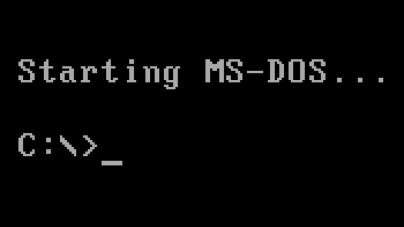
I remember being afraid of the first computer I used because I had to learn DOS with the little green cursor and the backslashes and forward slashes.  The system didn’t automatically save your document or prompt you to save it so I stuck a stickie note reminder to the side of the monitor.

Everything was printed on a flimsy dot-matrix printer and then mailed, couriered or faxed.  Faxes printed on slick paper that left black ink smudges on your clothes before curling up, turning yellow and becoming illegible.

I wasn’t sure I would like the new tech world, but soon the dreadful DOS was replaced with a desktop computer with Word Perfect.  I’ve always preferred Word Perfect over Microsoft Word because it was friendlier to writers.  Alas, Microsoft Word became ubiquitous and Word Perfect went the way of the dinosaurs.

Word Perfect was just an early example of all the changes technology has made to my job.  Many of the jobs I held early in my career, like hand delivering pleadings to the court clerk’s office for filing, have become irrelevant due to technology.  Most courts now require pleadings to be filed electronically.

But for every loss, technology had offered so much more. For example, email and text messaging eliminates the old phone tag game of trying to connect with colleagues or clients.  It also lowered the cost of starting a business.  Early in my career, a business owner needed to rent (or own) office space, furnish it, and hire staff.  The business owner also needed a telephone line obtained at great cost from the local baby Bell monopoly, a clunky desk top computer, a printer, a copier, and a fax machine.  A coffee maker was also a critical piece of office equipment.

Almost none of that is necessary today.  When I started my consulting business about five years ago, technology allowed me to work from a home office and use my cell phone as my business number.  My cell phone also allows me to text and email clients.  I get coffee at coffee shops when meeting prospects or clients.

I run my business with a laptop and a combined printer/copier/scanner.  My clients attach documents to email or we use cloud-based services like Google Docs or Dropbox to share documents on-line.  I save documents electronically and only occasionally print them.  A drawback to electronic databases is trying to remember my clever title for the file folder and document that I so diligently saved.

Of course, it’s not all a paradise.  Technology allows hackers and fraudsters to try to crack our on-line treasure troves of information, so any small business must invest in cyber security to protect its information and reputation.  Still, I wouldn’t want to go back to the days before all our modern technology.  Without all these modern conveniences, I would still find it necessary to be an employee in a big corporation because the investment costs of starting a business would simply be too high.

About Norma Shirk

Norma started her company, Corporate Compliance Risk Advisor, to help employers create human resources policies for their employees and employee benefit programs that are appropriate to the employer’s size and budget. The goal is to have structure without bureaucracy. Visit Norma’s website: www.complianceriskadvisor.com/.

Like what you’ve read? Feel free to share, but please… Give HerSavvy credit. Thanks!

Leave a comment

Filed under Business Savvy

How Journalism is Evolving in a Tech Savvy World

Tech News

Just before I began journalism school, nearly 20 years ago, I attended an orientation for new students.  I was seated at a table with the Dean, an award-winning print and broadcast journalist, who asked me point blank if I thought newspapers were eventually going to disappear.  “I certainly hope not,” I answered, “I can’t imagine not starting my day with a cup of coffee and a newspaper.”  Indeed, the Internet was in its infancy, cell phones were tiny, laptops were big and bulky and analog video was still the reigning format for TV news.

But the writing was on the wall (no pun intended) and our university had just created a cutting edge, high tech program for incoming students called “Online Journalism.”  The younger undergrads and my young grad school classmates flocked to the program, eager to learn this new technology.  But me, I wanted no part of it.  I had waited a long time to pursue my passion for journalism and I was determined to rely on traditional, time honored, reporting methods.  In fact, I continued to take notes and do my writing in long hand in a spiral notebook.

Those that don’t evolve are soon left behind and after much teasing by my 20-something classmates, I taught myself to compose my assignments on my computer.  When the school built a multi-million dollar state of the art digital newsroom, I registered for classes to learn how to navigate the world of digital news reporting.  I actually enjoyed the process and was pretty good at editing.

Imagine my surprise when my first job after grad school, at a local public radio station, required me to learn how to record on and edit reel-to-reel tape!  The 50-year-old station still hadn’t upgraded to the digital technology I’d worked so hard to learn.  But in time, they also made the switch.

These days, my tools of the trade are all contained in my IPhone.  I can take notes, record, edit and upload stories to the cloud, all from a device that fits in my pocket and weighs a few ounces.  Both audio and video quality is sharp and I can produce stories anywhere at any time.  Rather than wait in a newsroom for an assignment or a call from a source, I can be on the job all the time, anywhere.  The news cycle is now 24 hours and the churn is never ending.

So how has this new digital world affected the profession of journalism itself?  Here the waters are much murkier.  Questions about what is news and who is a journalist are much more complicated now that pretty much anyone with a phone or a laptop can record and report on events.  And the quality and quantity of product also raises questions about what is news and what is entertainment.  There are more podcasts, blogs, vlogs and online programming than can be counted, and the numbers grow exponentially.  The simple question about the survival of newspapers seems quaint in today’s world where even venerable publications have laid off print staff in favor of bloggers, podcasters and online producers.  Is this bad?  I’m not sure.  The world is both expanding and shrinking as new technology connects us all in ways we never dreamed of when I started school.

What’s up ahead?  It’s unclear where this digital revolution is taking us.  My hope is that whether through formal education or trial and error, there will always be those people who are our eyes and ears throughout the world; people with integrity who can report honestly and fairly, shine a light on events and be a watchdog, a voice for those who have no voice.  For whatever form it takes, that is the mission of good journalism and there is no substitute.

About Barbara Dab

Barbara Dab is a journalist, broadcast radio personality, producer and award-winning public relations consultant.  She is the creator of The Peretz Project: Stories from the Shoah: Next Generation.  The Peretz Project, named for her late father-in-law who was a Holocaust survivor, is collecting testimony from children of survivors.  Check it out at http://www.theperetzproject.com.  If you are, or someone you know is, the child of survivors of the Shoah, The Holocaust, and you would like to tell your story please leave a comment and Barbara will contact you.

Like what you’ve read? Feel free to share, but please… Give HerSavvy credit. Thanks!

3 Comments

Filed under Business Savvy

The Other Side of the Couch – Down, Down Below the Street


Sesame Street


When my daughter was small one of our favorite activities was to watch “Sesame Street” together.  This wonderful Children’s Television Workshop program was designed to engage both children and adults on a number of levels.  I often found that I learned things from watching the show, and I certainly loved watching my little girl learn about the world.  A favorite segment was called “Down, Down Below the Street,” sung by the acapella group 14K Soul.   The song introduced the idea that lots of things are going on in the sub-structure of a city, like all the various pipes and connections that bring light, heat and water and that allow for messy things to be discarded.   It’s a below-the-surface process that works without the folks above the street being completely aware of what is going on.

It seems to me that this is a lot like what goes on in our relationships.  Things just go along, seeming to work themselves out without many hitches, and we are not really consciously aware of the process – until the pipes break or the electricity fails (metaphorically speaking), and we suddenly find ourselves in the relational wilderness of broken expectations and destroyed trust.

One of the hardest hurdles that I experience in working with couples is that of the repeated “I’m sorry” that does not result in behavior change.  One partner does something that is hurtful to the other, and in the best of all possible scenarios, the couple is able to talk about this in a non-blaming way (This is what happened for me when you did “x” and “this is what was going on for me when I did “x”).  Both come away from the conversation with a deeper understanding and compassion for each other.

However, the next time that “x” happens, things are not going to go so well – and if “x” keeps on happening, even though promises are made to refrain from “x” or do something other than “x”, trust is eroded.

When that happens, one has to dig a little deeper to understand what is really going on – because it isn’t what is on the surface.  What is “down below the street” in the relationship has to be addressed.  Maybe one partner has been holding out on saying something about an issue that is really bothersome, or maybe someone has strayed beyond the agreed-upon boundaries of the relationship, or maybe the chores aren’t being done – it could be any content issue, but the REAL down-below-the-street issue is WHAT REACTIVE BEHAVIOR DOES THIS BRING UP IN ME OR MY PARTNER?  How does the way I respond to this issue bring me closer to or farther away from my partner?  And is that distance what I want, or is it a reaction to stuff I haven’t addressed in my own life?

Relationships are full of “sunny days” (“sunny days, chasing the clouds away”) and at the same time Down-Below-the-Street is always part of life on any street we take.  I hope you will take the time to be curious about your own reactive behaviors, and I wish you lots of sunny days.

About Susan Hammonds-White, EdD, LPC/MHSP:

Susan is a communications and relationship specialist, counselor, Imago Relationship Therapist, businesswoman, mother, and proud native Nashvillian. She has been in private practice for over 30 years. As she says, “I have the privilege of helping to mend broken hearts.”  Contact Susan at http://www.susanhammondswhite.com

Like what you’ve read? Feel free to share, but please… Give HerSavvy credit. Thanks!

Leave a comment

Filed under Self Savvy

The Other Side of the Couch – Hurricanes and Turtles

Snapping Turtle

My husband and I share our home with two cats – two animals that are as different as chalk and cheese. Oscar is a grey, black and brown tabby with a white nose and cheeks, a white bib, and four white paws. He has green eyes with black liner around each.  Oscar can only be described as portly – he is the older of the two by eight years.  He commands the high ground in the house in some ways.  His preferred hangout is the loft above the den/office where he naps during the day, but his preferred nighttime stance is curled up right against my hip, wedged just tightly enough that turning over will place him in some danger if he doesn’t move quickly enough.

Jasmine, on the other hand, at age three, is the social committee.  A Maine Coon mix with the typical ruff, long fur and feather tufts between her toes, she is also remarkably gentle, loves to be brushed, talks all the time, and has a purr that can be heard across the room.  Although much lighter in weight, with all her fur she looks to be almost the same size as Oscar.

Jasmine joined our family about a year ago, and the introduction between these two took a while.  However, Oscar was tolerant, and Jasmine was persistent.  Now they often squabble, but also can be found lying on the bed together at times.  Jasmine does not climb up into Oscar’s lair, and Oscar does not climb on Jasmine’s cat condo.  They will eat each other’s food if either can get away with it.  Water bowls and boxes seem to be shared territory.

If Oscar and Jasmine were a human couple, I would say that Oscar is the minimizer – the one who just wants to shut things down and avoid conflict – while Jasmine is the maximizer – what do you MEAN you don’t want to talk about it, we have to get to the bottom of this right NOW!

Maximizers and minimizers are roles that turn up in most coupleships.  The problem is that both individuals who play these roles tend to think that their way of doing things is the way things should be done.

If you are the person in your relationship who tends to be more verbal, to want to initiate talking or getting to the bottom of a problem, or who has a hard time when your partner wants to take time out from dealing with a situation, you could be a maximizer.  Another metaphor for this role is that of being the hurricane or the tiger – you have outward moving energy that wants to be expressed.

If you are the person in your relationship who just wants to get things back under control and to shut down any problems, on the theory that most things will take care of themselves if they are not made too much of, you are probably a minimizer – you have inward moving energy that wants to close off.  A metaphor for this energy is that of the turtle – pulling into its shell for safety (but remember that turtles can be snapping turtles, too, if necessary).

If you recognize yourself in these descriptions, you might also want to know that the more you minimize or maximize, the more likely it is that your partner will do the opposite – and that will get you both stuck in an ongoing power struggle.

If you are stuck:

  1. Step back and take a time out.  Don’t return until you have calmed down.
  2. Recognize your own energy type and try to incorporate some of the opposite energy.
  3. Accept your partner’s energy with grace. You are not likely to change this essential quality – best to learn how to appreciate and manage it.
  4. Squabble if you must, but always end up peacefully – like Oscar and Jasmine.

After all, lying on the bed together isn’t a bad outcome!

About Susan Hammonds-White, EdD, LPC/MHSP:

Susan is a communications and relationship specialist, counselor, Imago Relationship Therapist, businesswoman, mother, and proud native Nashvillian. She has been in private practice for over 30 years. As she says, “I have the privilege of helping to mend broken hearts.”  Contact Susan at http://www.susanhammondswhite.com

Like what you’ve read? Feel free to share, but please… Give HerSavvy credit. Thanks!

1 Comment

Filed under Self Savvy

The Other Side of the Couch – Lessons From My Mother

Mother2

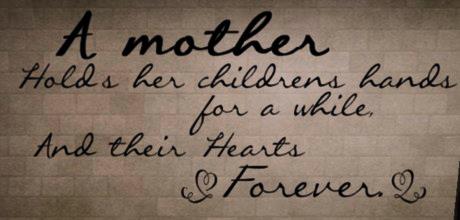
I woke up several days ago with an unexplained and surprising feeling of sadness.  I was down, and blue.  I couldn’t figure out what was going on.  As far as I knew, everything was all right in my life at the moment.  I was coming to the tail-end of a nasty virus, but I was feeling better every day.  I had taken an allergy medicine the night before, but it was one that was familiar and had never caused any odd reactions.  And yet – I was quite sad.  I had some cancellations that morning, and I decided to check in with my husband and daughter, who were meeting for lunch, to see if I could join them.

Sitting at the table, waiting for food service, I began to muse again on what was going on.  I talked to them about it – said I was feeling sad, and I couldn’t quite figure out why.  I was lonely, and I felt a bit tearful.  Talking about it brought a few more tears.  We talked of other things and then, all of a sudden, I knew.

It was my mother’s birthday.  She would have been 95 this year.  She died twenty-four years ago, six months before her 71st birthday.  Every year this time sneaks up on me. One would think I would remember, but there is something about these anniversaries that keeps us a bit unconscious.  The amazing thing is that the BODY KNOWS.  Even though I was not consciously aware, my body and emotions were telling me to pay attention.

As soon as I recognized what was happening inside, I felt a deep sense of relief and understanding, and an equally deep joy in remembering all the special things about my mother.  Tonight, as I write about those sweet memories, I came across a little scribble I wrote a while ago.

My mother taught me many things.  Some of the most precious are these:


Create beauty in unexpected places, for no reason at all.

Cherish your women friends.

Go to lunch!

Be sweet.

Believe in yourself.

You are beautiful; believe it.

Church matters.


I am so grateful for the love we shared, and for having her in my life for seventy years.  I hope that my daughter will have as many sweet memories of me when that day comes.

I love you, Mother.


About Susan Hammonds-White, EdD, LPC/MHSP:

Susan is a communications and relationship specialist, counselor, Imago Relationship Therapist, businesswoman, mother, and proud native Nashvillian. She has been in private practice for over 30 years. As she says, “I have the privilege of helping to mend broken hearts.”  Contact Susan at http://www.susanhammondswhite.com

Like what you’ve read? Feel free to share, but please… Give HerSavvy credit. Thanks!


Leave a comment

Filed under Self Savvy

The Other Side of the Couch – New Traditions?!

Traditions 2

I don’t really remember a time when the Christmas season was not filled with activity.  I grew up in a home with four other siblings and Christmas was a great event in our house.  My earliest memories involve sneaking down the stairs with my sister to see if Santa had come, and being absolutely convinced that Santa Claus was real, because ALL the presents were there, and Daddy and Mommy were asleep!  As I grew to adulthood Christmas continued to be the central holiday when the family gathered.  It was also true that as an adult I became much more involved in the preparing of these seemingly effortless rituals that culminated in the perfect Christmas morning, the presents wrapped and prepared for all, the Christmas breakfast and the Christmas dinner prepared and ready to serve.  I have loved Christmas and enjoyed the traditions of having my own home and making these traditions ours.

Now with my own home and my own adult, married daughter and my own Christmas to prepare, I am facing a first.  My daughter is spending Christmas with her husband’s family in another state.

No matter what I tell myself – that this is normal, that this is right, that this is her life, that we will be fine– I am overcome with sadness.  All of the wisdom I have so readily shared with others – make your own plans, create your own traditions, make this a day that is right for you, do a service project for others – pales in the face of this new reality.

As I face this, I think of my mother, whose five children grew up and scattered far across this country, rarely being all in the same place at the same time as adults.  I wonder how this felt for her.  I wonder how she bore it when I swanned off to South America for six years.   I wonder if she felt the same kind of emptiness in the face of this absence of what is, in the end, a part of one’s self.

So a part of my heart is going to be in North Carolina this Christmas.  I will bear up and be brave and have a good day.  And I will do my best to support my daughter in her choices, perhaps on the inside having a little childish tantrum that says “What about ME!” but hopefully not letting that part of me get in the way of giving her what she needs as an adult.  I will take my own advice, and my husband and I will do something different on Christmas.  It will be different, and it will be ok, and we will all grow a little bit in new ways.

I will hope for some new traditions that will translate into new ways of being for all of us.

So – Merry Christmas, Happy Holidays – Whatever you celebrate, make it a tradition that works for you.

About Susan Hammonds-White, EdD, LPC/MHSP:

Susan is a communications and relationship specialist, counselor, Imago Relationship Therapist, businesswoman, mother, and proud native Nashvillian. She has been in private practice for over 30 years. As she says, “I have the privilege of helping to mend broken hearts.”  Contact Susan at http://www.susanhammondswhite.com

Like what you’ve read? Feel free to share, but please… Give HerSavvy credit. Thanks!

Leave a comment

Filed under Self Savvy

The Other Side of the Couch:  Gratitude – It Works


GratitudeGratitude.  Who knew that the act of giving thanks had such profound effects on so many things? The act of being grateful on a regular basis has been shown to diminish cortisol levels in the body by a significant amount and to increase variability in heart rate coherence patterns, both of which are an indication of lowered stress levels (McCraty and colleagues, 1998).

In addition to improvement of personal health, expressing gratitude has recently been shown to have a clear protective effect on relationships.  In a study that recently appeared in the journal “Personal Relationships,” results indicated that expressions of gratitude helped relationships in measurable ways.

“Feeling appreciated and believing that your spouse values you directly influences how you feel about your marriage, how committed you are to it, and your belief that it will last,” says study co-author Ted Futris.

As Thanksgiving Day approaches, one of the best things we can do for ourselves and for our relationships is to engage in a daily practice of gratitude.  This can be done in a number of different ways.  Taking stock of the day, focusing before you go to sleep on five things for which you are grateful is one way.  Writing them down seems to help anchor the experience.  Notice how your body feels when you focus on things for which you are grateful – many people experience a sense of relaxing on the inside, perhaps a feeling of warmth.  These steps can be personally helpful in alleviating stress.

Expressing gratitude to others seems to be remarkably helpful in keeping relationships on an even keel.  Making a daily practice of expressing appreciation and gratitude to your partner, children, friends, and business associates really does make relationships better.  I recommend to the couples with whom I work that thinking about, looking for, and expressing thanks on a daily basis is an incredibly powerful tool that can keep your relationship connected.  Give it a try.  You will be glad you did.

Happy Day of Thanksgiving!


McCraty, R., Barrios-Choplin, B., Rozman, D., Atkinson, M. & Watkins, A. (1998). The impact of a new emotional self-management program on stress, emotions, heart rate variability, DHEA and cortisol. Integrative Physiological & Behavioral Science, 32, 151-70.

Barton et.al, Linking Financial Distress to Marital Quality:  The Intermediary Roles of Demand/Withdraw and Spousal Gratitude Expressions, Personal Relationships, 22, (2015), 536-549.

About Susan Hammonds-White, EdD, LPC/MHSP:

Susan is a communications and relationship specialist, counselor, Imago Relationship Therapist, businesswoman, mother, and proud native Nashvillian. She has been in private practice for over 30 years. As she says, “I have the privilege of helping to mend broken hearts.”  Contact Susan at http://www.susanhammondswhite.com

Like what you’ve read? Feel free to share, but please… Give HerSavvy credit. Thanks!


Leave a comment

Filed under Self Savvy

Moving 101

Moving

I was asked by my friend and realtor, Elizabeth Colton Walls, to share some of my reflections and tips from my recent move for her blog.  While I don’t pretend to be an expert, I did learn a few valuable lessons for making a move go more smoothly. Check out Elizabeth’s blog and my recent post and feel free to send me any questions you have about any of the resources mentioned.

Happy moving!

Barb

http://www.elizabethcoltonwalls.com/musings-on-moving/

About Barbara Dab

Barbara Dab is a journalist, broadcast radio personality, producer and award-winning public relations consultant. She is the creator of The Peretz Project: Stories from the Shoah: Next Generation.  Check it out at http://www.theperetzproject.com  If you are, or someone you know is, the child of survivors of the Shoah, The Holocaust, and you would like to tell your story please leave a comment and Barbara will contact you.

Like what you’ve read? Feel free to share, but please… Give HerSavvy credit. Thanks!
Leave a comment

Filed under Self Savvy

The Other Side of the Couch – She Sits in My Office

Acceptance 2

She sits in my office, a woman in her 20s, carefully yet casually dressed, clearly anxious.  This is our first visit, and I don’t yet know what brings her to me.  A counseling session opens with informed consent, so we speak of confidentiality, of any exceptions to that sacred boundary (any situation in which harm to self, to others, and/or to minor children or elderly requires breaking confidentiality).  Then we come to the question – What brings you here today?

She tears up, and her words begin to pour out as she struggles with her answer.  “I am attracted to women.  I have fought this and fought this, and not wanted it, and tried to be different, but it is no use.  I have no response to men.  I have dated men, and I have known kind, good men.  I grew up with kind parents.  I had a good home.  I am a Christian, and I grew up in a loving church.  At least I thought I did.  But my church is against homosexuality, and sees it as a sin.  I am torn apart inside.  I don’t want to be a lesbian.  I don’t want to live my life outside society’s acceptance.  Can you help me?  Can you help me change how I feel inside about being attracted to women?”

My heart sinks as I hear this question, because I know that the answer is not what she will want to hear.  Reputable therapists don’t offer what used to be called “conversion therapy” to supposedly help someone redirect their attraction template.   This so-called therapy is actually illegal in four states and is considered unethical by the mental health professions.

This client and I have a long road ahead together, if she decides to follow through with counseling.  Helping a person come to terms with their own sexual orientation, when it is different from what is considered the norm, is a challenge.  Many same-sex oriented individuals have struggled for years before they seek any kind of help and have absorbed the many homophobic messages that surround these issues.

The educational process will involve looking at the biology of attraction, at the internalized messages that complicate self-acceptance, at the kind of relationship the client wants (often a stable, adult, long-term relationship sanctioned by both the state and his/her faith background).  It will also involve looking at what it means to live one’s life as a gay/lesbian person in one’s family, community, profession, church.  It will involve helping this client differentiate between such Biblical issues as temple prostitution and sexual slavery, clearly opposed by the Old Testament, and the experience of monogamous, same-sex unions, which were not even thought of in that culture and time.  It will involve the question of children – whether and how to become a parent.  Most of all, it will involve learning self-acceptance and self-compassion.

The United States has experienced a remarkable shift in attitude over the last two decades, culminating in the recent decision by the Supreme Court affirming the right to marriage for same-sex couples.  This does not mean, however, that the acceptance for same-sex couples is easy, especially in the context of some faith-based institutions.

My hope for this client is that I will be able to walk with her through her fears, through giving up the dream of a “regular” life, to the point of being able to lovingly accept her own being.

My hope for our country is that we will all be able to walk through our fears, recognize that difference is not dangerous, and reach the point of being able to lovingly accept our fellow citizens in all their infinite variety.

About Susan Hammonds-White, EdD, LPC/MHSP:

Susan is a communications and relationship specialist, counselor, Imago Relationship Therapist, businesswoman, mother, and proud native Nashvillian. She has been in private practice for over 30 years. As she says, “I have the privilege of helping to mend broken hearts.”  Contact Susan at http://www.susanhammondswhite.com

Like what you’ve read? Feel free to share, but please… Give HerSavvy credit. Thanks!

Leave a comment

Filed under Self Savvy

The Other Side of the Couch – But I Don’t Want to Change!

Change

Some time ago I was working with a couple who were struggling with some issues in their marriage.  The wife was unhappy with how things were going in the relationship, and she wanted things to be different.  The husband was quite satisfied with how things were going, and in the face of his wife’s pressure, he finally erupted in the session with this statement:  “I DIDN’T GET MARRIED TO CHANGE MY LIFE!”

Regardless of the rights and wrongs of this particular couple’s issue, the husband’s impassioned statement has long stayed with me.  How many times in my own life have I been faced with the need to change – whether due to external circumstances created by another person’s need for change, or due to internal pressures requiring me to move in new directions.  The universality of these experiences, however, is that change is not often welcomed by human beings with open arms and a wide embrace.  It is more often encountered with reluctance and with some degree of foot-dragging.

And yet, change is inevitable.  We grow up.  We age.  Friends and family come and go.  Our bodies become different over the years.  Our understanding grows and changes (if we allow ourselves to engage in the process of self-examination.)  The reality is that the opposite of change is stasis – or death.

Rosabeth Moss-Kanter, author of The Change Masters (1983), spoke to the issue of change in corporations, essentially pointing out that corporations that embrace change are successful; those that do not either struggle or fail.  Her book points out this essential truth:  If you don’t master change, change will master you.

So how do I master this inevitable process?  I react a bit to the word “master” – I would substitute “live with” or “embrace” or “lean into” (thank you, Sheryl Sandberg).  I want to experience these processes as ways through which I am able to become more fully present with myself and with my world.  By acknowledging that change is happening, by looking it squarely in the face rather than being in denial about it, I am able to work with it rather than fight with it, and therefore more effectively live the life I want to live.

Some tips about embracing change:

  1. Identify the changes that are going on in your life.
  2. Decide how you want to relate to those changes.
  3. Choose changes that you want to make for yourself.
  4. Find support and accountability to hold yourself to the path that you have chosen.
  5. Enjoy the ride!

About Susan Hammonds-White, EdD, LPC/MHSP:

Susan is a communications and relationship specialist, counselor, Imago Relationship Therapist, businesswoman, mother, and proud native Nashvillian. She has been in private practice for over 30 years. As she says, “I have the privilege of helping to mend broken hearts.”  Contact Susan at http://www.susanhammondswhite.com

Like what you’ve read? Feel free to share, but please… Give HerSavvy credit. Thanks!

Leave a comment

Filed under Self Savvy