Tag Archives: Mental Health Service Provider

The Other Side of the Couch – Surprise at the Library

Library


I went to the public library a few days ago.  I have been going more frequently in the last year since I am a member of two book clubs, and I am spending way too much money on books.  I made a resolution to check with the library before I bought another book, so I ran in to see if a copy of The Color Purple by Alice Walker happened to be available.  (It was – I read it years ago, but this is the classic that my book club is reading this month.)

What was interesting to me is what happened after I found the book that I needed.  I started browsing – you know, just looking at book titles, pulling a few off the shelf to check out the descriptions.  Before I knew it I had picked up three other titles – one of which I put back because, although I wanted it, I knew it was too long and challenging a read right at this time.  I checked out the other two.

I left the library with three books – the one I came for, and two others that I would never have run across had I not been just poking around, picking up books and putting them back, just for the sake of looking.  I am now deep into one of those books (NOT the one I am supposed to be reading for book club!).

To have the opportunity to go to a public library, to hang out, to browse, to run across books that I might not have ever seen or known existed, is a privilege that we in this country and in this city take for granted.  To have a library card, to have access to the incredible array of services offered by our public library system, is one way in which our country maintains its democracy.  A library card is a ticket to information.  Information can be found in any number of different ways – through books, through public computers, through DVDs and CDs, through inter-library loan, and even through e-books.  In Nashville, the public library system is linked to our schools, so our students have access to this amazing universe of knowledge.

Library cards are free!  All one needs is an ID and proof of address.  What a bargain.  The information below is found on the Nashville Public Library website – www.nashvillepubliclibrary.org .

About Your Library Card

Your library card gives you free access to over two million books, ebooks, magazines, DVDs, streaming movies and music, and more.

Library cards are free for any person who lives in Davidson County or within the Goodlettsville city limits. Cards are also free for Metro Nashville employees.

You may get a library card online or in person at any library location.

Online cards allow immediate access to all online library materials. If you get a card in person, it allows immediate access to all library materials. To get a card, present your photo ID and proof of address. Any combination of accepted forms of ID that satisfy these requirements is allowed.

As I prepare to read another chapter of my “found” book, I am celebrating libraries, and books, and reading, and I am also acutely aware of the privilege that I have in this city, in this country.  Even in Nashville itself, too many men and women are unable to read.  According to the Nashville Adult Literacy Council, one in eight Nashvillians are unable to read.

Celebrate reading; celebrate your ability to go to a library and to find what you want, and sometimes to find some other things that you didn’t know you wanted.  Life is enriched in so many ways.

About Susan Hammonds-White, EdD, LPC/MHSP:

Susan is a communications and relationship specialist, counselor, Imago Relationship Therapist, businesswoman, mother, and proud native Nashvillian. She has been in private practice for over 30 years. As she says, “I have the privilege of helping to mend broken hearts.”  Contact Susan at http://www.susanhammondswhite.com

Like what you’ve read? Feel free to share, but please… Give HerSavvy credit. Thanks!

1 Comment

Filed under Self Savvy

The Other Side of the Couch – She Sits in My Office

Acceptance 2

She sits in my office, a woman in her 20s, carefully yet casually dressed, clearly anxious.  This is our first visit, and I don’t yet know what brings her to me.  A counseling session opens with informed consent, so we speak of confidentiality, of any exceptions to that sacred boundary (any situation in which harm to self, to others, and/or to minor children or elderly requires breaking confidentiality).  Then we come to the question – What brings you here today?

She tears up, and her words begin to pour out as she struggles with her answer.  “I am attracted to women.  I have fought this and fought this, and not wanted it, and tried to be different, but it is no use.  I have no response to men.  I have dated men, and I have known kind, good men.  I grew up with kind parents.  I had a good home.  I am a Christian, and I grew up in a loving church.  At least I thought I did.  But my church is against homosexuality, and sees it as a sin.  I am torn apart inside.  I don’t want to be a lesbian.  I don’t want to live my life outside society’s acceptance.  Can you help me?  Can you help me change how I feel inside about being attracted to women?”

My heart sinks as I hear this question, because I know that the answer is not what she will want to hear.  Reputable therapists don’t offer what used to be called “conversion therapy” to supposedly help someone redirect their attraction template.   This so-called therapy is actually illegal in four states and is considered unethical by the mental health professions.

This client and I have a long road ahead together, if she decides to follow through with counseling.  Helping a person come to terms with their own sexual orientation, when it is different from what is considered the norm, is a challenge.  Many same-sex oriented individuals have struggled for years before they seek any kind of help and have absorbed the many homophobic messages that surround these issues.

The educational process will involve looking at the biology of attraction, at the internalized messages that complicate self-acceptance, at the kind of relationship the client wants (often a stable, adult, long-term relationship sanctioned by both the state and his/her faith background).  It will also involve looking at what it means to live one’s life as a gay/lesbian person in one’s family, community, profession, church.  It will involve helping this client differentiate between such Biblical issues as temple prostitution and sexual slavery, clearly opposed by the Old Testament, and the experience of monogamous, same-sex unions, which were not even thought of in that culture and time.  It will involve the question of children – whether and how to become a parent.  Most of all, it will involve learning self-acceptance and self-compassion.

The United States has experienced a remarkable shift in attitude over the last two decades, culminating in the recent decision by the Supreme Court affirming the right to marriage for same-sex couples.  This does not mean, however, that the acceptance for same-sex couples is easy, especially in the context of some faith-based institutions.

My hope for this client is that I will be able to walk with her through her fears, through giving up the dream of a “regular” life, to the point of being able to lovingly accept her own being.

My hope for our country is that we will all be able to walk through our fears, recognize that difference is not dangerous, and reach the point of being able to lovingly accept our fellow citizens in all their infinite variety.

About Susan Hammonds-White, EdD, LPC/MHSP:

Susan is a communications and relationship specialist, counselor, Imago Relationship Therapist, businesswoman, mother, and proud native Nashvillian. She has been in private practice for over 30 years. As she says, “I have the privilege of helping to mend broken hearts.”  Contact Susan at http://www.susanhammondswhite.com

Like what you’ve read? Feel free to share, but please… Give HerSavvy credit. Thanks!
Leave a comment

Filed under Self Savvy

The Other Side of the Couch – What’s The Story You Are Making Up?

what is your story questionSomething that I encounter almost every day in working with couples is the problem caused by internal story-telling.  We all make up stories.  We make up stories about ourselves, about others, about why people do what they do, why we do what we do.  We are tremendously effective at this process, and we do it constantly.  The problems with doing this arise when we take action based on the story that we have told ourselves without questioning whether that story is based on more than our own perceptions.

Here is an example:  A husband won’t start driving until his wife has put on her seatbelt.  The story he tells himself is that he is making sure everyone is safe.  The story his wife tells herself is that he is treating her like a child and that she knows about putting on seat belts and will do it, but not because he makes her.  Because she tells herself this story, she is huffy with her husband; he doesn’t know why, and the day starts poorly.

Here is another example:  A woman has a need for what she calls a positive environment, which for her means no complaining or negative comments.  Her husband is a bit sarcastic and likes to complain about traffic, the weather, whatever.  When her husband makes these comments, the wife tells herself that he is doing this on purpose to annoy her, that he has no consideration, he clearly won’t listen to her, that he doesn’t love her, and maybe they should get a divorce.  The husband, on the other hand, is telling himself that he can say what he wants to say, he won’t be controlled and attacked, she doesn’t understand him at all, and maybe they should get a divorce.

Internal story-telling results in chasms and canyons in relationships!  The way to manage these problems is to make the stories external – say out loud your thoughts and intentions.  For example:  I am worried about your safety and because of that I would appreciate it if you would put on your seat belt before we start driving.  This is so that I will be comfortable.  It is not about you.  Or – when you won’t leave the driveway before I put on my seatbelt, I am uncomfortable because I feel controlled. Is there another way we could work on this?  Could you help me understand your thinking?

Making the internal story external saps its power and helps everyone clarify perceptions.  Give it a try!

About Susan Hammonds-White, EdD, LPC/MHSP:

Susan is a communications and relationship specialist, counselor, Imago Relationship Therapist, businesswoman, mother, and proud native Nashvillian. She has been in private practice for over 30 years. As she says, “I have the privilege of helping to mend broken hearts.”  Contact Susan at http://www.susanhammondswhite.com

Like what you’ve read? Feel free to share, but please… Give HerSavvy credit. Thanks!

Leave a comment

Filed under Self Savvy

The Other Side of the Couch – But I Don’t Want to Change!

Change

Some time ago I was working with a couple who were struggling with some issues in their marriage.  The wife was unhappy with how things were going in the relationship, and she wanted things to be different.  The husband was quite satisfied with how things were going, and in the face of his wife’s pressure, he finally erupted in the session with this statement:  “I DIDN’T GET MARRIED TO CHANGE MY LIFE!”

Regardless of the rights and wrongs of this particular couple’s issue, the husband’s impassioned statement has long stayed with me.  How many times in my own life have I been faced with the need to change – whether due to external circumstances created by another person’s need for change, or due to internal pressures requiring me to move in new directions.  The universality of these experiences, however, is that change is not often welcomed by human beings with open arms and a wide embrace.  It is more often encountered with reluctance and with some degree of foot-dragging.

And yet, change is inevitable.  We grow up.  We age.  Friends and family come and go.  Our bodies become different over the years.  Our understanding grows and changes (if we allow ourselves to engage in the process of self-examination.)  The reality is that the opposite of change is stasis – or death.

Rosabeth Moss-Kanter, author of The Change Masters (1983), spoke to the issue of change in corporations, essentially pointing out that corporations that embrace change are successful; those that do not either struggle or fail.  Her book points out this essential truth:  If you don’t master change, change will master you.

So how do I master this inevitable process?  I react a bit to the word “master” – I would substitute “live with” or “embrace” or “lean into” (thank you, Sheryl Sandberg).  I want to experience these processes as ways through which I am able to become more fully present with myself and with my world.  By acknowledging that change is happening, by looking it squarely in the face rather than being in denial about it, I am able to work with it rather than fight with it, and therefore more effectively live the life I want to live.

Some tips about embracing change:

  1. Identify the changes that are going on in your life.
  2. Decide how you want to relate to those changes.
  3. Choose changes that you want to make for yourself.
  4. Find support and accountability to hold yourself to the path that you have chosen.
  5. Enjoy the ride!

About Susan Hammonds-White, EdD, LPC/MHSP:

Susan is a communications and relationship specialist, counselor, Imago Relationship Therapist, businesswoman, mother, and proud native Nashvillian. She has been in private practice for over 30 years. As she says, “I have the privilege of helping to mend broken hearts.”  Contact Susan at http://www.susanhammondswhite.com

Like what you’ve read? Feel free to share, but please… Give HerSavvy credit. Thanks!

Leave a comment

Filed under Self Savvy

The Other Side of the Couch – Charleston

CharlestonI was on the way to Charleston on Friday, June 26, 2015, as President Obama gave the eulogy for Rev. Clementa Pinckney, one of the nine African-American members of the AME Emanuel Church who were gunned down by a white 21-one-year-old who had been indoctrinated by a white supremacist organization.  I was on the way to a city that embodies in so many ways the contradictions, struggles, pain that 150 years – no, 300 years – have not erased from this country.  The bloody war, known in the North as the Civil War, in some parts of the South still called the War Between the States, or less benignly, the War of Northern Aggression, still incites pain.  Black or white, Northern or Southern, the history of war, occupation, slavery, Jim Crow, voter suppression is unfortunately alive today.

President Obama said,

For too long, we were blind to the pain that the Confederate flag stirred in too many of our citizens. It’s true, a flag did not cause these murders. But as people from all walks of life, Republicans and Democrats, now acknowledge — including Governor Haley, whose recent eloquence on the subject is worthy of praise — as we all have to acknowledge, the flag has always represented more than just ancestral pride. For many, black and white, that flag was a reminder of systemic oppression and racial subjugation. We see that now.

Removing the flag from this state’s capitol would not be an act of political correctness; it would not be an insult to the valor of Confederate soldiers. It would simply be an acknowledgment that the cause for which they fought — the cause of slavery — was wrong — the imposition of Jim Crow after the Civil War, the resistance to civil rights for all people was wrong. It would be one step in an honest accounting of America’s history; a modest but meaningful balm for so many unhealed wounds. It would be an expression of the amazing changes that have transformed this state and this country for the better, because of the work of so many people of goodwill, people of all races striving to form a more perfect union. By taking down that flag, we express God’s grace.

But I don’t think God wants us to stop there. For too long, we’ve been blind to the way past injustices continue to shape the present. Perhaps we see that now. Perhaps this tragedy causes us to ask some tough questions about how we can permit so many of our children to languish in poverty, or attend dilapidated schools, or grow up without prospects for a job or for a career.

Perhaps it causes us to examine what we’re doing to cause some of our children to hate. Perhaps it softens hearts towards those lost young men, tens and tens of thousands caught up in the criminal justice system — and leads us to make sure that that system is not infected with bias; that we embrace changes in how we train and equip our police so that the bonds of trust between law enforcement and the communities they serve make us all safer and more secure.

Maybe we now realize the way racial bias can infect us even when we don’t realize it, so that we’re guarding against not just racial slurs, but we’re also guarding against the subtle impulse to call Johnny back for a job interview but not Jamal. So that we search our hearts when we consider laws to make it harder for some of our fellow citizens to vote.  By recognizing our common humanity by treating every child as important, regardless of the color of their skin or the station into which they were born, and to do what’s necessary to make opportunity real for every American — by doing that, we express God’s grace.


I am moved by this eloquent response to unspeakable tragedy.  I am moved by the families of those massacred, who offered forgiveness to the murderer.  I am moved by the people of Charleston, who, rather than withdrawing into factions and anger, came together with tears in the face of this tragedy.  I hope that political divisions can be put aside as we come together to work for a better tomorrow.

It’s not about the Confederate Flag.  It’s about us.  All of us.  May we all be Charleston, and create a better future for our country, united.

About Susan Hammonds-White, EdD, LPC/MHSP:

Susan is a communications and relationship specialist, counselor, Imago Relationship Therapist, businesswoman, mother, and proud native Nashvillian. She has been in private practice for over 30 years. As she says, “I have the privilege of helping to mend broken hearts.”  Contact Susan at http://www.susanhammondswhite.com

Like what you’ve read? Feel free to share, but please… Give HerSavvy credit. Thanks!


Leave a comment

Filed under Self Savvy

The Other Side of the Couch – Loss, Again

girl and sky

She called this afternoon.

I knew immediately that something wasn’t right. For days now I have been having a sense of something being wrong – some disturbance in the Force, in the energy that surrounds us all. I had laid it to the time of year, always a challenging one for me. As soon as the cherries bloom, every year, I am back in those unquiet days before my mother’s death, driving back and forth to the hospital, and seeing the most beautiful and radiant of springs unfolding throughout the poignant April days.

I have been aware of being sad, of missing my mother this year in a more particular way. Perhaps as I approach her age at her death, and realize how much more life I wished for her, and how much more life I hope for myself, I am shaken by the gossamer threads that hold us to this planet, this plane of existence. The unexpected lurks, and there is much that we cannot control.

The call telling me that a dear friend, younger than I, had lost his battle with cancer, a cancer that metastasized in the same way that my mother’s had, and that ended in a similar, brutal way, recapitulates all losses. The weight is the same, the heavy leadenness, the what-does-it-matter feeling, the tears always ready to be shed, the questions to which there are no answers.

I grieve for his wife, for his daughters, for my husband, who treasured him as a close friend. I grieve for the circle of lives that he touched, which are myriad. He was a giver. I grieve for the life he didn’t get to live. And yet, I know that he lived life with gusto, with joy, with presence. He appreciated the life he had. He knew that it wasn’t guaranteed. He knew that before the cancer ever came.

So today I am doing my best, in the midst of sadness, to celebrate the life of a special man, who gave much to the world, to his family, to his wife, to his community. He gave the best hugs. His life philosophy upheld and lifted. May all of us be so mourned. His was a life well lived. He will be missed.

About Susan Hammonds-White, EdD, LPC/MHSP:

Susan is a communications and relationship specialist, counselor, Imago Relationship Therapist, businesswoman, mother, and proud native Nashvillian. She has been in private practice for over 30 years. As she says, “I have the privilege of helping to mend broken hearts.”  Contact Susan at http://www.susanhammondswhite.com

Like what you’ve read? Feel free to share, but please… Give HerSavvy credit. Thanks!

Leave a comment

Filed under Self Savvy

The Other Side of the Couch – How to Say “No”

Stress

Every now and then a period of time arises in my life that results in hand-wringing and gnashing of teeth, accompanied by thoughts such as, “How could this have happened again?” and “What were you thinking?” and “Were you even thinking?”   This is usually the result of having said, “Yes,” to too many different projects, all of which for some odd reason all need to be completed within the same (already packed) time period.   This is what I used to call in my college days a “Pressure Period.”  The perplexing part of this for me is that I am light-years past college, and the same kind of thing keeps on happening on an all-too-regular basis.

I have strategies for dealing with it when it happens – chunk it down, one step at a time, do the next right thing, this too shall pass.  All of these strategies work to some degree, and the period of time passes and it all gets done.  However, what I want is a change in the pattern.  I want it NOT to happen.

To make that happen, I have to be really honest with myself and with what I am committing myself to taking on.  For example, I am currently the president or leader of three organizations – two are local and one is national.  I didn’t plan to be the one in charge of these groups all at the same time – it just turned out that way.  It’s as though when I am asked to take a certain role, everything other than my ability to do the job and my desire to do it well and my knowledge that I can do it well recedes.  I can only see that one thing that is ahead of me  All the other things that I do are not present as I contemplate this possibility.  I do choose to say yes, and I often say it quickly, without taking time to consider the impact on other areas of my life.

The result of this pattern is that I stay very busy.  I am sure that staying busy is serving some purpose in my life, but I won’t know what that purpose is unless I allow myself to become less busy.  Becoming less busy is going to involve saying, “No.” – and saying no is a skill I need to practice.

So – here are some ideas I plan to try:

  • Say maybe.
  • Sleep on any decision.
  • Make a blanket rule about saying, “Yes,” to anything at all for “x” period of time, no matter how good it sounds.
  • Be ok with changing my mind.
  • Understand that I am not the only person who can do a task. I am not irreplaceable (Wow – how arrogant to even think such a thing).
  • Breathe
  • Be compassionate to the part of me that wants to say yes, and curious about what it would be like to be less busy.

I will let you know how it goes.  In the meantime, I’d better get busy….!!!

About Susan Hammonds-White, EdD, LPC/MHSP:

Susan is a communications and relationship specialist, counselor, Imago Relationship Therapist, businesswoman, mother, and proud native Nashvillian. She has been in private practice for over 30 years. As she says, “I have the privilege of helping to mend broken hearts.”  Contact Susan at http://www.susanhammondswhite.com

Like what you’ve read? Feel free to share, but please… Give HerSavvy credit. Thanks!

Leave a comment

Filed under Business Savvy, Self Savvy

The Other Side of the Couch – Letting Go

Grief

I received the news yesterday that one of my dearest friends, one of those friends that has touched your life in a thousand ways, unexpectedly succumbed to pneumonia.  She had been battling cancer for some time, and she had started on a new kind of chemotherapy.  I knew that she had been struggling with side effects, but the news that she had not survived was both shocking and so very sad.  As I face this grief, I notice that is a familiar experience now – the weight in the chest, the tears that lurk behind the eyes, the feeling that nothing much matters.  I have been here before.

Any loss recapitulates all the other losses – and as we live life longer, those losses indeed pile up.  I believe that one of the lessons that all human beings are called to face is that of how do we let go.  When a loved one has moved beyond us, as will happen if we live long enough, how do we go forward?

Perhaps one way of looking at this is NOT to go forward, but to stay still. The shock of loss is immobilizing at first, and for good reasons.  We are not thinking clearly; our rational mind has been overturned, and we are living in – swimming in – the emotional sea of grief.  I would wish for all space, quiet, support, time.

David Whyte, a poet and author whose work has been very meaningful to me, has written a wonderful book called Consolations.  He chooses 52 words and writes essays on each.  One of his words is Heartbreak.  Below is an excerpt.

David Whyte

HEARTBREAK

“…If heartbreak is inevitable and inescapable, it might be asking us to look for it and make friends with it, to see it as our constant and instructive companion, and even perhaps, in the depth of its impact as well as in its hindsight, to see it as its own reward. Heartbreak asks us not to look for an alternative path, because there is no alternative path. It is a deeper introduction to what we love and have loved, an inescapable and often beautiful question, something or someone who has been with us all along, asking us to be ready for the last letting go.”

‘HEARTBREAK’ Excerpted From CONSOLATIONS:

The Solace, Nourishment and Underlying Meaning of Everyday Words.

© David Whyte and Many Rivers Press 2015

Now Available http://davidwhyte.stores.yahoo.net/newbook.html

As I think of my friend, and experience the heartbreak that comes with my loss of her, I am asking of myself the opportunity to sit with my heartbreak, to be with it and with her, to remember, to regret, just to be with the precious moments that we did have, to grieve those that we will not have, as I allow that piece of my heart that belonged to her to open, to grieve, and to let go.

About Susan Hammonds-White, EdD, LPC/MHSP:

Susan is a communications and relationship specialist, counselor, Imago Relationship Therapist, businesswoman, mother, and proud native Nashvillian. She has been in private practice for over 30 years. As she says, “I have the privilege of helping to mend broken hearts.”  Contact Susan at http://www.susanhammondswhite.com

Like what you’ve read? Feel free to share, but please… Give HerSavvy credit. Thanks!
2 Comments

Filed under Self Savvy

The Other Side of the Couch – Is Your Brain High Jacked?

Limbic Brain

I had an odd experience the other day.  I had made an appointment for an orientation to a wellness center, but when I arrived at the appointed time, my name could not be found in the computer. A little background would be in order – since I have a hyphenated last name, computers often struggle with me. However, they tried all possible combinations and nothing came up.  I was offered the opportunity to  a) come back an hour later, b) reschedule, or c) receive a free personal training session as a compensation.

What was interesting to me was my reaction.  I became tearful; my voice began to quiver; I stated that I was irritated and upset and that none of those options were acceptable, and I walked out.  As I walked to the car, I felt my heart pounding, and when I got to the car, I got in, slammed the door, and tried to figure out what on earth had happened.  I was reacting to this computer glitch as though I had been personally attacked and I was feeling hurt, powerless and angry.  My brain had been high jacked!

I knew that I was in the grip of an adrenaline rush powered by a variety of neurochemicals and that I was not responding rationally.  I also knew that something was powering this that was bigger than a computer glitch.  So I took a few minutes to sit with myself – but nothing came up.  I was still distressed.  I decided to leave and to check this out when I was a bit calmer.

Later, I looked again at what had happened and I discovered the iceberg beneath the seemingly insignificant experience.  For me, the iceberg included ambivalence about committing to an exercise program based on fear of injury (old stuff), a story that I was telling myself that said something like, “You’ll never be able to do this right. Why are you even trying?” (self-judgment), and a sense of hopelessness about my body.  Wow!  What I found out was that even getting in the door of this wellness center had been a huge stretch and that I was carrying a lot of self-judgment that was activated by this small disappointment.

I called and made another appointment, and I will take that free session as compensation!

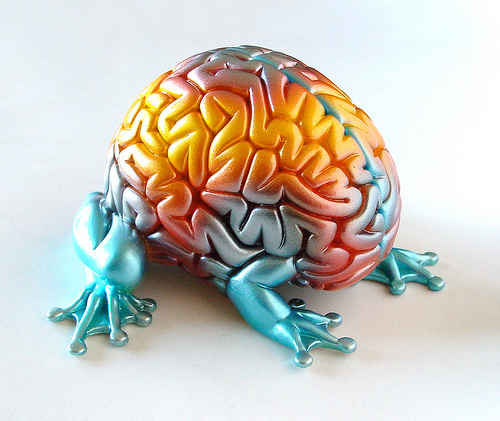
This kind of experience is actually quite common in human beings.  Our limbic system, ruled by the amygdala and based on fear, can high jack our logical, thinking brain all too easily.

What can you do when your brain is high jacked?

  1. Recognize it – you want to react much more strongly than the situation warrants; you have physical responses – heart pounding, breathing quickened, voice changes; you want to react impulsively.
  2. Leave the situation if possible – take a break; drink water; go for a walk.
  3. If you are with a partner or a friend, explain that you need a time out.
  4. When the physical symptoms pass, sit with yourself and listen without judgment. Your body and brain know a lot about what has happened, and if you listen to yourself, you will learn.
  5. Do what is necessary to repair the situation.

Careful listening and self-compassion are the keys to a better understanding of your own brain.

About Susan Hammonds-White, EdD, LPC/MHSP:

Susan is a communications and relationship specialist, counselor, Imago Relationship Therapist, businesswoman, mother, and proud native Nashvillian. She has been in private practice for over 30 years. As she says, “I have the privilege of helping to mend broken hearts.” Contact Susan athttp://www.susanhammondswhite.com

Like what you’ve read? Feel free to share, but please… Give HerSavvy credit. Thanks!


3 Comments

Filed under Self Savvy

The Other Side of the Couch –Listening

Listening

I recently had the pleasure of attending an unusual conference in our nation’s capital. NO, the conference had nothing to do with politics (although we did have a surprise visit from “President Obama” – for split seconds the audience really did think this very talented impersonator was the real thing!)  The theme of the conference was Joyful Aliveness, and the hotel was rocked by shouts of “You are Amazing!” from the presenters, the participants, and anyone else who was brought in for any purpose.

I was attending the annual conference of Imago Relationship Therapists. IRI is an international organization that brings together Imago therapists from all over the world.  This year there were participants from 21 different countries, including 8 from Estonia, 17 from South Korea, and 4 from South Africa.

Imago Relationship Therapy, first developed by Harville Hendricks and his wife, Helen LeKelly Hunt, is a way of healing relationships through the use of a variety of processes, most importantly through the use of Dialogical processes.  First developed nearly 25 years ago, Imago is used by over 1000 therapists around the world, changing the world, as we say “one couple at a time.”  (For more information, check out www.gettingtheloveyouwant.com, or just google it on Youtube.)

Imago processes are based on very precise and attuned listening, a skill that most people have never been taught.  What more often than not happens when two people are talking about a subject that brings up any feeling of conflict is that while one person is talking and the other is ostensibly listening, what is really going on is that the supposed listener is actually listening to what is going on inside his or her own head, so as to effectively challenge or contradict the other.  The same thing goes on when the other person is called upon to listen.  WE DON’T LISTEN, and we, therefore, often base our behavior on erroneous information.

What was beautiful about this conference was that I was in a community of trained and respectful listeners who, even in the midst of disagreement (and there were disagreements), were able to listen, take in new information, even change their positions based on new information.  I enjoyed it so much!

Below is a poem that was shared after the conference.  It sums up my thoughts about listening.  Enjoy!


“Reduced to Joy” by Mark Nepo

We can grow by simply listening, the way the tree on

 that ridge listens its branches to the sky,

 the way blood listens its flow to the site

 of a wound, the way you listen like a basin when

 my head so full of grief can’t look you in the eye.

 We can listen our way out of anger, if we let the heart

 soften the wolf we keep inside.

 We can last by listening deeply,

 the way roots reach for the next inch of earth,

 the way an old turtle listens all he hears into the pattern of his shell.


About Susan Hammonds-White, EdD, LPC/MHSP:

Susan is a communications and relationship specialist, counselor, Imago Relationship Therapist, businesswoman, mother, and proud native Nashvillian. She has been in private practice for over 30 years. As she says, “I have the privilege of helping to mend broken hearts.”

Like what you’ve read? Feel free to share, but please… Give HerSavvy credit. Thanks!

Leave a comment

Filed under Self Savvy