Tag Archives: Mental Health Service Provider

The Other Side of the Couch – Speaking Tech

Locked Computer

Are you a digital native or an immigrant to the land of technology?

If you were born after 1987, you are most likely a digital native. You have grown up with technology and have little resistance to it.  You do it naturally, without a lot of thought.  If you are a digital immigrant, many things about technology can be overwhelming.  As the millennials grow up and move into the job market, more and more experiences require computer savvy.  If you want to apply for a job, you will most likely have to do so online.  If you want to find a phone number, forget about finding a phone book.  Need to apply for Medicare or social security?  Most help is found online.  Many of the day-to-day activities that used to be done through mail or through written application processes are not even available in these forms.

How do all of these changes affect professional counselors and other mental health professionals?

In a word, profoundly!  Technological familiarity is now often required to submit insurance forms, to sign up for conferences, to maintain awareness of changes in the field.  Journals which once were delivered through the mail now are delivered through digital means.   Practitioners have a wide variety of information sources available, but also can be overwhelmed with the sheer volume of information flooding in-boxes.

The most significant changes that are affecting the mental health field are those related to issues of confidentiality and informed consent.  Confidentiality is the bedrock foundation on which the counseling relationship rests.  Anything that threatens confidentiality is a threat to both the client and the counselor.  Confidentiality requires very careful attention to any possibility of breach.  However, many individuals, both counselors and clients, are very used to using emails and texting in order to quickly and efficiently reach others.

How do professional counselors handle these issues?  The most important method is through informed consent – that is, through explaining the issues that relate to the use of emails/texting and social media to clients as soon as a counseling relationship is begun.  Professional counselors are urged through their ethical standards to maintain a social media and technology policy and to explain it to clients.  Counselors are also encouraged to use encrypted programs in sending and receiving emails or texts, if they actually agree to do so (some counselors do not).

Telehealth or telemedicine is another emerging area of concern.  Suppose I am a counselor in Tennessee and a client in another state finds my website (another necessity for current practice) and wants to work with me through a video platform.  First, unless I am licensed in the state where the client is, I cannot work with the client.  Second, if I am licensed in that state, I must use a video platform that is HIPAA-compliant (Skype is not).  Third, I must be knowledgeable concerning the resources in that client’s area in case of emergency.  Fourth, I must have enough ability to work with technology to be able to access the client through another means if for some reason the video bridge fails at a crucial moment.

Technology is both an incredible blessing and a huge burden.  My immigrant ability to speak tech is improving, but I will never be as adept at it as are millennials.  Nonetheless, I will keep trying, because it is where the world is going.

What are your stories about technology?  How do you manage the digital world?  I would love to hear about it.

About Susan Hammonds-White, EdD, LPC/MHSP:

Susan is a communications and relationship specialist, counselor, Imago Relationship Therapist, businesswoman, mother, and proud native Nashvillian. She has been in private practice for over 30 years. As she says, “I have the privilege of helping to mend broken hearts.”  Contact Susan at http://www.susanhammondswhite.com

Like what you’ve read? Feel free to share, but please… Give HerSavvy credit. Thanks!

Leave a comment

Filed under Business Savvy, Self Savvy

The Other Side of the Couch – What To Do When It’s Too Late

Too Late

The woman sitting across from me is a mess.  She is in my office because her husband of thirty years has out of the blue announced that he wants a divorce.  The entire narrative of her life has been turned upside down in the space of a few hours.  The reality that she has lived with – that she is loved, that she is part of a partnership that is ongoing, that she and her husband have had their issues, but will always work them out and will grow old together – is torn apart.  She is facing a broken home, a home that she has poured everything she has into creating and maintaining.  She chose to be a stay-at-home mom, and their financial circumstances allowed this to happen.  She was so certain of the relationship that the idea of its being gone is literally nauseating.

I know the long road ahead of this woman as she enters the netherworld of interrogatories, property settlements, splitting of assets.  Who keeps the house, does anyone keep the house, does anyone WANT to keep the house?  How will the children manage?  Even as adults, divorce breaks families apart.  Custody may not be an issue, but adult emotional loyalties are as delicate and easily damaged as a child’s psyche.

The experience of breaking apart a marriage is wrenching for all concerned.  Whether married for months or years or decades, couples carry into a divorce the reality of heartbreak and broken dreams.  More often than not one of the spouses is anxious to end things, and the other spouse wants only to hold on in the hope that something, anything, will stop the inevitable demise of the marriage.

The end of a marriage is a crazy time for both partners.  Whether both want the marriage to end or one does and the other doesn’t, the effect of breaking the bonds of attachment and commitment is profound, if sometimes unconscious for a time.  The leaver often becomes callous to the pain of the “leavee,” or the leaver may become so guilty about wanting to leave that he/she makes financial decisions that are not reasonable.  If the decision is mutual, there is nonetheless a need for dealing with the psychic fallout from what amounts to a nuclear bomb going off in people’s lives.

One way to mitigate some of this distress is by using some of the attorneys, therapists and mediators who are committed to using the collaborative divorce model.  Even if two people are not in agreement about ending the marriage, the use of collaborative divorce can dial down the adversarial struggle that mirrors the internal pain of the dying marriage.  Another helpful process is that of using Divorce Care (which has a religious component and is often found in churches) or Divorce Recovery, a more secular support process.

Have you gone through a break-up or a divorce?  What was helpful to you?  Please leave ideas and comments below, and thank you.

About Susan Hammonds-White, EdD, LPC/MHSP:

Susan is a communications and relationship specialist, counselor, Imago Relationship Therapist, businesswoman, mother, and proud native Nashvillian. She has been in private practice for over 30 years. As she says, “I have the privilege of helping to mend broken hearts.”  Contact Susan at http://www.susanhammondswhite.com

Like what you’ve read? Feel free to share, but please… Give HerSavvy credit. Thanks!

1 Comment

Filed under Self Savvy

The Other Side of the Couch – Memorial Day

Memorial Day
This past Memorial Day weekend was perfect in its blue-sky, cotton-cloud beauty, in its breezes that tamed the almost 90-degree heat in Nashville, and in its opportunities to gather with friends and family.  This ushering-in-of-summer weekend, this celebration of all the things like watermelon and burgers and kids running around and fireflies and even fireworks, seemed light-hearted in its easy and breezy fun.

And yet – and yet – this day also carries undertones and overtones of other days, days that were darker, full of other kinds of feelings and memories.  This is a day the origins of which are disputed, but no matter where it began, it in some way began as a remembrance of those who died when this country was rent by civil war.  Whether begun by Southern women, freedmen, or Northern generals, the day evolved over the years into what it is today:  a memorial to those in this country who lost their lives in defending the lives of others.

I grew up in the 50’s and 60’s.  As a child I read the Cherry Ames: Student Nurse Series enthralled by the tales of bravery involving WWII.  As a young teen I read Janet Lambert’s series focusing on the Parrish family, whose parents were military and whose young men aspired to join the service and attend West Point.  As I entered college, our country was beginning to face the struggle of Vietnam, and my patriotic ideals began to become mixed up with the war protests that were common in my northeastern college.  I was uncertain about what to think about the whole idea of the military.  For a time I turned to pacifism, but then I realized that if attacked I could not condone doing nothing.

These confusions continue, but what I know today is that I hold in high esteem those men and women who choose to serve their country by joining one of the services.  I am thankful for these men and women, and I hold the memory of those who died in the service of others with gratitude and thanks.

At the same time, I continue to struggle with the need for war, the reality of war.  Although I was never a great fan of Dwight David Eisenhower, I have recently come across some things that he said, and they make really good sense.

Eisenhower said, “I hate war as only a soldier who has lived it can, only as one who has seen its brutality, its futility, its stupidity.  War settles nothing.”

He also said, “Every gun that is made, every warship launched, every rocket fired, signifies in the final sense a theft from those who hunger and are not fed, those who are cold and are not clothed.  This world in arms is not spending money alone.  It is spending the sweat of its laborers, the genius of its scientists, the hopes of its children.”

I hope that the words of this old soldier will be heard.  At a time when war seems endless, let’s remember that, as Ike said, war settles nothing.  In the meantime, we remember, and we are grateful.

About Susan Hammonds-White, EdD, LPC/MHSP:

Susan is a communications and relationship specialist, counselor, Imago Relationship Therapist, businesswoman, mother, and proud native Nashvillian. She has been in private practice for over 30 years. As she says, “I have the privilege of helping to mend broken hearts.”  Contact Susan at http://www.susanhammondswhite.com

Like what you’ve read? Feel free to share, but please… Give HerSavvy credit. Thanks!

1 Comment

Filed under Uncategorized

The Other Side of the Couch –Alone?

AloneSo many people are afraid of being alone.  Over and over I hear in my office from clients – I can’t  leave; I would be alone,  or I can’t leave him or her, they would be alone – as though being alone is the worst thing that could ever happen to a human being, as though being alone is a penance, a punishment, a horror.

I know that aloneness is used as punishment.  Maximum security, solitary for years on end, drives humans crazy, literally.  Some cultures use shunning to punish, and people actually die from it.  And yet I have always wondered about that experience – a belief leading to that ending.

Being alone is one of the joys of my life.  Perhaps because I choose it, decide it when I want to do so – perhaps because I spend the majority of my days in deep places with others.  Being alone with no other human energy pulling on me is like a drink of clear, pure water, a resting place, a respite.  I return to relationship refreshed.

And yet, when I am alone, am I alone?  I am with me, and I am in relationship with all that is, and in those moments of “alone” I am yet more aware and connected to all – to the singing teakettle, the doors that call and close, the aliveness of memory, the presence of loved ones called to mind and into communion.

Perhaps “alone” is nothing more than a belief.  I am alone means I am here, in this amazing and infinite world of all possibilities.  I am always home.

What is your experience of being alone?  Do you dread it, seek it out, run from it?  How is alone different from lonely?  I invite you to spend a little time with experiencing your own relationship to the idea of being alone – you might find there is more to it than you have given yourself time to know.

About Susan Hammonds-White, EdD, LPC/MHSP:

Susan is a communications and relationship specialist, counselor, Imago Relationship Therapist, businesswoman, mother, and proud native Nashvillian. She has been in private practice for over 30 years. As she says, “I have the privilege of helping to mend broken hearts.”  Contact Susan at http://www.susanhammondswhite.com

Like what you’ve read? Feel free to share, but please… Give HerSavvy credit. Thanks!

1 Comment

Filed under Self Savvy

The Other Side of the Couch – Down, Down Below the Street


Sesame Street


When my daughter was small one of our favorite activities was to watch “Sesame Street” together.  This wonderful Children’s Television Workshop program was designed to engage both children and adults on a number of levels.  I often found that I learned things from watching the show, and I certainly loved watching my little girl learn about the world.  A favorite segment was called “Down, Down Below the Street,” sung by the acapella group 14K Soul.   The song introduced the idea that lots of things are going on in the sub-structure of a city, like all the various pipes and connections that bring light, heat and water and that allow for messy things to be discarded.   It’s a below-the-surface process that works without the folks above the street being completely aware of what is going on.

It seems to me that this is a lot like what goes on in our relationships.  Things just go along, seeming to work themselves out without many hitches, and we are not really consciously aware of the process – until the pipes break or the electricity fails (metaphorically speaking), and we suddenly find ourselves in the relational wilderness of broken expectations and destroyed trust.

One of the hardest hurdles that I experience in working with couples is that of the repeated “I’m sorry” that does not result in behavior change.  One partner does something that is hurtful to the other, and in the best of all possible scenarios, the couple is able to talk about this in a non-blaming way (This is what happened for me when you did “x” and “this is what was going on for me when I did “x”).  Both come away from the conversation with a deeper understanding and compassion for each other.

However, the next time that “x” happens, things are not going to go so well – and if “x” keeps on happening, even though promises are made to refrain from “x” or do something other than “x”, trust is eroded.

When that happens, one has to dig a little deeper to understand what is really going on – because it isn’t what is on the surface.  What is “down below the street” in the relationship has to be addressed.  Maybe one partner has been holding out on saying something about an issue that is really bothersome, or maybe someone has strayed beyond the agreed-upon boundaries of the relationship, or maybe the chores aren’t being done – it could be any content issue, but the REAL down-below-the-street issue is WHAT REACTIVE BEHAVIOR DOES THIS BRING UP IN ME OR MY PARTNER?  How does the way I respond to this issue bring me closer to or farther away from my partner?  And is that distance what I want, or is it a reaction to stuff I haven’t addressed in my own life?

Relationships are full of “sunny days” (“sunny days, chasing the clouds away”) and at the same time Down-Below-the-Street is always part of life on any street we take.  I hope you will take the time to be curious about your own reactive behaviors, and I wish you lots of sunny days.

About Susan Hammonds-White, EdD, LPC/MHSP:

Susan is a communications and relationship specialist, counselor, Imago Relationship Therapist, businesswoman, mother, and proud native Nashvillian. She has been in private practice for over 30 years. As she says, “I have the privilege of helping to mend broken hearts.”  Contact Susan at http://www.susanhammondswhite.com

Like what you’ve read? Feel free to share, but please… Give HerSavvy credit. Thanks!

Leave a comment

Filed under Self Savvy

The Other Side of the Couch – What’s with the Weather?

Weather

No, I am not going to rail about El Nino or debate climate change; neither am I going to use such weather clichés as, “If you don’t like the weather in New England now, just wait a few minutes” – attributed to Mark Twain.  (In considering this topic I did a search on weather quotes and found that the attribution to Twain was unsourced; however, he did give a talk to the New England Society’s Seventy-First Annual Dinner, New York City, Dec. 22, 1876, in which he reported counting 137 different kinds of weather in New England within 24 hours! He might have been exaggerating for effect, being Mark Twain.)

Today I am more interested in the topic of inner weather.  We human beings like to think of ourselves as higher than or perhaps exempt from the effects of environment on our experiences.  We live our lives in this country, often, in urban centers filled with noise and traffic.  We spend our days in office cubicles surrounded by the twitters and whirring of computers, ringing phones, printers and all the other technological advances of the 21st century.  We go home to televisions, streaming video, video games.  Many of us don’t get outside more than the ten minutes it takes us to move from home to car, car to office.  Perhaps we live in cities with public transportation, and we ride subways or ells or buses.  If we are fit and lucky and it is safe, we might get to ride bicycles.  We spend more and more time removed from the weather.

We are told that we need to spend at least 15 minutes daily getting outside sunshine in order to have appropriate levels of Vitamin D, a vitamin that has in recent years been determined to be both very important to human health and very likely to be deficient in many people in the United States.  We don’t get out very much these days.

I am not (yet) an outdoor person.   I don’t like to sweat, and I don’t like being cold.   A perfect day would be sunny with a slight breeze, about 72, with a lovely, relatively easy trail that goes through a beautiful forest filled with deer and other wildlife, but NOT filled with insects.  As it happens, such a beautiful place exists about a mile from my home; however, the 72 degree days happen rarely, and the insects disappear only with the appearance of much colder weather.  What to do.

My goal for myself is to become more of an outdoor person so that my inner weather will be fortified by all the good things the outdoors can offer – increased Vitamin D, but more than that, the experience of beauty, the joy of movement, the removal from the pace of life that we experience these days.  I’ll let you know how it goes.

Want to change your own inner weather?

  1. Take a walk at lunchtime – any movement helps, even through a steel canyon.
  2. Get up 15 minutes earlier and GO OUTSIDE – rain or shine. Even a balcony on a high-rise will do.
  3. Get a dog. Dogs are great about making us outdoor people.
  4. If you have a pet, pet your pet. Even if you are not outside, the act of interacting with a pet has beneficial effects on anxiety, blood pressure, even digestion.
  5. Create something beautiful. Just for the joy of it.
  6. Really look at a leaf, or a stick, or a stone. Think about its life journey.

About Susan Hammonds-White, EdD, LPC/MHSP:

Susan is a communications and relationship specialist, counselor, Imago Relationship Therapist, businesswoman, mother, and proud native Nashvillian. She has been in private practice for over 30 years. As she says, “I have the privilege of helping to mend broken hearts.”  Contact Susan at http://www.susanhammondswhite.com

Like what you’ve read? Feel free to share, but please… Give HerSavvy credit. Thanks!

Leave a comment

Filed under Self Savvy

The Other Side of the Couch – Hurricanes and Turtles

Snapping Turtle

My husband and I share our home with two cats – two animals that are as different as chalk and cheese. Oscar is a grey, black and brown tabby with a white nose and cheeks, a white bib, and four white paws. He has green eyes with black liner around each.  Oscar can only be described as portly – he is the older of the two by eight years.  He commands the high ground in the house in some ways.  His preferred hangout is the loft above the den/office where he naps during the day, but his preferred nighttime stance is curled up right against my hip, wedged just tightly enough that turning over will place him in some danger if he doesn’t move quickly enough.

Jasmine, on the other hand, at age three, is the social committee.  A Maine Coon mix with the typical ruff, long fur and feather tufts between her toes, she is also remarkably gentle, loves to be brushed, talks all the time, and has a purr that can be heard across the room.  Although much lighter in weight, with all her fur she looks to be almost the same size as Oscar.

Jasmine joined our family about a year ago, and the introduction between these two took a while.  However, Oscar was tolerant, and Jasmine was persistent.  Now they often squabble, but also can be found lying on the bed together at times.  Jasmine does not climb up into Oscar’s lair, and Oscar does not climb on Jasmine’s cat condo.  They will eat each other’s food if either can get away with it.  Water bowls and boxes seem to be shared territory.

If Oscar and Jasmine were a human couple, I would say that Oscar is the minimizer – the one who just wants to shut things down and avoid conflict – while Jasmine is the maximizer – what do you MEAN you don’t want to talk about it, we have to get to the bottom of this right NOW!

Maximizers and minimizers are roles that turn up in most coupleships.  The problem is that both individuals who play these roles tend to think that their way of doing things is the way things should be done.

If you are the person in your relationship who tends to be more verbal, to want to initiate talking or getting to the bottom of a problem, or who has a hard time when your partner wants to take time out from dealing with a situation, you could be a maximizer.  Another metaphor for this role is that of being the hurricane or the tiger – you have outward moving energy that wants to be expressed.

If you are the person in your relationship who just wants to get things back under control and to shut down any problems, on the theory that most things will take care of themselves if they are not made too much of, you are probably a minimizer – you have inward moving energy that wants to close off.  A metaphor for this energy is that of the turtle – pulling into its shell for safety (but remember that turtles can be snapping turtles, too, if necessary).

If you recognize yourself in these descriptions, you might also want to know that the more you minimize or maximize, the more likely it is that your partner will do the opposite – and that will get you both stuck in an ongoing power struggle.

If you are stuck:

  1. Step back and take a time out.  Don’t return until you have calmed down.
  2. Recognize your own energy type and try to incorporate some of the opposite energy.
  3. Accept your partner’s energy with grace. You are not likely to change this essential quality – best to learn how to appreciate and manage it.
  4. Squabble if you must, but always end up peacefully – like Oscar and Jasmine.

After all, lying on the bed together isn’t a bad outcome!

About Susan Hammonds-White, EdD, LPC/MHSP:

Susan is a communications and relationship specialist, counselor, Imago Relationship Therapist, businesswoman, mother, and proud native Nashvillian. She has been in private practice for over 30 years. As she says, “I have the privilege of helping to mend broken hearts.”  Contact Susan at http://www.susanhammondswhite.com

Like what you’ve read? Feel free to share, but please… Give HerSavvy credit. Thanks!

1 Comment

Filed under Self Savvy

The Other Side of the Couch – Lessons From My Mother

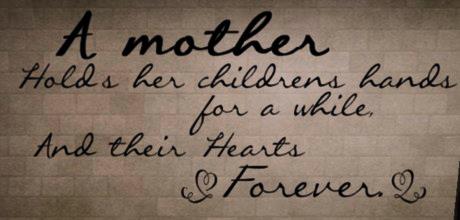
Mother2

I woke up several days ago with an unexplained and surprising feeling of sadness.  I was down, and blue.  I couldn’t figure out what was going on.  As far as I knew, everything was all right in my life at the moment.  I was coming to the tail-end of a nasty virus, but I was feeling better every day.  I had taken an allergy medicine the night before, but it was one that was familiar and had never caused any odd reactions.  And yet – I was quite sad.  I had some cancellations that morning, and I decided to check in with my husband and daughter, who were meeting for lunch, to see if I could join them.

Sitting at the table, waiting for food service, I began to muse again on what was going on.  I talked to them about it – said I was feeling sad, and I couldn’t quite figure out why.  I was lonely, and I felt a bit tearful.  Talking about it brought a few more tears.  We talked of other things and then, all of a sudden, I knew.

It was my mother’s birthday.  She would have been 95 this year.  She died twenty-four years ago, six months before her 71st birthday.  Every year this time sneaks up on me. One would think I would remember, but there is something about these anniversaries that keeps us a bit unconscious.  The amazing thing is that the BODY KNOWS.  Even though I was not consciously aware, my body and emotions were telling me to pay attention.

As soon as I recognized what was happening inside, I felt a deep sense of relief and understanding, and an equally deep joy in remembering all the special things about my mother.  Tonight, as I write about those sweet memories, I came across a little scribble I wrote a while ago.

My mother taught me many things.  Some of the most precious are these:


Create beauty in unexpected places, for no reason at all.

Cherish your women friends.

Go to lunch!

Be sweet.

Believe in yourself.

You are beautiful; believe it.

Church matters.


I am so grateful for the love we shared, and for having her in my life for seventy years.  I hope that my daughter will have as many sweet memories of me when that day comes.

I love you, Mother.


About Susan Hammonds-White, EdD, LPC/MHSP:

Susan is a communications and relationship specialist, counselor, Imago Relationship Therapist, businesswoman, mother, and proud native Nashvillian. She has been in private practice for over 30 years. As she says, “I have the privilege of helping to mend broken hearts.”  Contact Susan at http://www.susanhammondswhite.com

Like what you’ve read? Feel free to share, but please… Give HerSavvy credit. Thanks!


Leave a comment

Filed under Self Savvy

The Other Side of the Couch – New Traditions?!

Traditions 2

I don’t really remember a time when the Christmas season was not filled with activity.  I grew up in a home with four other siblings and Christmas was a great event in our house.  My earliest memories involve sneaking down the stairs with my sister to see if Santa had come, and being absolutely convinced that Santa Claus was real, because ALL the presents were there, and Daddy and Mommy were asleep!  As I grew to adulthood Christmas continued to be the central holiday when the family gathered.  It was also true that as an adult I became much more involved in the preparing of these seemingly effortless rituals that culminated in the perfect Christmas morning, the presents wrapped and prepared for all, the Christmas breakfast and the Christmas dinner prepared and ready to serve.  I have loved Christmas and enjoyed the traditions of having my own home and making these traditions ours.

Now with my own home and my own adult, married daughter and my own Christmas to prepare, I am facing a first.  My daughter is spending Christmas with her husband’s family in another state.

No matter what I tell myself – that this is normal, that this is right, that this is her life, that we will be fine– I am overcome with sadness.  All of the wisdom I have so readily shared with others – make your own plans, create your own traditions, make this a day that is right for you, do a service project for others – pales in the face of this new reality.

As I face this, I think of my mother, whose five children grew up and scattered far across this country, rarely being all in the same place at the same time as adults.  I wonder how this felt for her.  I wonder how she bore it when I swanned off to South America for six years.   I wonder if she felt the same kind of emptiness in the face of this absence of what is, in the end, a part of one’s self.

So a part of my heart is going to be in North Carolina this Christmas.  I will bear up and be brave and have a good day.  And I will do my best to support my daughter in her choices, perhaps on the inside having a little childish tantrum that says “What about ME!” but hopefully not letting that part of me get in the way of giving her what she needs as an adult.  I will take my own advice, and my husband and I will do something different on Christmas.  It will be different, and it will be ok, and we will all grow a little bit in new ways.

I will hope for some new traditions that will translate into new ways of being for all of us.

So – Merry Christmas, Happy Holidays – Whatever you celebrate, make it a tradition that works for you.

About Susan Hammonds-White, EdD, LPC/MHSP:

Susan is a communications and relationship specialist, counselor, Imago Relationship Therapist, businesswoman, mother, and proud native Nashvillian. She has been in private practice for over 30 years. As she says, “I have the privilege of helping to mend broken hearts.”  Contact Susan at http://www.susanhammondswhite.com

Like what you’ve read? Feel free to share, but please… Give HerSavvy credit. Thanks!

Leave a comment

Filed under Self Savvy

The Other Side of the Couch:  Gratitude – It Works


GratitudeGratitude.  Who knew that the act of giving thanks had such profound effects on so many things? The act of being grateful on a regular basis has been shown to diminish cortisol levels in the body by a significant amount and to increase variability in heart rate coherence patterns, both of which are an indication of lowered stress levels (McCraty and colleagues, 1998).

In addition to improvement of personal health, expressing gratitude has recently been shown to have a clear protective effect on relationships.  In a study that recently appeared in the journal “Personal Relationships,” results indicated that expressions of gratitude helped relationships in measurable ways.

“Feeling appreciated and believing that your spouse values you directly influences how you feel about your marriage, how committed you are to it, and your belief that it will last,” says study co-author Ted Futris.

As Thanksgiving Day approaches, one of the best things we can do for ourselves and for our relationships is to engage in a daily practice of gratitude.  This can be done in a number of different ways.  Taking stock of the day, focusing before you go to sleep on five things for which you are grateful is one way.  Writing them down seems to help anchor the experience.  Notice how your body feels when you focus on things for which you are grateful – many people experience a sense of relaxing on the inside, perhaps a feeling of warmth.  These steps can be personally helpful in alleviating stress.

Expressing gratitude to others seems to be remarkably helpful in keeping relationships on an even keel.  Making a daily practice of expressing appreciation and gratitude to your partner, children, friends, and business associates really does make relationships better.  I recommend to the couples with whom I work that thinking about, looking for, and expressing thanks on a daily basis is an incredibly powerful tool that can keep your relationship connected.  Give it a try.  You will be glad you did.

Happy Day of Thanksgiving!


McCraty, R., Barrios-Choplin, B., Rozman, D., Atkinson, M. & Watkins, A. (1998). The impact of a new emotional self-management program on stress, emotions, heart rate variability, DHEA and cortisol. Integrative Physiological & Behavioral Science, 32, 151-70.

Barton et.al, Linking Financial Distress to Marital Quality:  The Intermediary Roles of Demand/Withdraw and Spousal Gratitude Expressions, Personal Relationships, 22, (2015), 536-549.

About Susan Hammonds-White, EdD, LPC/MHSP:

Susan is a communications and relationship specialist, counselor, Imago Relationship Therapist, businesswoman, mother, and proud native Nashvillian. She has been in private practice for over 30 years. As she says, “I have the privilege of helping to mend broken hearts.”  Contact Susan at http://www.susanhammondswhite.com

Like what you’ve read? Feel free to share, but please… Give HerSavvy credit. Thanks!

 

Leave a comment

Filed under Self Savvy